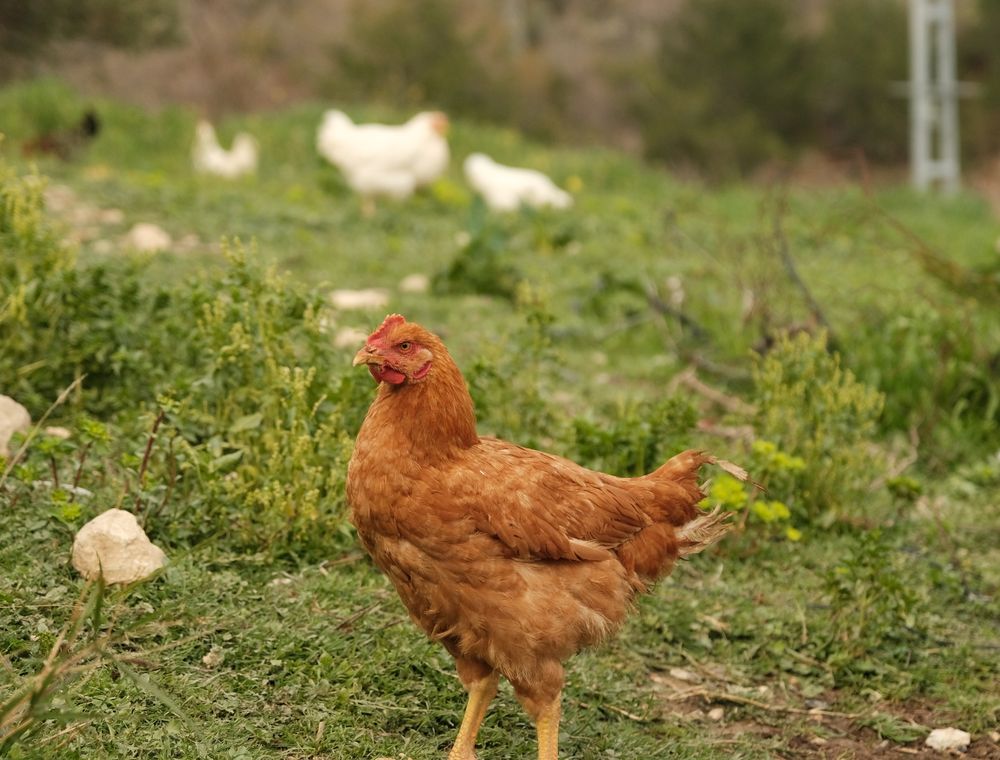
Short answer: Wing clipping cuts the outer flight feathers so a hen cannot gain enough lift to clear a fence, and it is worth doing only for free-range birds that keep getting out after the fence is fixed. Toe clipping is painful, leaves an open wound and gives little benefit that leg rings or wing tags do not give you without cutting. Cut only fully grown outer primaries, never a feather still growing with blood in its shaft, and follow your vet's advice on handling.
Key takeaways
- Clip the mature outer primaries only, and never a blood feather.
- A clip reduces flight but does not hold a determined bird.
- Fix the fence, gap or roost before you reach for the scissors.
- Avoid toe clipping: it hurts, leaves a wound, and leg rings or wing tags identify birds without cutting.
- Clip free-range birds that keep escaping, not broilers, chicks or caged layers.
Why the hen ends up on the neighbour's roof
Why is your hen sitting on the neighbour's roof again? Usually the answer is one of four things. She is trying to reach a roost higher than the one you gave her. She wants out of a yard that feels too small. A predator has spooked her, and flying is her first reflex. Or she was never trained to a coop and simply goes wherever the grass looks greener.
Chickens are not strong flyers, but a good layer with full wings can clear a fence of a metre and a half without much effort, and she will climb onto anything with a ledge. The flight is short and low. What makes it a problem is repetition. A hen that has learned the way over a wall will do it every morning until something changes. Some breeds take to free range far better than others, and our guide to the best chickens for free-range Ghana compares them for exactly that life.
Before you clip anything, count the escapes for a week. Note the time, the bird and the spot she left from. The answer usually points to a gap in the fence, a feeding time that draws birds to the boundary, or a roost that sits too close to the wall.
What a wing clip actually removes
Each wing carries ten long primary feathers at the tip, and they do most of the work in lift and thrust. The secondary feathers along the forearm help too, but cutting them is not needed to stop a hen getting over a fence. A clip takes off part of the outer primaries. The bird can still flutter, jump and run. What she loses is sustained lift.
Clipping one wing only is called unbalancing. It makes flight lopsided, so a hen that does take off tends to spiral down. Some farmers use it on purpose, and we think it is a poor trade. Clipping both wings evenly is the more common approach on a backyard flock, because the bird stays balanced when she jumps.
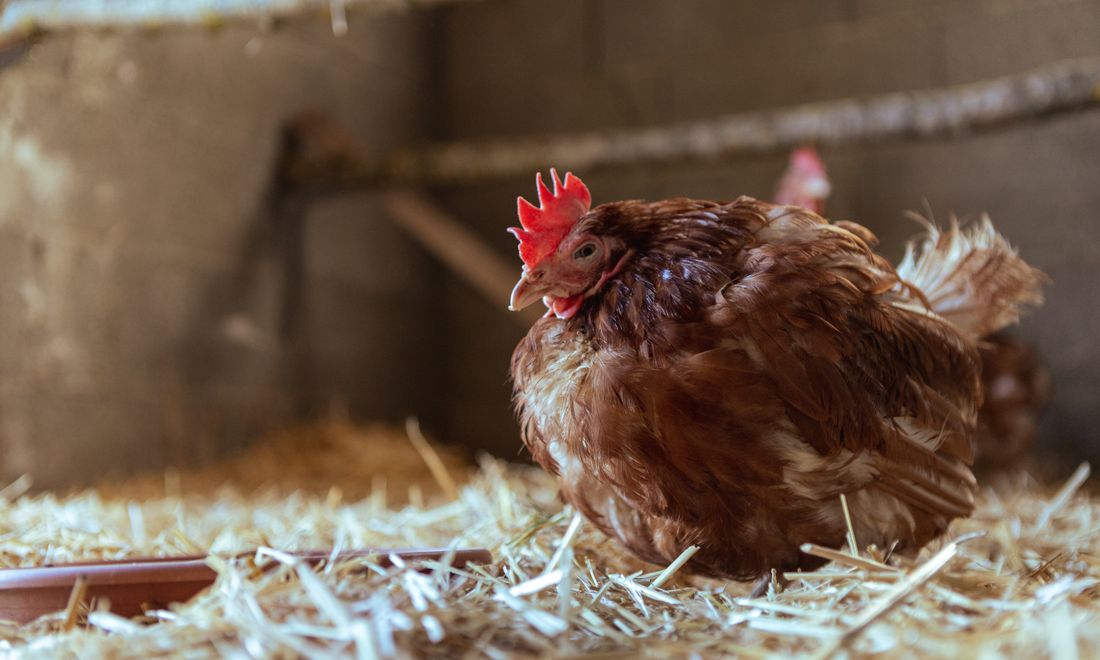
One thing a clip cannot do is hold a bird that is determined. A frightened hen that flaps hard can still get a few metres off the ground. Treat a clip as a reduction in flight, not as a cage, and keep the fence and the roost in order whatever you cut.
Blood feathers: the cut you must not make
A feather that is still growing has a blood supply running up its shaft. From a distance it looks like any other feather. Hold it against the light, though, and the shaft glows pink-red, and the tip feels soft. That is a blood feather. Cutting it bleeds, can hurt the bird badly, and the wound can turn septic.
Check each primary before you cut. Only cut feathers that are fully grown, with a dry, hard shaft and no pink. If a blood feather sits among the primaries you planned to cut, leave it and cut around it. On a mature hen, clipping the outer primaries usually means a handful of feathers per wing, not the whole wing.
If you do cut a blood feather, keep calm. Hold gentle pressure with a clean cloth for a few minutes. A pinch of cornflour or a styptic powder from a pharmacy helps the clot form. Put the bird in a quiet, clean pen away from the flock until the bleeding stops, and look at the wound the next morning.
Clipping a hen, step by step
Do the catch and the clip in one calm session. Choose early morning or dusk, when the flock has settled and the bird is easier to hold. If you are unsure how to catch a hen without damaging her wings, the approach in our guide to catching and handling chickens is the one to use before you pick up the scissors.
- Hold the bird with one hand under her breast and the wings folded against her body, the way you would carry something you do not want to drop.
- Take one wing and open it gently, spreading the primaries so you can see each feather.
- Identify the ten outer primaries. Check each shaft for pink or softness, and skip any blood feather.
- Cut the outer part of each mature primary with sharp scissors, in one clean motion rather than a sawing action. Leave the stub near the base so the wing still folds neatly.
- Repeat on the other wing so the cut is even.
- Fold both wings back in, check the cut ends for bleeding, and return her to the flock.
A clip done in five minutes is kinder than one that takes twenty with a struggling bird. Keep the number of birds you handle in one session small, and put each hen back before you catch the next.
Toe clipping: why we advise against it
Toe clipping means removing part of one or more toes, usually with clippers or a blade, on a chick or a young bird. Some operations have used it to mark birds for identification when there was no other easy way to tell them apart. We do not recommend it. A toe is living bone, joint and nerve, and a cut through it hurts the bird for days. It leaves an open wound in the litter and can lead to infection or lameness.
Many animal welfare codes now ask farms to use other methods, and the reasons are sound. A bird limping on a clipped toe cannot scratch, roost or reach the feeder comfortably. The gain in identification is small next to that cost.
If you need to tell birds apart, pick a method that cuts nothing. Leg rings suit breeders and trial birds, and wing tags let you read a number from a distance across a flock. A coloured spray mark on the back works for a few days in a small group, though it wears off, so it suits short trials and not long records. Choose the method that fits your records, and write the scheme into your batch book so the numbers mean something a year later.
Options before the scissors: fence, net and roost first
A wing clip is the last tool, not the first. In most cases a hen gets out because of something you can fix in a weekend. Work down this table, and only reach for the clip when the rows above it have failed.
| Option | Good for | Watch out for |
|---|---|---|
| Raise the fence to about 1.8 metres | Most hens, including the agile breeds | Materials cost, and a roost set against the fence still lets a bird hop over |
| Net over the top of the run | Keeping birds in a small yard or run | Netting sags and traps birds unless it is tensioned; check it after heavy rain |
| Move the roost away from the boundary | Birds that fly out from a roost near a wall | Expect a week of confusion while the flock learns the new spot |
| Close the one gap you find | A single known exit point | New gaps appear after rain, and after dogs have been at the fence |
| Clip the wings | Birds that still escape after the fixes above | Needs redoing after moults, and needs careful handling |
In a Ghanaian yard, the most common gap is a low wall with a broken corner, or a gutter hanging just high enough for a hen to step onto. Fix the fence, and the clip becomes a job for the few birds that still test it. For predator-proof fencing, which overlaps with the same work, our guide to protecting chickens from predators goes into more detail.
Which birds to clip, and which to leave alone
Not every bird on the farm needs the scissors, and some should never see them. Here is how we would divide a flock.
- Free-range layers that keep leaving the yard: clip them, but only after the fence and roost fixes have failed.
- Free-range cockerels that roost on walls: clip them if they are a real nuisance. Many farmers rehome cockerels rather than manage them, and that is a fair choice.
- Caged layers and birds in closed houses: no clipping needed, because they do not fly out.
- Broilers near market weight: do not clip. They are too heavy to fly far, and handling them stresses the flock.
- Chicks and growers: never clip. Feathers are still developing, and a cut damages the growth.
- Breeders and show birds: check the breed standard and talk to your vet first. Clip only if there is a welfare problem.
- Sick, moulting or stressed birds: leave them alone until they recover.
If you are starting a layer flock and want birds that suit a free-range yard, our layer day-old chicks page explains the options, and our breeds page shows how the lines differ.

Need chicks for your next batch?
Send breed, number and town. We reply with price, hatch date and delivery cost in writing.
The first week after a clip
A clipped hen is usually settled within an hour, but she needs a day or two to learn her new balance. Keep her with the flock, and watch her over the first few mornings. The first flights after a clip tend to end badly on a sharp fence or a tin roof, so check the perimeter too.
Look at the cut ends each morning for three days. Watch the bird's posture and her feeding. A hen that stays hunched, stops eating or stops drinking needs attention, and so does a bird with a swollen or drooping wing. Call your vet if a wound is hot, smells bad or keeps bleeding.
Avoid handling a hen in the same week as her vaccinations or a move to a new pen. Stress on top of stress takes egg output down, and a hen already off her lay will not thank you for the extra handling. Follow your vet's advice on the timing of any work with the flock. If you need replacement hens for the run, you can order them here, and we will confirm the price in writing before payment.
Mistakes we see with clipping
Most clipping problems come from a handful of habits, and they are easy to avoid once you know them.
- Cutting every primary, which leaves the hen unable to reach a safe perch and an easy target for a dog.
- Clipping one wing and calling it a fix for the whole flock.
- Clipping during a moult, when the new feathers are soft and full of blood.
- Using blunt kitchen scissors that crush the shaft instead of cutting it cleanly.
- Clipping the birds when the fence was the real problem all along.
- Forgetting that a clip is temporary. The feathers grow back, usually at the next moult, and the bird goes over the fence again.
Beak trimming is a separate job with its own reasons, and it should never be confused with wing work. Our beak trimming guide sets out when it is considered and what to try first.
A clipping checklist for every session
Run through this list before you catch the first hen, and keep it pinned in the coop so whoever helps you does the same. If a step is unclear, our frequently asked questions may already answer it.
- Fence, gap and roost checked and fixed before the first clip.
- The bird is healthy, not moulting heavily and not stressed by a recent move.
- Catch done at dusk or early morning, one bird at a time.
- Every primary checked for blood before any cut is made.
- Both wings clipped evenly, with the cut ends checked for bleeding.
- Bird back with the flock and watched over the next three mornings.
- Date, bird number and feathers cut written in the batch book, so you know when to look again.
Questions farmers ask
Does wing clipping hurt the hen?
Cutting a fully grown feather is not painful in the way cutting bone is, because the part you cut is dead tissue. The danger is cutting a blood feather or a growing pin feather, which hurts and bleeds. Clip only feathers that are fully grown and dry in the shaft, and the hen will usually settle within minutes of being returned to the flock.
How often do I need to clip again?
A clip lasts until the cut feathers are replaced, which normally happens at the next moult. Some hens regrow feathers faster and need attention sooner. Check the bird every few weeks, and clip again only when she is getting out again, not on a fixed calendar.
Is toe clipping allowed in Ghana?
Check with your local veterinary office and any rules that apply to your farm. Whatever the rule says, we advise against toe clipping because it causes pain and wounds, and leg rings or wing tags identify birds without any cutting.
Should I clip my hens to stop them roosting on the roof?
Usually not on its own. Moving the roost and fixing the fence solve most roof problems. If a bird still flies up after that, a clip may help, but it will not stop a determined hen. Check the roost height against the wall before you make any cut.
Can I clip a chick's wings to stop it flying?
No. Chicks do not fly far, and clipping feathers that are still growing damages the feather and the growth beneath it. Wait until the bird is mature, then decide whether clipping is needed at all.
What do I do if the wing bleeds after clipping?
Apply gentle pressure with a clean cloth for several minutes, then a pinch of cornflour or styptic powder on the cut. Keep the bird in a quiet, clean pen for a while. Contact your vet if the bleeding does not stop, if the wing hangs down, or if the bird stops eating.
Does clipping reduce egg production?
Clipping does not directly reduce laying, but the stress around it can. Handling a hen during peak lay can knock her output down for a few days. Clip when the flock is settled, avoid handling during a moult or heavy lay, and watch the egg count for the following week.


