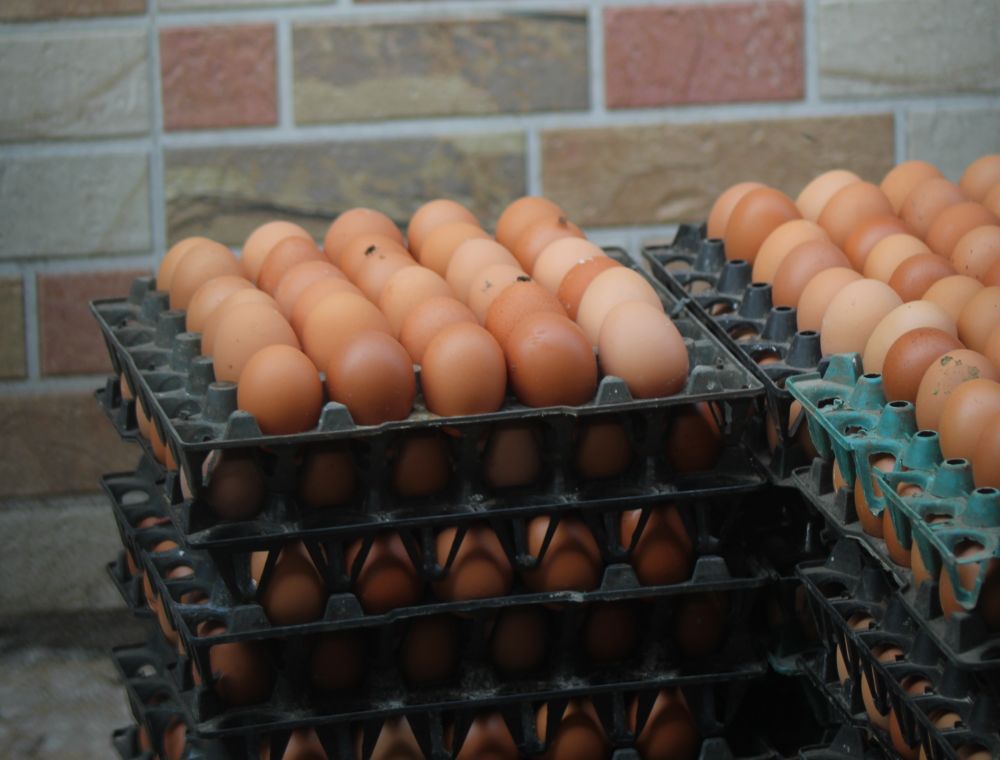
Short answer: The Welsummer is a Dutch dual-purpose hen that lays dark terracotta, speckled eggs, typically around 150 to 180 a year in a good season. She is an active forager that needs a secure, high-fenced run and a closing routine to protect her from predators. Keep pure lines and avoid crossing with other breeds if you want the deep shell colour to last.
Key takeaways
- Expect pale, small eggs in the first month of lay, and judge shell colour across the whole year rather than the first tray.
- Shell colour is set by genetics, while shell strength depends on calcium in the feed, so treat the two questions separately.
- Fence or net the run higher than you think you need, because a Welsummer will find the low point and use it.
- Keep a Welsummer cockerel with pure hens and change him every few seasons to hold the colour.
- Check the flock at dawn and dusk, and close the house every evening with a headcount before the door shuts.
Why the egg colour is the reason people keep them
The Welsummer comes from the village of Welsum in the Netherlands, where breeders worked on it in the early 1900s. It was built as a farm hen for eggs and table meat, and the thing it is known for is the egg. The shell is a deep terracotta, speckled with darker flecks, and on a tray of mixed eggs it stands out before anyone reads the label.
That colour is genetic. Feed will not turn a pale shell into a dark one, and a hen that lays a lighter egg is not necessarily unhealthy. What feed does affect is shell strength, so a hen short of calcium may lay a thin egg in any colour. Keep the colour question separate from the shell question when you judge a flock.
For a Ghanaian farmer the appeal is simple. A brown egg already sells, and a deep, speckled one gives you something to say to the buyer who asks why yours look different. The hen also forages well, which cuts the feed bill on a free-range plot, and she is not a heavy bird, so she does not need a large house.
If you are comparing this with other dual-purpose hens, our best dual-purpose chickens guide sets out the trade-offs side by side. For a broader look at layer options, the breeds page is a good starting point. If the New Hampshire is on your shortlist too, our New Hampshire Red guide sets out how the two differ in a run.
Telling a pure Welsummer chick from a mixed one
Day-old chicks are hard to judge by colour alone, so do not try to decide on the day they arrive. Some are clearly mixed, and some look like a dozen other breeds. Wait until the adult plumage starts to show around 16 to 20 weeks, and then look for the partridge pattern the breed is known for: golden-brown hackle and saddle feathers with dark centres, and a hen that carries the colour evenly rather than in patches.
If you are buying pure lines, ask the supplier for the parent stock records or the breeder's details, and compare the adult hens with the photos the breeder sends. A hen that looks nothing like the breed standard is a sign that the line has been crossed somewhere.

Mixed chicks are not a waste. A crossbred hen can be a good layer, and many backyards run perfectly well on them. The point is to know what you have before you put a Welsummer cockerel in with them and expect the eggs to deepen. That is the most common way a Welsummer flock loses its colour over two or three seasons.
The egg colour curve: why pale first eggs are normal
A young Welsummer hen does not lay her best egg first. The early eggs tend to be lighter, a little smaller and sometimes slightly misshapen, and the colour deepens as the months pass. Farmers who sell eggs by colour often make the mistake of grading the first month's output as if it were the flock's standard. It is not.
| Month of lay | Typical eggs per hen | Shell colour you should see |
|---|---|---|
| Month 1 | 8 to 10 | Pale to light brown, some small eggs |
| Months 2 to 3 | 14 to 18 | Medium brown, colour starting to deepen |
| Months 4 to 7 | 18 to 22 | Full terracotta with speckling |
| Months 8 to 12 | 15 to 19 | Deep colour, may pale slightly as the hen ages |
The table is a planning guide, not a guarantee. A hen in her second year may lay slightly lighter shells, which is normal ageing and not a sign that she has stopped being a Welsummer. If the colour drops sharply across a whole flock in one month, look at feed, water, heat and a recent vaccination before you blame the genetics.

Judge the colour in daylight, at the nest, not under a dim coop lamp. Low light makes every shell look darker or paler than it is, and a grader working in a dark shed will argue with the eggs. Brown-egg buyers in the Central Region often ask the same question about shell colour, and our brown versus white eggs article covers how the market reads it.
Temperament: why they fly and how to keep them in
The Welsummer is alert and active, and she is one of the few layers we would call restless. A bird that wants to see what is past the fence will find the lowest point and use it. We have seen hens go over a wall of 90 centimetres with no help at all, usually in the early morning when the rest of the yard is quiet.
There are three practical fixes. The first is a higher run, with a mesh roof or netting over the top if the trees around the plot are close. The second is a trim of the primary wing feathers, done carefully by someone who knows how, so the bird can still balance and land without injuring a wing. The third is to give her a reason to stay: a scratching patch, dust bath, shade and a feeder she can reach from inside the pen.
Do not expect a Welsummer to be as calm as a Barnevelder in a crowded pen. Keep her in a space with room to move, and she will settle. Keep her shut in a small house with a noisy neighbour and she will spend her day at the door.
Free range in Ghana: forage, predators and the dry season
A Welsummer is a good forager, and on a run with grass, insects and shade she will cut her feed use noticeably. The catch is seasonal. In the dry months from December to March the grass in most of Central Region is short and brown, and the insects are scarce. A forager that has learned to rely on the plot will go hungry on it, so be ready to give a full ration at that point.
Predators are the bigger threat than hunger. Dogs, snakes and mongoose all take free-range hens in Ghana, and a Welsummer that wanders will run into them more often than a heavier, slower bird. Shut the flock in at dusk, check the pen for gaps every morning, and keep a closed house that the birds return to at night. A hen left in the open after dark is a meal waiting to happen.
- Shade trees or a shade net over at least half the run.
- A water point that is not in full sun at midday.
- A dust bath of dry soil and sand for the hens to use in the heat.
- A closing routine every evening, with a headcount before the door shuts.
For the parasite side of a free-range plot, our worming guide covers the routine to follow, and your vet's advice should set the timing for your area.
Housing an active layer: perches, nest boxes and a ventilated roof
The Welsummer's house should be built around movement. She will fly up to a perch, drop down, scratch and fly again many times a day, so give her a house with low perches and a clear route in and out. A perch placed too high becomes a daily hazard when she misjudges the landing, and a bruised breast is hard to see until the hen stops laying.
Nest boxes should be dark and roomy, with a lip on the front so eggs stay in. Put them at a height she can reach without climbing a ladder of perches. We find that a box with a little straw or dry husk, placed away from the door, gets used much more reliably than a box in the open.
Ventilation is the other half of the house. Give her roof-level openings and keep the sides open where possible, but do not let wind blow straight onto the perch. Dust in the harmattan settles on a perch quickly, so clean the boards weekly and keep the litter loose enough to take the scratching she will do.
Breeding true to colour without a stud book
If you want to keep the terracotta eggs, you have to keep the bloodline pure. The easiest way is to run a pen of Welsummer hens with a Welsummer cockerel from a different source, and to change the cockerel every second or third season so you do not breed close relatives together.
Keep a simple record for each hen: the date she started laying, the egg colour on the first and tenth weeks, and any broody spells. Cull the hens that lay pale shells for more than a season, not because they are unhealthy, but because they are the wrong colour for the breed you are trying to hold.
The mistake we see most often is a cockerel from a Sasso or Kuroiler flock running with Welsummer hens. Those crosses lay a brown egg, but the colour is no longer the Welsummer's. Within two seasons the speckle has gone and the shell is just brown. If your aim is the traditional look, keep the lines apart.
Need chicks for your next batch?
Send breed, number and town. We reply with price, hatch date and delivery cost in writing.
The run's arithmetic: twelve hens and sixty-six crates
Here is a small example from the kind of backyard we often hear about. Most of our layer customers start with the layer chicks page open on one screen and a calculator on the other. Twelve Welsummer hens average 165 eggs each over a laying year. That is 1,980 eggs, or 66 crates of 30. Valued at GH₵50 a crate, which is the rate on our own table-egg line, the gross comes to GH₵3,300 before feed.
Twelve hens do not eat much, but they eat every day. At about 110 grams of layer ration a day, the flock uses roughly 480 kilograms of feed in a year. Multiply that by your price per kilo and you have the feed bill. The free-range forage cuts that number, but the dry months will push it back up, so do not build the budget on the good season alone.
If you are thinking about starting with day-old chicks rather than pullets, our current from-prices give you the starting point, and the day-old chicks page explains how we pack and dispatch them.
Health checks that matter for an active hen
An active hen is easier to examine than a fat one, but she is also more likely to hide a problem until it is serious. Look at her every day, not just when you collect the eggs. A hen that stops running to the feeder, stands with feathers puffed or lags behind the flock at dusk is telling you something.
In the dry season, red mites can build up in the crevices of a house that is not cleaned out. They feed at night, and you may only see them when you lift a perch board with a torch. Check the cracks weekly, clean the house, and treat only what your vet advises. Lice and worms are also common on free-range plots, and a regular check of the vent and the droppings will show you the pattern before the flock drops in lay.
- Check each hen's keel and vent for condition once a week.
- Look at the droppings on the board every morning for colour and consistency.
- Count the flock at dusk and at dawn, and note any bird missing.
- Keep the vaccination record with the batch card and follow the schedule your vet sets.
For the vaccines that matter most on a layer flock, our guide to vaccinating chickens explains the common programme, and the common chick diseases article covers what to look for early.
A first-season plan for a Welsummer pullet
The first season is where a Welsummer flock is made or lost. Most of what matters happens before the first egg, so the plan below is built around the calendar rather than the bird's age alone.
- Weeks 1 to 6: brooder at the right heat, starter feed, water with a clean dish beside the feed.
- Weeks 7 to 16: grower feed, outdoor run once the feathers are through, and a weekly weigh-in of a sample.
- Weeks 16 to 18: move to the layer house, add oyster shell, and start the feed switch over seven days.
- Weeks 20 to 24: watch for the first eggs, note the colour and size, and keep a count per hen.
- Months 6 to 9: review the egg colour by hen, cull the poor layers, and check the pen for predators.
- Month 12: sum the year, compare with the table in this guide, and decide what to keep for the next season.
Keep a notebook by the nest box. Two lines a day, date and count, will tell you more about your flock by the end of the year than any guide can. When the numbers work, place the order through the order form, and the delivery page will show how boxes reach your region. The frequently asked questions cover the rest.
Questions farmers ask
What eggs does a Welsummer lay?
A Welsummer lays a dark terracotta egg, speckled with darker flecks, which is one of the most distinctive shell colours among brown-egg breeds. Colour depends on genetics, so a pale egg from a pure hen is still normal in her first few weeks of lay.
How many eggs does a Welsummer hen lay per year?
In a good season, a Welsummer hen typically lays around 150 to 180 eggs in her first laying year. Output is lower in the first month of lay and in the hottest or wettest months. Judge the flock over twelve months, not a single good or bad week.
Why are my Welsummer eggs pale?
The most likely reason is age. First-month pullets and older hens in their second year often lay lighter shells. A sudden drop across the whole flock points to feed, water, heat or a recent vaccination stress, so check those before you assume the colour is a genetic problem.
Do Welsummers fly over fences?
Yes, and they often do. The breed is alert and active, and a low fence will be tested early in the morning. Use a higher run with netting over the top if needed, or a careful trim of the primary wing feathers done by someone who knows the method.
Can I keep Welsummers with other breeds?
You can keep them in the same run, but crossing breeds will spread the colour thin. If you want the terracotta egg to hold, keep a pure Welsummer cockerel with the hens and avoid bringing in a cockerel from a different breed or from a mixed flock.
Are Welsummers good for free range in Ghana?
They are good foragers, and on a plot with grass and insects they reduce the feed bill. The risk is the dry months, when forage is short, and predators such as dogs, snakes and mongoose, which take free-range hens. Plan a full ration and a secure house for those months.
What should I buy first when starting with Welsummers?
Start with a clear plan: a brooder for the first six weeks, a grower ration, a secure run and a layer house ready before the hens start laying. Check with us on WhatsApp whether the breed is in the hatch that week before you plan a house around it, and ask for the batch record with the order.


