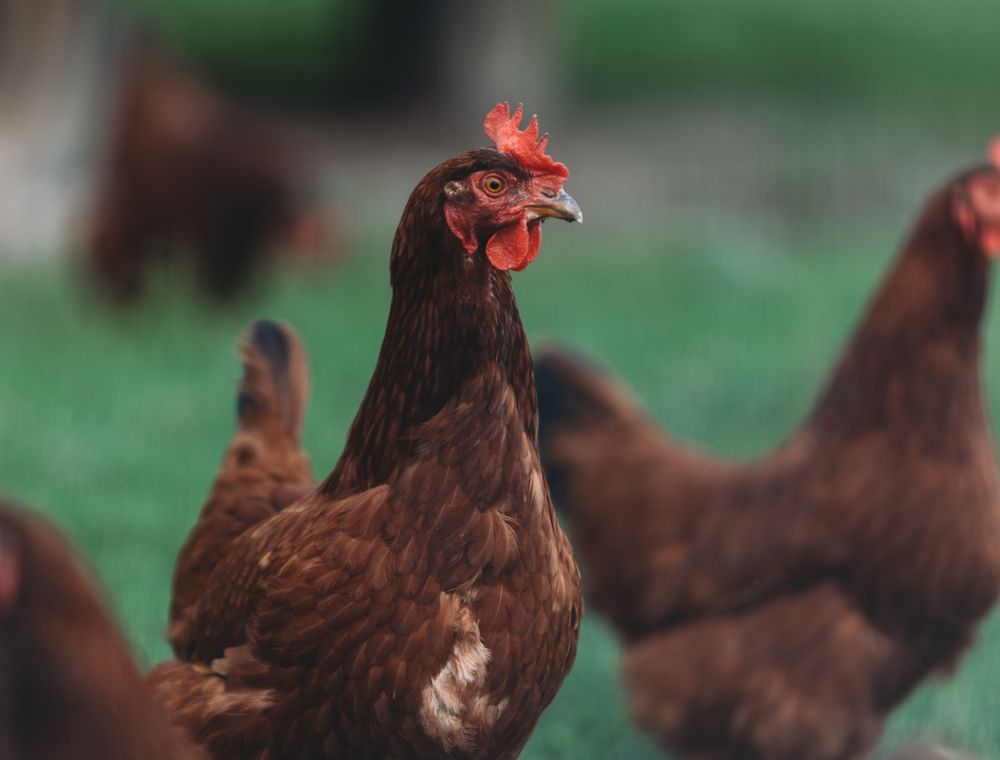
Short answer: The New Hampshire Red is a brown-egg dual-purpose hen bred from Rhode Island Red stock to lay a little more and mature a little faster. A good first laying year gives roughly 180 to 200 eggs per hen, with output falling in the hottest weeks. It suits a small free-range flock or a backyard that wants eggs and table birds from the same pen.
Key takeaways
- Plan on 180 to 200 brown eggs per hen in a good first laying year, and judge the flock over twelve months, not one good week.
- Keep pullets on grower ration until about 18 weeks, then switch gradually to layer feed with oyster shell in its own dish.
- Give the flock shade and cool water from March onward, when the heat starts to cut lay.
- If you want fertile eggs, one cockerel per nine or so hens is plenty, and the spare goes at 16 to 20 weeks.
- Ask the supplier which New Hampshire line your chicks come from, because lines differ in pace and temperament.
How the New Hampshire Red differs from the Rhode Island Red
Ask a farmer who has kept both breeds and you will hear the same story. The Rhode Island Red is the dependable old hen, and the New Hampshire is the one that pushes a little harder. The New Hampshire was developed in New Hampshire in the early twentieth century from Rhode Island Red stock, with breeders selecting for earlier laying, a larger brown egg and a body that matured faster.
In a backyard you will struggle to tell them apart by eye. The New Hampshire usually shows a clearer red-brown across the back and hackles, and the hens tend to carry a little more weight at the same age. The real difference shows up over one laying season, and it shows most in how quickly a pullet reaches her first egg.
Keep one thing in mind before you buy. Breeders keep separate New Hampshire lines, and a chick from one line can behave quite differently from a chick from another. If you already keep Rhode Island Reds and want a side-by-side, read our Rhode Island Red guide first, then ask the supplier which line your chicks come from before you commit a whole house to them.
For the broader choice of layers, our breeds page sets out what each type is for, and the layer chicks page lists the brown-egg options we currently hatch or import.
What a good New Hampshire chick looks like in the box
A healthy chick is on its feet within seconds of you lifting the lid. It has dry, fluffy down, bright eyes, clean vent feathers and a navel that is closed and dry. A chick that sits hunched at the back of the box, or has a pasty, dirty vent, is telling you something went wrong in transit or earlier, and you should photograph it straight away.
Before a box leaves our Opeikuma site, every chick has been through the hatchery programme: coccidiosis, infectious bronchitis, Gumboro (IBD), Newcastle (NCD) and Marek's. The batch card that goes with the order lists what was given and when. We dispatch the day they hatch in ventilated boxes of 50, so a chick that has been on the road for a day may look tired when it arrives. Give it clean water with a little sugar, keep it warm, and wait an hour before you judge it.
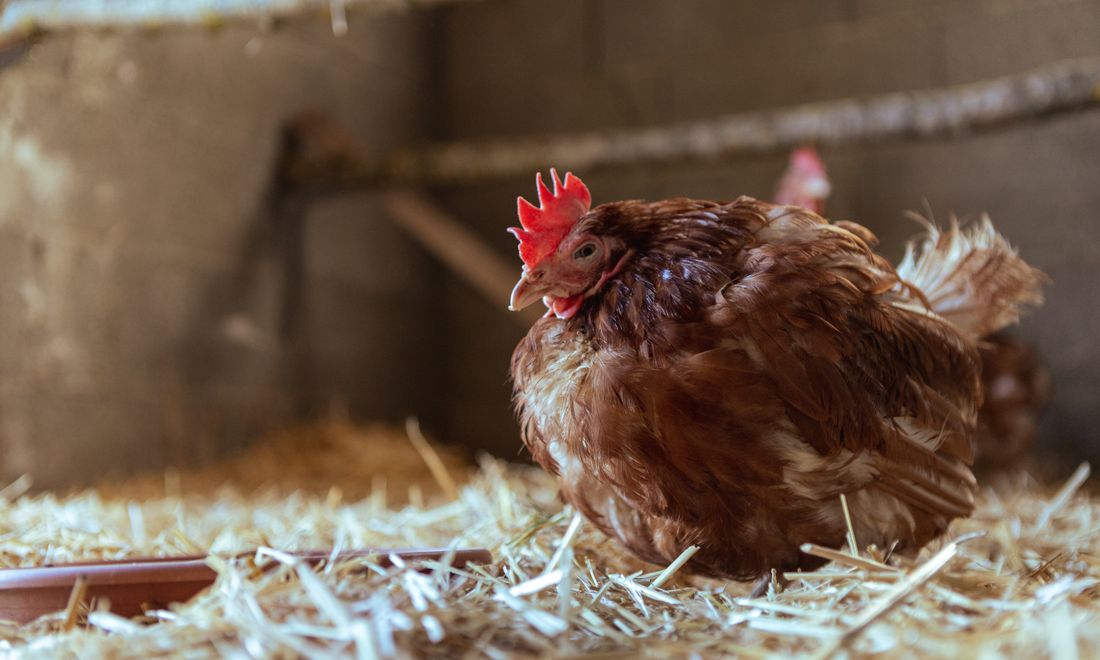
Our delivery page explains how boxes travel across all 16 regions. Whatever the route, do the same checks at the gate:
- Count the chicks against the order before the driver leaves.
- Lift each chick gently and watch it stand and walk.
- Check the navel for dryness and the vent for cleanliness.
- Take a photo of anything doubtful and message it to our WhatsApp line, +233 24 915 1503, before the day is out.
A chick that dies in transit is made good in our next hatch at no charge, but the claim depends on the count and the photo reaching us on the day of arrival. Once a chick has spent three days in a brooder before anyone looks at it, the argument becomes much harder. Read our note on the vaccination schedule so you know what protection the batch record should show.
How many eggs to expect in the first laying year
This is the planning table we give customers who ask for a month-by-month picture. The figures are averages for a well-fed flock on a steady light programme. They are not a promise. A flock that bakes in March and April will dip, and a flock that gets a sudden feed change in the middle of the year will dip too.
| Laying month | Eggs per hen in the month | Running total per hen |
|---|---|---|
| Month 1 | 10 | 10 |
| Month 2 | 15 | 25 |
| Month 3 | 18 | 43 |
| Month 4 | 20 | 63 |
| Month 5 | 20 | 83 |
| Month 6 | 19 | 102 |
| Month 7 | 18 | 120 |
| Month 8 | 18 | 138 |
| Month 9 | 17 | 155 |
| Month 10 | 16 | 171 |
| Month 11 | 15 | 186 |
| Month 12 | 14 | 200 |
Notice how light the first month is. A pullet that starts at 21 or 22 weeks needs a few weeks before she lays on most days, and the eggs in that first fortnight run small. Do not start changing her feed to fix that. A sudden switch knocks laying back far more than small eggs do.
The peak in months four and five is the reason this breed is worth keeping. After that the curve is a slow fall, and a hen that is still laying at 14 eggs a month in her twelfth month is earning her place. If you want a deeper comparison of what brown-shelled hens do over a year, our brown versus white eggs article covers the market side.
Feeding for lay, and why the ration changes at 18 weeks
A New Hampshire pullet is not a broiler, and she should not be fed like one. Until about 18 weeks she needs a grower ration with enough protein to build frame and feathers without making her fat. A fat pullet lays late and lays poorly, and we would rather see a lean bird that is a little behind on weight than a heavy one with a blocked oviduct later on.
Once she is close to lay, the ration changes to a layer mash or pellet. Calcium goes up sharply because the shell is made from it, and the layer ration is where most of that calcium should come from.
| Stage | Typical age | Crude protein (approx.) | What to watch |
|---|---|---|---|
| Starter | 0 to 6 weeks | 18 to 20 percent | Clean water beside the feed from day one |
| Grower | 6 to 16 weeks | 15 to 16 percent | Weigh a sample monthly and aim for steady gain |
| Pre-lay | 16 to 18 weeks | 16 to 17 percent, more calcium | Switch over seven days, not overnight |
| Layer | From first egg | 16 to 17 percent, calcium 3.5 to 4 percent | Oyster shell in a separate dish |
The switch is where most flocks get hurt. We hear it from farmers all the time: the feed shop ran out, the helper bought a different bag, and the hens stopped laying for a week. Mix the new ration into the old one over seven days, roughly a quarter new on day one, half by day three, three quarters by day five, then full. Keep the oyster shell in its own dish so hens take it when they need it, not every time they walk past.
Free-range birds will find their own grit and insects, but in the dry season in Central Region the ground is bare for months. A flock on bare ground will eat less of its own natural calcium source, so do not rely on pecking to cover the gap. For worms and parasites in a free-range pen, follow the routine in our deworming guide and keep your vet's advice close.
Housing the breed when the dust comes in and the rains follow
The harmattan runs roughly from December to February. It brings fine dust that gets into everything, and cool dry nights that can drop low enough to make an open-sided house feel cold to a bird that has been on warm bedding all day. The rains bring the opposite problem: damp litter, mould on the feed and a rise in worm burden on any ground the birds have been scratching for weeks.
In the harmattan we want the house open high on the sides and closed at bird level, so the air moves over the roof and the birds stay out of a draught. Keep the litter dry and turn it every few days so the top layer does not cake. In the rainy season the same house needs more airflow, not less, and the litter has to be changed more often because it soaks up water fast.
Plan on 20 to 25 centimetres of perch per hen, and budget a nest for roughly every five hens. The New Hampshire is a steady layer, but she will queue for a nest in the afternoon if there is only one box, and the birds that wait tend to lay on the floor. Put the nest boxes in the darkest, quietest corner, lined with clean, dry husk or shavings, and check them before the afternoon rush.
- Litter: dry, loose and turned weekly in the harmattan, changed sooner in the rains.
- Ventilation: high openings, no draught at perch height.
- Perch: 20 to 25 centimetres per hen, with droppings boards under them.
- Nest: roughly one box per five hens, in shade.
Broodiness: when she sits, and what to do about it
Most New Hampshire hens go broody at least once in a laying year, and some go broody often. A broody hen stops laying, fluffs her feathers, growls when you reach under her and spends most of the day on the nest. She is not sick. Her body is telling her to hatch, and she is doing exactly what it asks.
If you do not want chicks, break the cycle quickly, because every week she sits is a week without eggs. Lift her off the nest each evening and set her on the perch. If she goes back after two or three days, move her to a wire-floored cage with food and water for three to four days. Put the cage in the shade, in a place with airflow. A broody hen shut in a closed box in Ghana heat loses weight quickly, and that weight is hard to put back on before the next laying cycle.
Some farmers keep a broody hen with a dish of cool water, a dark corner and nothing else. That works for many hens. If you want chicks from her, the simpler route is to set fertile eggs in an incubator, and our egg hatching service page explains how we handle that.
Roosters: keep one, sell one, or put the spare in the pot
If you want fertile eggs for hatching, keep roughly one cockerel to every nine hens. The New Hampshire is a medium-heavy bird, so the top of that range is safer. Two cockerels in one pen will fight, and the fight usually costs a bird its comb, an eye or its place in the pecking order before it is over.
Cockerels you are not keeping as breeders should leave the flock at 16 to 20 weeks, before they start mounting hens and tearing feathers off their backs. Weigh them before they go. A dual-purpose cockerel sells as a table bird, and buyers who want a bigger, firmer bird will pay a fair price for it, but they will not pay for a skinny one that has been in a pen with no feed for a week.
Keep your records simple: hatch date, weight at sale and what you were paid. Over a year that tells you whether the male side of your flock earns its feed.
Need chicks for your next batch?
Send breed, number and town. We reply with price, hatch date and delivery cost in writing.
A worked example: 30 hens behind a house in Kasoa
Take a small flock of 30 New Hampshire hens that average 190 eggs each in a year. That is 5,700 eggs, or 190 crates of 30. Valued at our table-egg rate of GH₵50 a crate, the gross is GH₵9,500 a year, before you buy a single bag of feed.
The expensive line is feed. A laying hen eats roughly 115 grams of layer ration a day, so 30 hens eat about 1,200 kilograms a year. Multiply that by your own feed price per kilo, then add shell grit, the vet's bill when a bird goes off colour, litter and the eggs that crack in the nest. The margin lives in feed and losses, not in the egg price.
Losses are the part people underestimate. Say 3 percent of the year's eggs crack, get dirty or go missing under a bush. That is 171 eggs, or about 5.7 crates, which is roughly GH₵285 gone at the crate price. Halve the cracks with a shell grit schedule and a second nest-box check each afternoon, and you have recovered most of that money for the cost of a bucket and five minutes.
If you are still deciding whether to start with pullets or day-old chicks, our day-old chick prices page gives the current starting figures, and you can place an order on the order form.
Mistakes we see with New Hampshire flocks
The breed is forgiving, but the same few mistakes keep turning up at the farm gate when customers call us to ask why their flock is slow.
- Keeping pullets on a broiler-style ration past 18 weeks, which makes them fat and slows the first eggs.
- Putting a broody hen back in the flock without removing her, so two more hens start sitting by the weekend.
- Running thirty hens off a single nest box and then blaming the hens for laying on the floor.
- Mixing a new cockerel from an unknown line into a breeding pen without asking what he is.
- Letting the house get hot in March and April, then blaming the breed for a dip that the heat caused.
- Skipping the batch record and not checking vaccination dates against the calendar on the wall.
Most of these come down to the same root: the farmer knows the breed on paper but has not watched the flock through a full laying year. Our best layer breeds guide compares the options if you are still choosing between them.
A first-month checklist for a New Hampshire pullet flock
Print this and tape it inside the house door. It covers the first month after the chicks reach you, and the steps are in the order most farmers wish they had done them.
- Weigh ten birds on day 56 and write the average on the house wall. Repeat at 12 weeks.
- Check that the starter or grower ration is in the feeder and that clean water is topped up morning and evening.
- Match the vaccination record against the batch card, and book the next dose with your vet's advice on timing.
- Count the perch length and the nest boxes against the number of pullets you have.
- Walk the flock at dusk and count the birds on the perch. A bird on the floor at night is a bird you need to look at.
- Plan the move to the layer house for 16 to 18 weeks, before the first egg, so the hens settle before they start laying.
If you are short of space for that move, our bulk page sets out how larger orders are quoted, and we are happy to talk through staggering the hatch on WhatsApp.
Questions farmers ask
Are New Hampshire Reds better for eggs or for meat in Ghana?
They are a layer first. A hen gives roughly 180 to 200 brown eggs in a good first year, and a cockerel makes a medium-heavy table bird when sold at 16 to 20 weeks. If you want a fast meat bird, a broiler line will beat her on weight gain by a wide margin, so do not expect her to replace one.
How many eggs does a New Hampshire Red lay in a year?
In a well-managed first laying year, plan on about 180 to 200 eggs per hen. Output drops in the hottest months and during the moult, and a sudden feed change can cost weeks of lay. Keep records for a full year before you judge your flock, because one bad month says little about the breed.
When do New Hampshire pullets start laying?
Most start somewhere around 20 to 22 weeks, sometimes a little earlier in a cool season. The first eggs are often small and a little irregular. Lay usually climbs over the next six to eight weeks, and the peak comes in the fourth and fifth months of laying.
Are New Hampshire hens broody?
Some are, and some go broody several times a year. A broody hen stops laying and sits on the nest. Lift her off each evening, or move her to a wire-floored cage in the shade for three to four days. Put her in a cool, airy place, because a closed box in Ghanaian heat costs a broody hen weight quickly.
Can I keep New Hampshire Reds with Sasso or Kuroiler birds?
You can, but they grow and feed at different rates. Keep the grower ration suited to the youngest birds, check weights in each group, and separate them if one group is pushing the other off the feeder. Mixed flocks work better in backyards than in a house with a single feed line.
Do I need a rooster to get eggs?
No. Hens lay without a cockerel, and those eggs are infertile and keep as well as fertile ones. You only need a cockerel if you want chicks. Keep about one cockerel per nine hens for hatching eggs, and sell the rest before they start damaging the hens.
What should I check before buying New Hampshire chicks?
Ask which line the chicks come from, what the vaccination record shows and how many birds arrive per box. Count on arrival and send a photo on WhatsApp the same day if anything looks wrong. If a bird is lost on the road, we make it good in the next hatch at no cost, as long as the tally and the picture reach us the same afternoon.


