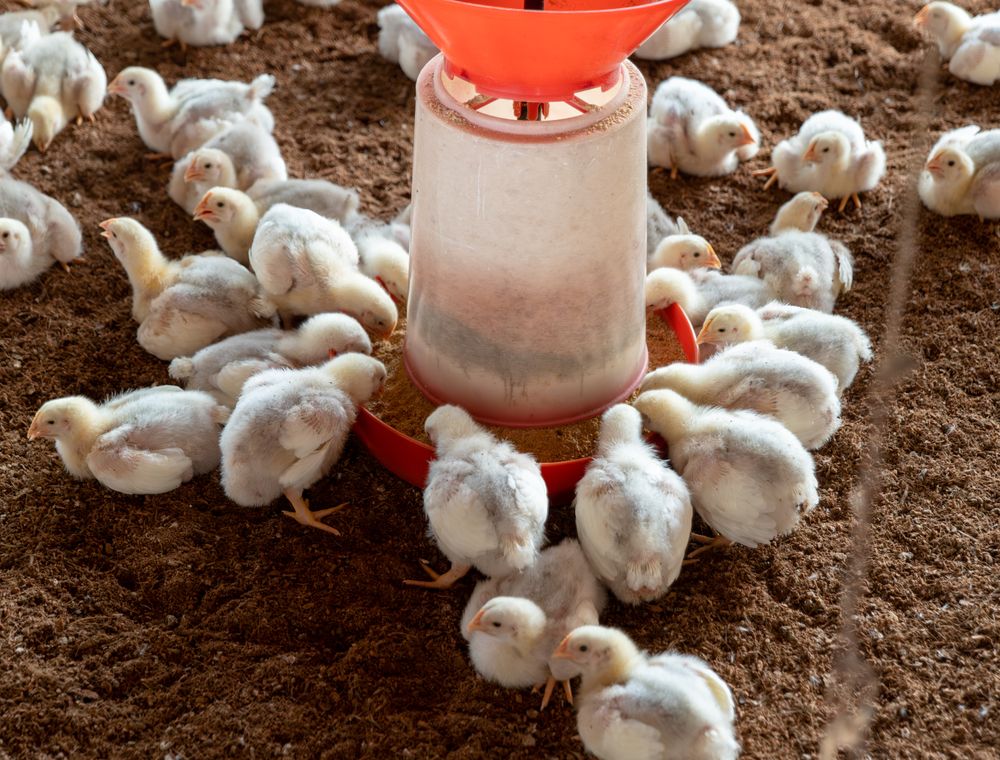
Short answer: Runting-stunting syndrome (RSS) leaves a share of a broiler flock small, uneven and unthrifty from about the second week, even when the birds look fine at feeding time. It is driven mainly by enteric viruses that damage the gut lining and the pancreas, so birds digest less and grow slower. A weekly weigh-in, a look at the back corners of the house and a post-mortem on one small bird will show it early. Clean chicks, sound litter and biosecurity limit the damage, and your vet should confirm the cause before you change treatment.
Key takeaways
- A runty bird is usually a digestion problem before it is a feed-quantity problem.
- Weigh a sample every week. The uniformity figure warns you before the eye does.
- The virus starts it, but damp litter, mixed ages, mouldy feed and coccidiosis decide how far it goes.
- A small pancreas and a thin, watery gut at post-mortem are the clues worth paying a vet to read.
- Do not cover it with random products. Get the cause confirmed and fix the house.
Why the same feeder gives you two sizes of bird
Why are a handful of my broilers half the size of the rest, when they all eat from the same feeder and drink from the same line? It is the question we hear most from farmers who bought a healthy batch and then watched the flock split apart in the third week.
The short answer is that feed and water are not the whole story. A broiler that is small at two weeks is often a bird whose gut is not absorbing properly, and that bird will stay behind even when it eats as much as its neighbours. Runting-stunting syndrome, usually shortened to RSS, is the name for that pattern: a proportion of the flock becomes stunted, uneven and unthrifty, typically from around the second week, while the rest of the house looks normal.
The word syndrome matters. RSS is not one germ you can point to on a lab slip. It is a pattern of damage that several enteric viruses can cause, and whether it appears, and how badly, depends on what else is happening in the house.
What the virus does to the gut and the pancreas
Most of the damage happens in the small intestine and the pancreas. The gut lining is where feed is broken down and taken into the body. When enteric viruses infect that lining, the tiny finger-like villi shorten and become less efficient, so the chick passes more undigested feed out of the back end.
The pancreas is the second casualty. It makes the enzymes that break down protein and fat, and in many RSS birds it is visibly smaller than it should be, pale and firm instead of soft and reddish. A bird with a poor pancreas can eat well and still grow slowly, which is why farmers often tell us the feeder looks busy and the birds look hungry.
Growth is the thing you lose first. Feed intake may hold up for days, so the feed bill looks normal while the feed conversion ratio drifts upwards. In our experience, the farms that catch RSS early are the ones that weigh birds on a schedule, not the ones that trust what the feeder looks like.
The viruses behind the name
Avian reovirus is the one the literature names most often when it discusses RSS, but it is not the only candidate. Chicken astrovirus, avian nephritis virus and other enteric viruses have all been linked to runting in different flocks, and in some outbreaks more than one is present at once. That is why two farms with the same signs can get different results from the same management change.
Reovirus is a tough virus. It can survive in litter and on equipment for a long time, and in some cases it can reach chicks through the egg from breeder hens. That vertical route is the reason the chick you buy matters so much. A chick from a well-managed breeder flock starts with fewer problems than one from a flock that has been carrying virus for months. Some of our stock is imported from the Netherlands, Belgium and Germany, and our imported day-old chicks page explains how those birds reach us.
Your vet can confirm the cause with a sample sent to a laboratory. A diagnosis made by looking at the outside of a bird is a guess, and neither of us should treat a guess as a result.
Signs you can see from the walkway
You will rarely see RSS on day one. The first sign is usually unevenness: a cluster of birds that look a week younger than the rest, scattered through the house or sitting near the wall where the litter is driest. Walk through early in the morning, before the feeders get busy, and look at the back of the house as well as the middle.
A few other signs to check for:
- Pasty or dirty vents, with droppings stuck to the feathers around the vent.
- Rough, ragged feathering that looks poor for the bird's age.
- Birds standing apart with hunched backs, sleepy and slow to move when you walk past.
- Watery or foamy droppings in a few birds, not the whole house.
- Birds that cannot keep up at the drinkers, or that stay on the litter at feeding time.
One bird like this is nothing. Five or six in a single pen, all about the same size, is a pattern. Note where they are, because the location often points to the cause: a cold corner, a leaking drinker, a patch of caked litter.

A sample weigh-in tells you more than the eye
A flock that looks fine can still be drifting. The simplest early warning is a weekly sample. Pick at least 40 birds at random from different parts of the house, weigh each one, and work out the average. Then count how many birds fall within 10 per cent either side of that average.
A healthy flock keeps most of its birds inside that band. When fewer than four out of five birds sit within 10 per cent of the average, the house is getting uneven, and the small birds are where RSS shows up first. Keep the figures on a sheet on the wall, because the trend matters more than any single week.
Here is a worked example for a 600-bird house of Ross 308 chicks bought at our starting price of GH₵20 each. That is GH₵12,000 in chicks before a single bag of feed, which is why one bad fortnight hurts so much. The figures below are illustrative, not taken from a particular farm. For a full target curve across the grow-out, our broiler weight chart by week is the one to pin on the wall.
| Day | Average weight (kg) | Birds within 10% of average (of 40) | What we would do |
|---|---|---|---|
| 7 | 0.19 | 36 | Normal, keep the routine |
| 14 | 0.46 | 31 | Walk the back corners, check gut and litter |
| 21 | 0.84 | 25 | Post-mortem two or three small birds, call the vet |
| 28 | 1.30 | 22 | Sort and record the uneven birds, review feed and water |
The day 21 row is the one that worries us. By then the gap between the big birds and the small ones is wide enough that a feed change alone will not close it.
What a post-mortem shows on a small bird
If you have a bird that is clearly small and poorly, open it. A post-mortem costs very little and tells you more than a week of guessing. Look at the pancreas first. In RSS it is often small, pale and shrunken. Then look at the intestine. You may find a thin, watery or mucus-filled gut, with undigested feed inside and a lining that looks dull rather than glossy.
Put a healthy bird from the same house beside the runty one. The contrast is usually obvious even to a beginner. Take the runty bird's pancreas and a section of gut to your vet or a lab, because the same signs can come from coccidiosis, bacterial enteritis or mycotoxins, and each one needs a different response.
Bring a short note with the bird: its weight, its age, the feed brand and when it changed, and what the house looked like that week. A vet can do far more with a bird and a story than with a bird alone. Our post-mortem guide shows how to open a bird cleanly without spoiling the organs you need to see.
Why some houses go runty and others do not
The virus is the trigger, but the house decides how hard it hits. These are the conditions we see behind runty flocks in Ghana. None of them is a mystery, and most are in your hands.
- Chicks from a breeder flock with a poor health history, or from a source that cannot show vaccination records.
- Mixed ages in the same house, so older birds keep the virus alive in the litter for the new batch.
- Damp litter in the rainy months, especially under drinkers that leak.
- Mouldy or badly stored feed, which adds mycotoxins on top of the virus.
- Coccidiosis that goes unchecked in the second and third week, when the gut is most exposed.
- Sudden changes in feed, temperature or water that stress the gut at the wrong moment.
Notice how many of those are management, not genetics. A Ross 308 chick from a good source, put into a house with leaking drinkers and last month's litter, can turn runty faster than a slower-growing bird raised in a clean, dry pen. For the house-side causes of uneven growth in fast birds, see our guide to reducing broiler mortality.
Need chicks for your next batch?
Send breed, number and town. We reply with price, hatch date and delivery cost in writing.
Starting with the right chicks and the right house
Most of the fight is won before the chicks arrive. Before a chick leaves us it has been through the hatchery programme for Marek's, Newcastle, Gumboro, bronchitis and coccidiosis, and the batch record lists the dates. That record matters, because it tells your vet what has been covered and what has not.
Reovirus is not on that vaccination list. Ask your vet whether breeder protection or other steps are worth considering for your region and your chick source. Do not assume a chick is free of every enteric virus just because it came from a good hatchery. Ask, write the answer down, and compare it with what happens in the house.
Before the chicks come, scrub and dry the house, replace the top litter, and check every drinker and feeder. Our brooder setup guide covers the basics. Chicks leave the day they hatch, in ventilated boxes of 50, and our delivery page explains how they reach your region. The chicks should land on dry bedding at the right temperature, with clean water within reach in the first hour.
Feeding and watering through a runty spell
When you already have runts, the temptation is to change everything at once: a new feed, a new supplement, a new drinker, a bottle from the agro-dealer's shelf. Resist it. Sudden changes stress a gut that is already struggling, and a random product will not repair a pancreas.
What helps is dull work. Keep the feed fresh, dry and under cover, and do not let wet feed sit in the feeders through the afternoon heat. Check that every drinker runs, that the water is clean, and that no bird is trapped at the back where the line pressure is low. Keep the feed programme on the schedule your vet and feed supplier agreed for the age of the birds. Our starter, grower and finisher guide sets out the usual stages.
If your vet recommends treatment for coccidiosis or a bacterial problem, follow the label and the vet's advice, including any withdrawal period if birds are going to market. Do not stretch a course because a bird still looks poorly. Look at the house and the gut first.
What to do with the runts
Farmers ask whether they should cull the small birds or leave them to catch up. The honest answer is that many RSS runts never reach the weight of their pen-mates, so they eat feed and drag the flock average down. A bird that cannot stand, cannot reach the feeder, or loses weight every day should be killed humanely and disposed of properly, not left to suffer in a corner.
Birds that are small but still eating and walking may recover a little, but they rarely catch up before market date. Keep them apart if you can, weigh them, and decide early whether they go to the pot at home or to a buyer who wants a smaller bird. Do not sell a sick bird as if it were healthy, and do not mix sick and healthy birds in the same crate.
A rule we give farmers: if you would be uncomfortable showing the bird to your vet, it should not go to market. If a bird has to be put down, our guide to humane culling covers how to do it without making the rest of the house worse.
If you are restocking after a bad batch, our bulk day-old chicks page explains how larger orders are quoted, and orders of 1,000 and above are priced individually.
A weekly checklist for the house
Work through this list once a week, at the same time of day, and write the answers down:
- Weigh a sample of at least 40 birds and record the average and the share within 10 per cent of it.
- Walk the back corners and the wall edges before the feeders are busy.
- Check every drinker for leaks and run a few lines to confirm the pressure is even.
- Turn the litter and remove any caked patches under the drinkers.
- Look at a few vents and note any birds with pasty or dirty droppings.
- Open one small bird, or call your vet the same day if the numbers are slipping.
- Read the wall sheet against last week, and act on the trend rather than one bad morning.
If you do nothing else from this article, do the weigh-in. It costs an hour and a bag of patience, and it is the one habit that tells you about RSS before the market weight tells you too late.
Our WhatsApp line, +233 24 915 1503, is open if you want to compare your batch record with what you are seeing in the house. You can also read our broiler chick page for what we send, or check current chick prices before you plan the next batch.
Questions farmers ask
Is runting-stunting syndrome contagious?
Yes, in the sense that the viruses spread through litter, equipment, people and the breeder-to-chick route. That means the whole flock shares the risk, not just the small birds. A runty bird does not usually pass the problem directly to its neighbour, but the litter it lives on is the litter the others breathe and walk on, which is why one bad house can affect the whole batch.
Can antibiotics cure runting-stunting?
Not on their own. The main cause is viral, and antibiotics do not kill viruses. Your vet may use an antibiotic to control a secondary bacterial infection that has taken hold in a damaged gut, but that is a separate decision. Fixing the litter, the water and the feed is what changes the pattern in the house.
At what age does RSS usually show?
Most farmers see the first unevenness between about 10 and 21 days old, which is when the gut is working hardest on rapid growth. Some flocks show signs a little later, and some show them as a slow drift in the weekly weights rather than a single obvious event. The weekly sample is the only way to catch that drift early.
Will the runts catch up by market day?
Rarely. Some small birds recover a little, but most will not reach the weight of the flock by the time you sell. Keeping them in the house and feeding them through the last weeks is usually a cost without a return. Decide early, separate them, and keep the sick ones away from the healthy birds.
Is a post-mortem reliable on its own?
It is a very useful start, but not a final answer. A small pancreas and a watery gut point strongly towards this kind of problem, yet coccidiosis, bacterial enteritis and mycotoxins can look similar. Take the bird and the house history to your vet, and ask for a lab test if the cause still is not clear.
Do reovirus vaccines exist?
Reovirus vaccines are used in some breeder programmes, which protect the chicks that come from vaccinated hens. Whether a vaccine applies to the chicks you buy depends on your supplier and your region. Ask your vet and ask your chick source what protection they use, and keep the answer on file with the batch record.
Does Halaal Farms send out chicks that carry RSS?
Every batch goes through the hatchery programme, and the record shows which doses went in and when. If birds look wrong on arrival, send us the record and a clear photo the same day on WhatsApp, +233 24 915 1503, and we will go through it with you.


