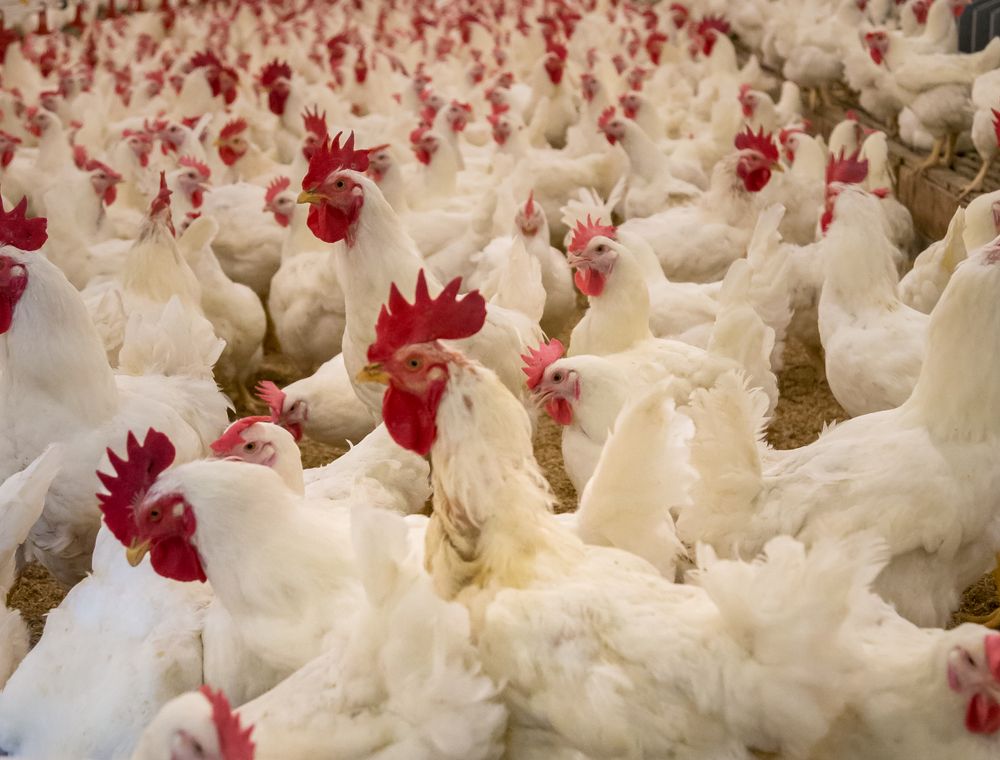
Short answer: Wild birds such as village weavers, sparrows, doves and pigeons come into poultry houses for spilt feed, open water and nesting space, and they can bring droppings, mites and disease with them. Use about 12 mm mesh on any opening small birds can reach, seal the larger gaps, clear spilt feed every day and cover open water. Keep your flock away from ponds and dams where wild waterfowl gather, because some of the most serious infections travel with them.
Key takeaways
- Droppings in feed and water are the main route wild birds carry into a house.
- Use about 12 mm mesh wherever small birds can reach, and 25 mm only where pigeons are the sole problem.
- Spilt feed draws wild birds faster than any other single cause, so clear it daily.
- Cover open water, and keep the flock away from ponds, dams and open drains.
- Net the open sides so air still moves, and keep the netting tight.
- Remove nests and roosting ledges once the birds have left them.
What the eaves look like at first light
At first light, stand under the eaves of a poultry house in Kasoa and watch the weaver birds dive into the gap above the door. Sparrows work the spilt feed under the hopper. A pair of pigeons sits on the ridge, and a crow waits on the fence for a chance at the bins. Nobody on the farm planned to feed any of them, and every one of them is there because the farm gives them something for nothing.
Wild birds come for spilt grain at the feed hopper, water in an open trough, warm rafters and the gaps under the roof sheets. A house that is open at the sides is an open invitation, and a house that has been open for years carries a resident population that is hard to shift.
The birds are not the enemy in themselves. A village weaver has every right to its nest in a tree. The problem is what the birds carry into the house and what they take out of it, and that is what the rest of this article covers.
The wild birds that come in, and what each one does
Not every wild bird is the same problem. Some take feed, some leave droppings where the chicks feed, and some are a risk because of where they have been. The table sets out the usual visitors on a Ghanaian farm and the fix that matches each one.
| Bird | How it gets in | What it brings or takes | Fix |
|---|---|---|---|
| Village weaver | Through open sides and gaps under the roof sheets | Takes spilt grain, nests at roof edges, drops faeces on feed | 12 mm mesh on the sides, and spilt feed cleared daily |
| House sparrow | Smallest gaps, around fan housings and inlets | Takes feed, carries mites from its nests, droppings in feeders | 12 mm mesh over every inlet and opening |
| Pigeon and dove | Ridge gaps, ledges and loose sheeting | Droppings on feed and perches, nests in the roof space | Close the ridge and ledges, and net the larger gaps |
| Pied crow | Around feed stores, bins and waste heaps | Opens feed bags, takes eggs and small chicks, spreads litter | Lock the feed, cover the bins and clear the waste |
| Ducks, geese and herons | Ponds, dams and open drains near the farm | Droppings in open water, and possible carriage of serious infections | Keep the flock away from open water, and fence it off |
Exclusion works better than trapping, and it leaves the birds alone. Trapping does not change why the birds came in, and the next one will simply take the empty place. Mesh, feed control and tidy premises remove the reason for the visit. Hawks and kites are a different job, and our guide to protecting chickens from predators covers them.
How wild birds spread disease into the house
The main route is droppings. A bird that roosts on a rafter over the feed hopper leaves its faeces exactly where the chicks and hens eat. A single dropping can carry bacteria and viruses, and a flock that picks at feed does not know which bits came from a bird. Water is the second route. A wild bird drinking from an open trough, or dropping into a storage tank, puts its load straight into the flock's drinking water.
Wild birds also bring parasites. Nests in the eaves and roof spaces often hold red mites and other pests, and they move onto the birds and into the litter when a nest is disturbed or abandoned. Clearing old nests belongs in the monthly walk, and it is a real part of the exclusion effort, not an optional tidy-up.
Some of the diseases carried by wild birds are serious. Wild waterfowl are a known reservoir for avian influenza, and pigeons can carry a strain of Newcastle disease. How much risk this brings depends on your area and the season, so ask your vet how far your birds should be kept from ponds and wild flocks, and follow that advice. Our avian influenza guide sets out the signs to watch for in the flock.
Mesh size and gaps: what keeps a sparrow out
Measure the gaps before you buy the mesh. A sparrow or a weaver squeezes through an opening a few centimetres wide, and a pigeon needs a much bigger one. Use 12 mm mesh, about half an inch, on any opening that small birds could reach. That is most openings on a Ghanaian farm. Reserve 25 mm mesh, about one inch, for places where pigeons or doves are the only problem and small birds cannot get in anyway. In practice that means 12 mm almost everywhere.
- Use welded wire or a rigid plastic mesh on the sides, not a light fly screen that tears in the wind.
- Fix the mesh to a frame so it stays flat when the wind gets up.
- Seal the gap between the mesh and the wall or roof with battens or flashing.
- Check round fan housings, pipe holes and cable entries, because those are the gaps people forget.
- Leave the inlets open for air, but cover them with mesh that a bird cannot pass.
Fine insect mesh keeps birds out, but it clogs with dust in the harmattan and cuts the airflow. Use a coarser bird mesh for the bird-proofing, and add a separate dust filter at the fan inlet if you need one. A house that cannot breathe is a bigger problem than a sparrow. If you are still planning the house itself, our cheap chicken coop guide shows how openings and airflow are usually laid out.
Netting the open sides without choking the air
Many poultry houses in Ghana are open-sided by design, because moving air keeps the birds cool. Netting those sides changes the airflow, so do not do it by blocking the openings outright. Use a frame with a mesh panel that covers the opening and still lets air through. Tension the panel so it does not sag. A sagging net bellies out, catches a bird's head, and leaves a loose bottom edge where a rat can get under.

Think about the wind as well. A tall, unsupported panel flaps and tears in a strong rainy-season wind, and a torn net is an open door. Put posts at the corners and at intervals along any long run, and check the fixings after every storm. A panel that comes loose at night can let in a whole group of weavers before anyone notices. Before you fix the netting on an existing house, check the ventilation plan in our broiler house setup guide, so the mesh does not undo the airflow you designed.
Keep the netting clear of the feeders and drinkers, or you will spend your mornings brushing it. Leave a hand's width between the net and the top of the feeder, so the birds inside can feed without pushing against the mesh and tearing it.
Spilt feed is the magnet, and it is the cheapest fix
A wild bird that finds spilt feed comes back every day. A few handfuls on the floor under the hopper can bring a flock of weavers and sparrows within days, and they return to the same spot each morning. Clearing spilt feed is the cheapest exclusion measure on the farm, and most farms do it only when they remember.
- Fit the feeder pan with a lip or a cover, so birds cannot pull feed out from the side.
- Keep feed bags closed and stored on a raised pallet inside a closed store, never stacked against an open side.
- Sweep up spilt feed at the end of every feeding, not when you get round to it.
- Repair cracked feeders and split bags on the day you find them.
- Store the sweepings in a sealed container, not on the floor or in a basket by the door.
Do the sum for your own farm. A pan that spills a single handful each day loses about a kilogram every few weeks, and the birds that collect it leave their droppings in the feed they leave behind. Work out what that kilogram costs at your current feed price, then compare it with the cost of a sealed bin.
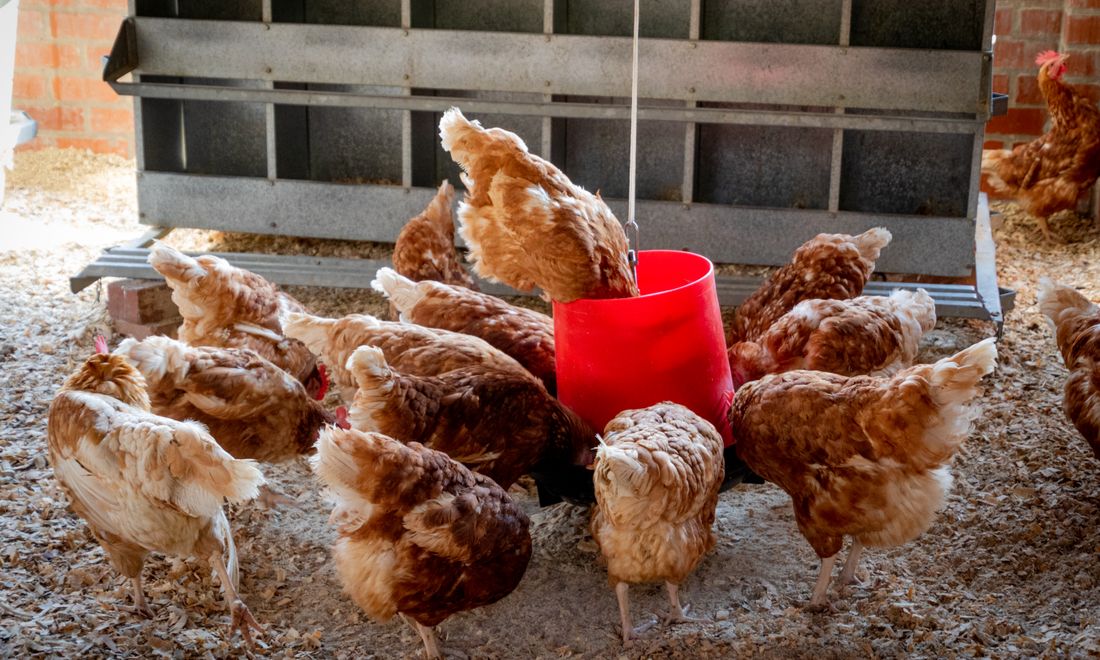
Spilt feed also draws rats. If you already have a rodent problem, read our rodent and snake control guide alongside this one, because the same feed clean-up solves both.
Water, header tanks and open troughs
Birds drink wherever water is open, and a wild bird is no different. An open trough outside a house, a bucket left under a leaking tap, or a tank with a broken lid all invite visitors. Once a bird has drunk from a tank, its droppings can fall into the same water, and nobody sees it happen.
- Use nipple or cup drinkers inside the house, which leave less water open to the air.
- Cover header tanks and storage tanks with lids that fit properly, and check them every week.
- Fix dripping taps and leaks so no standing water collects outside the house.
- Keep drains clear and covered with a grate, so puddles do not form on the ground round the houses.
If a tank has to stay open, fit mesh over the top and keep the tap well away from any perch a bird could use. A cover costs very little, and it protects the water your flock drinks every day of the year.
Need chicks for your next batch?
Send breed, number and town. We reply with price, hatch date and delivery cost in writing.
Roof ledges, ridge gaps and the nests in the eaves
Pigeons and weavers come in from above more often than people expect. Look at the ridge, the gap where the roof sheets meet the wall, and any ledge a bird can land on. A ledge is a roost, and a roost over the feed hopper is the worst place a bird can sit. Close those gaps before anything else on the roof.
Remove nests from the eaves and roof spaces once the birds have left them, and never while there are eggs or chicks in the nest. Close the gap behind the nest site with mesh or flashing, or the birds will rebuild in the same place within a season. Angled wire or bird spikes on the ledges stop birds from sitting there. Check the spikes regularly, because they bend, and they collect droppings and feathers as well.
Once the roof is sealed and the feed is clean, you can plan the next batch with confidence. Our broiler day-old chicks page explains what we supply, and you can place an order when the house is ready.
A monthly walk round the outside of the house
Walk round every house once a month with a torch, looking at the points where birds get in. Do the gaps in daylight, and the roosts at dusk, because birds are most active when you are least likely to be looking at them. A walk of ten minutes each month catches most problems before they become a flock problem.
- Walk the full perimeter, including the back of each house and the store.
- Check every mesh panel for tears, sagging and loose fixings.
- Look for droppings on rafters, ledges and above the feeders.
- Check fan housings, pipe holes and cable entries for new gaps.
- Look for nests in the eaves, and for birds coming and going at the ridge.
- Check the water tanks, the lids and the drinkers.
- Pick up any spilt feed and any dead wild birds, and note what you found in the farm book.
Keep a simple note of each walk: the date, the gaps found, and what was fixed. Over a few months the notes show you where the birds keep trying, and that tells you where to spend the next pound.
Ponds, dams and the waterfowl problem
Wild ducks, geese and herons gather on open water, and open water is common in many parts of the Central Region. A dam or pond next to your houses is a meeting point for birds that can carry avian influenza and other infections, and the contact often happens without anybody seeing it.
The steps are practical rather than dramatic. Fence the water so your birds cannot reach it. Keep feed and water stores away from the edge of the pond. Do not let people carry buckets or equipment from the pond straight to the houses, and do not draw pond water into your drinkers without a clear reason and your vet's agreement.
If you see large numbers of dead wild birds near the farm, or a sudden drop in your own flock, call your vet the same day. Do not wait for the signs to get worse first. The wider routine for keeping people, vehicles and rodents away from the flock is in our biosecurity guide.
Questions farmers ask
Are wild birds a big problem for a small farm?
They can be. A few birds at the feed each day take a steady share of the ration, and their droppings can carry disease into the flock. On a small farm, one open gap can change the whole picture, so the fix is worth the time even when the losses look small.
Is 12 mm mesh too fine for ventilation?
Not on its own, provided it is kept clean and the open area is large enough. Choose a mesh with a good open area, fix it to a frame that holds it flat, and clean it through the harmattan so dust does not choke the airflow. If the house needs more air, add a second inlet rather than removing the mesh.
Can I use netting to keep pigeons off the roof?
Yes, but a net on the roof needs proper support, and it must not hang low enough to trap birds that land on it. Fix the ledges and the ridge gaps first, because those are what keep pigeons nesting. Netting the roof is a second step, for when the ledges are sorted and birds are still coming in.
Should I scare wild birds away?
Scaring works for a few days, and then the birds learn the trick. Mesh, feed control and closed gaps last much longer. Use noise or movement as a short-term measure while you fix the cause, not as the plan.
Can I trap or kill the wild birds that come into the house?
Exclusion is the better route. Trapping does not solve the reason the birds came in, and some of the species around farms may be protected where you live. Ask your local veterinary or wildlife authority what applies to you before doing anything beyond exclusion.
Do wild birds cause avian influenza outbreaks?
They are one possible source, especially wild waterfowl, and they can carry the virus without looking ill. You cannot control wild birds completely, which is why you limit their contact with feed, water and litter. If you see sudden deaths or a sharp drop in your flock, call your vet straight away.
How do I stop birds nesting in the eaves?
Check the eaves each month and remove any nest that is empty. Close the gap behind the nest site with mesh or flashing before the birds return. If there are eggs or chicks in the nest, wait until the birds have left, then remove the nest and close the gap.


