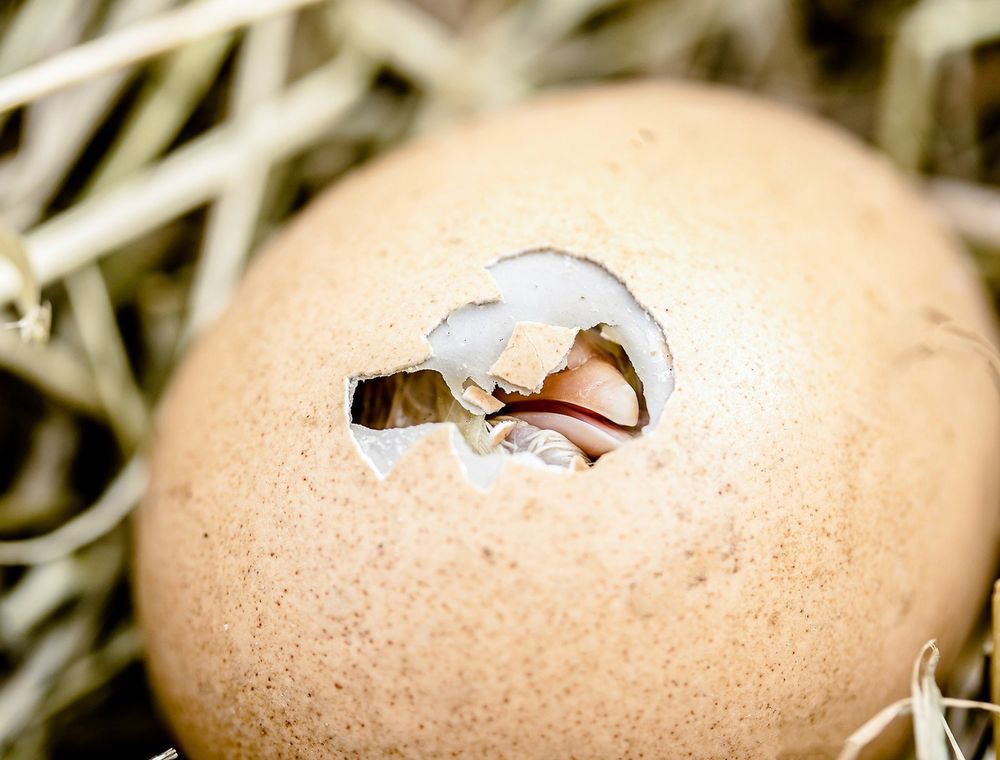
Short answer: Lockdown is the last three days before hatch, starting on day 18 for chicken eggs. You make the final turn that morning, lay the eggs flat in the hatcher if you have one, raise humidity to roughly 65 to 70 per cent and keep the lid shut. The chick is absorbing its yolk and breathing from the air cell, so every opening costs it heat and moisture. Most problems in these three days come from humidity that is too low or from opening the machine too often.
Key takeaways
- Day 18 is a handover: the turning stops and the chick takes over the last stage of the hatch.
- Raise humidity early on day 18 to about 65 to 70 per cent at egg height, and give it a couple of hours to climb.
- Keep the lid shut between checks. Each opening costs heat and moisture the chick still needs.
- Count the pips and log them, so a stalled hatch shows up as a stall rather than a surprise on day 21.
- Leave chicks in the hatcher until they are dry and moving, then move them in one trip.
Day 18 is a handover, not a finish line
Think of day 18 as the morning the job passes from you to the chick. Until then the machine has been doing the work a hen would do: warming the eggs, shifting them and holding the moisture. From day 18 the embryo is big enough to need its own breathing space, and it starts getting ready to leave the shell. Your part now is to stop getting in the way.
Lockdown is the name for the last three days before hatch, starting on day 18. Some keepers call it the hatch window. If you are still getting used to the machine, our day-by-day incubation guide shows where this falls in the full 21 days. Three things change on the same morning. The turning stops, the humidity goes up, and the lid stays closed as much as the machine allows. Miss one of those and the other two count for less.
What the chick is doing inside the shell
By day 18 the chick fills most of the shell and has turned its head toward the broad end, where the air cell sits. The air cell is a small pocket of air between the membranes. The chick starts breathing from it well before it breaks through, and it draws the last of the yolk into its body. That yolk becomes its food for the first day or two after hatch. A chick that has absorbed its yolk properly can go a day or two without feed. A chick that has not usually hatches weak and does poorly in the brooder.
Around days 19 and 20 you may see the first pip, a small hole where the beak breaks through the membrane into the air cell. That is normal. What you cannot see is the work inside the shell. The chick turns, presses its beak against the membrane, and tries to zip the shell open in a line around the egg.
Stopping the turner without shocking the eggs
Your last turn comes first thing on day 18, as our turning guide explains, and after that the trays stay put. If you are moving the eggs to a separate hatcher, do it gently, in one trip, and with the eggs laid flat rather than standing pointed end down. Warm the hatcher up before you transfer, so the eggs do not sit cooling in open air while you fetch the last tray. A transfer that takes ten minutes is fine. A transfer that drags on for forty, with the room cold, starts a bad hatch before it has begun.
If you hatch in the same machine you set in, lay the eggs flat on the tray where they already are, and do not lift them to see what is happening underneath. Lift only when you have a reason, and close the lid again within a minute.
Raising humidity: the number and how to get there
For chicken eggs, aim for about 65 to 70 per cent relative humidity at egg height during lockdown. That is higher than the 50 to 60 per cent most keepers use in the setter. The extra moisture softens the membrane so the chick can push through it. Get there by adding wet sponge to the tray, topping up the water if the tray has room, and closing the vents as far as the design allows. If the number will not climb, our guide to incubator humidity problems works through the common causes.
Make the change early on day 18. Raising humidity in a hurry in the last hours, with chicks already moving, means more lid-opening and more fiddling at the moment the machine should be still. The lid of the hatcher runs drier and warmer than the eggs, so take the reading down at egg level. The reading may take a couple of hours to climb, so do not pour water in at nine in the morning just because the number has not moved yet.
Running the hatcher a shade cooler, and why it warms up late
Many keepers run the hatcher a little cooler than the setter, around 37 to 37.2 °C, and the sensible habit is to hold the middle of that range rather than chase a degree either way. The reason is the chicks themselves. As they start to breathe air and move, they give off heat. A hatcher that drifts up in the last 24 hours with no change to the setting is often carrying the warmth of its own occupants.
Do not chase that rise with the thermostat. Wait for the temperature to settle, then check whether a vent has been left closed or a sponge has been wedged against the probe. A hatcher that stays above about 38 °C for hours is a real problem. It needs a fix, not a hopeful wait. If the power is the cause, because the machine rebooted or ran on a backup after a cut, our guide to incubating through power cuts explains what to check afterwards.
Reading the machine across the last three days
Most lockdown problems announce themselves through the hygrometer and the thermometer before anything shows on the eggs. The table below pairs the signs we look for with the likely cause and the first thing to try.
| Sign | Likely reason | First thing to try |
|---|---|---|
| Humidity below 55 per cent on day 19 | Too little wet surface, or a dry room | Add a wet sponge, top up the tray, close the vents a little |
| Temperature above 38 °C for several hours | Thermostat drift, a closed vent, or chick heat | Check the probe position and the vents, and do not open the lid |
| Papery, dry membrane at the air cell | Humidity was low earlier in the set | Raise humidity now, and leave the membrane alone |
| Many pips but no zipping by day 21 | Dry membranes, or chicks in a poor position | Check humidity first, then read the assisted hatching guide before touching anything |
| Chicks hatching early and weak | A temperature spike during lockdown | Log the spike, then check the setter record for an earlier problem |
Pipping and zipping: what normal looks like and how long it takes
A pip is the first hole through the shell, usually a small crack or dot, and it can show anywhere from about day 19 to day 21. The chick then rests, sometimes for hours, before it zips. Zipping is the chick rotating inside the shell and working its beak along a line until the top lifts away. It can take a few hours or most of a day, and a long rest is not automatically a dead chick.
Listen as well as look. A live chick that has pipped will often tap or peep faintly from inside. That sound tells you more than a stopwatch does, and it is the reason we ask keepers to stand still for a minute before they reach for the lid.
When to help a chick, and when to leave it alone
The rule we give most people is simple. Do not open a shell that has not zipped, and do not peel membrane off a chick that is still moving. A chick inside an unzipped shell is still drawing its last food from the yolk, and the membrane is protecting it. Our guide to assisted hatching covers the narrow cases where a light touch is justified, and it explains why most of them are better left alone.
If you do need to act, check the humidity first. Often the real problem is the room, not the chick. When you do open the lid, keep it open only briefly, and shut it before you decide on the next step.
Need chicks for your next batch?
Send breed, number and town. We reply with price, hatch date and delivery cost in writing.
Dead in the shell, and what the pattern tells you
Chicks that die in the shell during lockdown tell you more about the machine than about the chick. Look at where the chick lies. A chick with its head tucked under the right wing is in the normal hatching position, and one still there at the end was often too weak to turn. A chick with its head forced to one side, or with its beak poking out for a long time without a zip, may have been held by dry membranes.
Count the dead chicks in each group, and note the stage they died at. Several dead at the same stage points to a single event, such as a power cut or a temperature spike in the last 48 hours. A scatter of dead chicks at different stages points further back, to storage, the setter or the eggs themselves. Our temperature and humidity chart is a useful reference when you are working back through the log, and our setting guide shows what the first 24 hours should look like if you need to check the start of the set.
Lockdown in Ghana's harmattan and rainy season
The harmattan is the hardest time for a lockdown. The outside air can drop humidity a long way in a single day, and a box that held 60 per cent at noon can read 45 by evening if the vents are open and the water is low. Plan for it by checking the tray at noon and again before dark, and keep a spare tray of warm water at hand.
The rains are the reverse. High outside humidity pushes the hygrometer up quickly, sometimes past 75 per cent, and a box that is too wet can leave chicks sluggish and sticky. Ease off the sponge and the water a little, and make sure the vents can still move air. A hatch that is wet at the end is harder to dry than a hatch that is dry at the start.
A worked example: a dry night on day 18 into 19
Say the hatcher reads 58 per cent at 6 pm on day 18, after the change. By 9 pm the room has cooled, the reading has dropped to 49 per cent, and the first pips are showing. The keeper adds one wet sponge and tops up the tray. The reading creeps to 55 by 10 pm and to 64 by 6 am. Before the morning check, the keeper adds a second sponge, and the machine settles at 67. At 7 am on day 19 the first chick is zipping. The lid stays shut until noon, and by evening the first chicks are dry enough to move.
Notice what did not happen. The lid was not opened at 9 pm to look, and water was not poured over the eggs. Each of those would have cost more than the humidity gained, and the chicks would have paid for it.
A lockdown checklist for the three days
- Last turn: first thing on day 18, with the time written in the log.
- Lay the eggs flat in the hatcher, close the lid and leave it shut.
- Raise humidity early on day 18 to about 65 to 70 per cent at egg height.
- Check the temperature at dawn, noon, dusk and late evening, opening the lid no more than once per check.
- Keep a spare tray of warm water and a clean sponge within reach.
- Count the pips at each check and log the number, so you can tell progress from a stall.
- Leave the chicks inside until they are dry and fluffy before you move them.
After the hatch: the box, the chicks and what comes next
Once the chicks are dry, move them to the brooder in one trip. Leave the hatcher to cool with its lid open between hatches, and clean it out before the next set. The first hours after hatch are about warmth, water and feed in that order, and our first 48 hours guide picks up from there, with the order of warmth, water and feed.

If the hatch went well and you are planning the next one, our day-old chicks hatchery page explains how we handle chicks from the box to your farm. If the set did not go to plan, send your log to our WhatsApp line, +233 24 915 1503, and we will help you read it. If you would rather not manage the hatch yourself, our egg hatching service is the other route. Buying chicks instead? The order form is where to start, and the quote comes in writing first.
Questions farmers ask
What is lockdown in incubation?
Lockdown is the last three days before hatch, starting on day 18 for chicken eggs. You stop turning, raise the humidity and keep the lid shut so the chick can settle and hatch. Keepers use the word loosely, but the job is always the same: stop disturbing the eggs and make the air right for the final stage.
What humidity should I use during lockdown?
For chicken eggs, aim for about 65 to 70 per cent relative humidity at egg height. That is higher than the 50 to 60 per cent used earlier in the set. Read the hygrometer at egg height, and give the reading a couple of hours to climb after each change before you add more water or sponge.
Should I still turn the eggs on day 18?
The last turn happens early on day 18. After it, the eggs should not be moved again. Turning later disturbs the chick at the point where it needs to be settled, and it can knock a chick that is already in position back into a poor one.
Is it normal for chicks to rest for hours after pipping?
Yes. A chick may pip and then rest for several hours before it zips, and a long rest does not always mean a dead chick. Listen for faint tapping or peeping from inside. If nothing changes after about a day, check the humidity first, and only then decide whether any help is justified.
Should I open the hatcher to help chicks hatch?
Not in the normal course. Each opening drops the humidity and the temperature, and a chick inside an unzipped shell is still using the membrane and the yolk. Open only to check the humidity, to remove chicks that are dry and moving, or to deal with a clear problem. Assisted hatching has narrow cases, covered in our guide.
Why did my chicks hatch early and weak?
Early, weak hatches often follow a temperature spike during lockdown, or a setter that ran high earlier in the set. Check the log for readings above about 38 °C. Look at the setter record as well, because an early hatch can start with a problem in the first half of the incubation.
When can I move chicks out of the hatcher?
When they are dry, fluffy and moving about, usually some hours after the first hatch. Move them in one trip to a warm brooder, and do not leave them in the hatcher to cool. For the feed and water routine after that, see our first 48 hours guide.


