Short answer: Ghana's village chickens are not one breed but a range of local ecotypes, shaped by generations of farmers for heat, scavenging and brooding. Naked-neck, frizzle and feathered-leg types, along with small body sizes and many colour patterns, each carry a trade-off between tolerance and output. Knowing which traits your birds carry tells you what to keep, what to cross and what to leave alone.
Key takeaways
- A local flock is an ecotype, a population shaped by its surroundings, not a registered breed, so the birds vary from compound to compound.
- The naked-neck and frizzle traits are common in village birds and are linked with better heat tolerance, at the cost of some feather cover.
- Village hens go broody often and rear chicks well, which makes them a free incubator for a family flock.
- They scavenge well but grow and lay slowly, so give them only the supplement that closes the protein and calcium gap.
- Write down what you have before you cross anything. You cannot judge an improved flock against birds you have never counted.
What we mean by an ecotype
A breed has a written standard, a closed stud book and a breeder who keeps the lines apart. An ecotype is different. It is a population of birds that has been shaped by its environment, usually without any written plan, through generations of farmers keeping the birds they liked and losing the ones that did not survive. Village flocks across Ghana are ecotypes. Two compounds a few kilometres apart can keep birds that look and behave differently, because the owners have chosen differently and the birds have adapted to different feed, shade and disease.
We should be straight about our position. Halaal Farms hatches from European parent stock and imports from the Netherlands, Belgium and Germany. We do not keep village birds, so we cannot tell you what one particular compound's flock will do. What follows is what the birds are known for in general, and what farmers describe when they talk to us about their own birds.
Naked neck, frizzle and feathered legs
Three feather traits turn up often in village flocks. The naked neck is a patch of bare skin on the neck and upper body. Birds that carry it shed heat more easily, which is one reason it is common in hot tropical villages. The frizzle has feathers that curl outward and stand away from the body, so frizzled birds carry less insulation. The feathered-leg type grows feathers down the shanks. Some keepers like the look, and others find the feathers collect mud in the rains.
Each trait has a practical edge. A naked-neck bird is a good choice for the hottest, most open compounds, but it will feel the harmattan nights. Expect a naked-neck bird to fluff up and huddle on a cold morning, and give it a sheltered roost when the air turns dry and cool. A frizzled hen needs a dry, draught-free house in the cool months for the same reason. Feathered shanks need a dry run, and a wet week will show you the difference quickly.
Size, growth and the small village hen
Local hens are small. A mature hen is often somewhere around 1 to 1.5 kilograms, and cockerels are heavier but still well short of a commercial bird. They take a long time to mature, often six months or more before the first egg, and a village flock lays in a seasonal pattern rather than a steady stream.
Output depends heavily on how the birds live. Under scavenging, a village hen is often quoted at something in the range of 40 to 60 eggs a year, and the count drops whenever she is raising chicks. Those numbers are not a failure. They are what a bird that finds most of its own food, and does so without a ration, can be expected to deliver. The return is simply smaller than a commercial layer's, and the feed bill is far lower to match.
Broodiness and mothering: the local hen's real strength
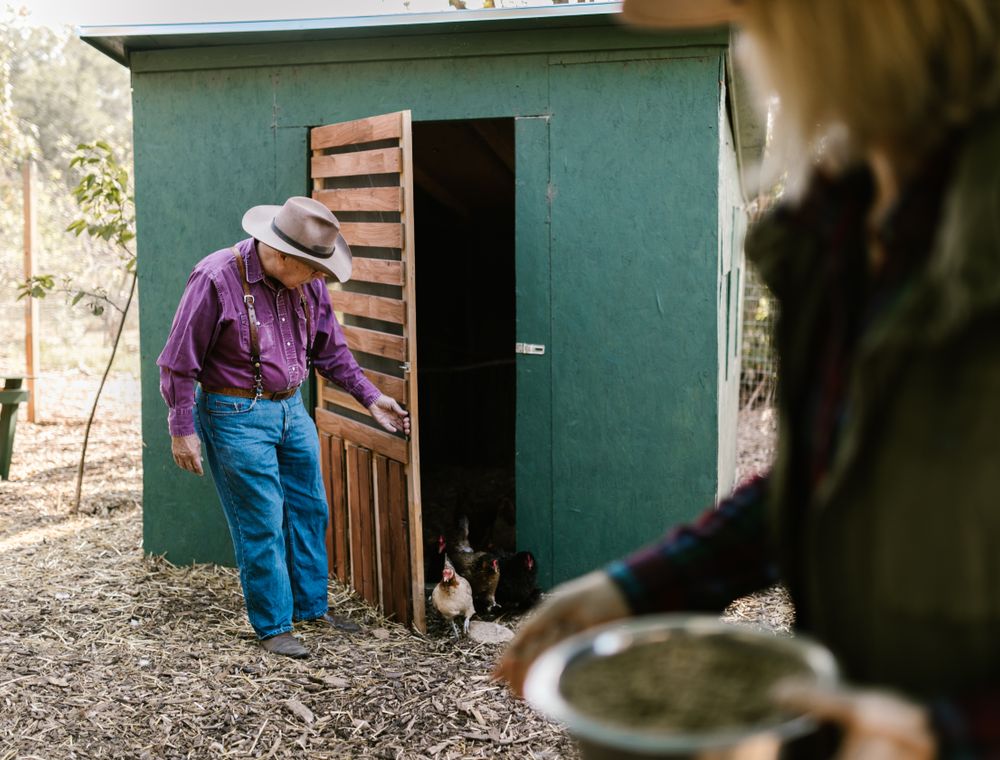
Where local hens earn their place is in brooding. A village hen goes broody several times a year, sits a clutch for about three weeks and then walks her chicks around the compound. She teaches them to scratch and to hide when a shadow crosses the yard. Many of those chicks survive because the hen is always close and always alert. A commercial hybrid hen is a poorer mother. She often does not sit at all, and when she does, the flock is rarely built around her.
If you have a broody local hen and a clean nest, you can let her do the work. Give her eggs of a size she can cover, keep the nest clean and dry, and put food and water within a few steps of the nest. A hen that is left to sit with a chance to eat will hatch and rear chicks with much less help than most people expect. The point is to work with what your own flock already does. Our improved local breeds article covers how to keep the best hatchers in the line.
Colour, camouflage and why it still matters
Many village birds are speckled, barred or red-brown, and the colour is not an accident. Mottled plumage blends into dry grass and litter, which helps against hawks and kites overhead and against cats and mongooses on the ground. A plain white bird is a clear target in an open compound, and keepers who lose birds to predators often notice that the lighter birds go first.
That matters when you think about crossing. An improved bird that is bright white or black may look more productive on paper, but on a scavenging farm it may be the one that disappears. Note which colours survive in your own flock, and count how many of each you lose over a year. That count is more useful than any colour chart.
What a village flock eats, and what it lacks
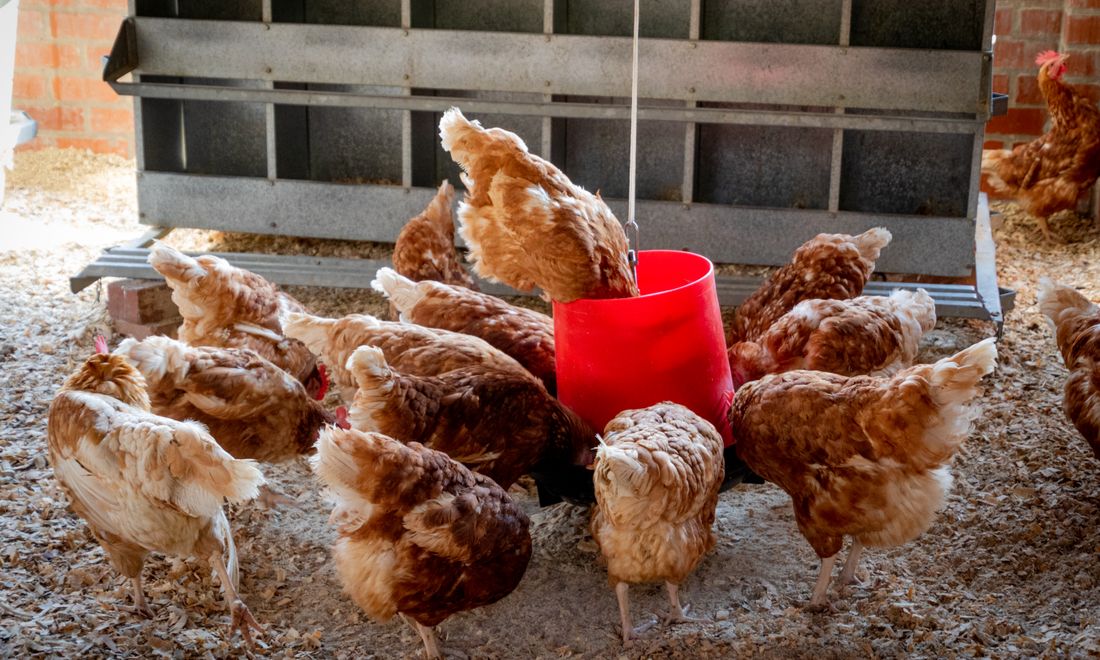
A scavenging flock finds insects, termites in the rains, seeds, green shoots and kitchen scraps. That is a useful diet for a hen, and it keeps the feed bill low. The gap is protein and calcium. Insects thin out in the dry season, and scraps rarely add up to the right ration. Lay drops first, then the shells get thin and the chicks grow slowly.
The fix is a small supplement, not a full commercial ration handed out on a schedule. A small daily measure of a balanced feed, given in the morning so the birds come in and eat, closes most of the gap without ruining the foraging. Keep the scraps simple: cooked grain, greens and cassava peel in small amounts. Leave out salty scraps and any feed that has gone mouldy, because mould in feed is a health problem for scavengers too. Our kitchen scraps and forage guide sets out what is safe to feed.
Disease: where village birds are most at risk
Village flocks often go unvaccinated against Newcastle disease, and an outbreak can take a whole compound in a few days. Some local birds survive outbreaks that wipe out exotic flocks, and keepers often credit natural resistance. The honest answer is that survival is uneven. A flock that came through one outbreak is not protected from the next, and a new bird brought in from outside can carry the virus in with it.
Talk to your vet about a vaccination plan for village birds in your area, and do not rely on resistance to see you through. Worms are the other steady drain. Birds that scratch over the same ground pick up worms season after season, and the signs are thin, poor birds that still eat. Our Newcastle disease prevention guide and the worms and deworming article cover the basics. Follow your vet's advice on any treatment, and never guess a dose.
Need chicks for your next batch?
Send breed, number and town. We reply with price, hatch date and delivery cost in writing.
Improving a local flock without losing what works
Improving is not the same as replacing. The aim is to keep the hardiness and the brooding while lifting weight and lay. The simplest route is to bring in a good improved cockerel and let the local hens mate with him. The first cross usually lifts size and lay. The second cross is less certain, and by the third the flock is mostly improved birds with much of the hardiness diluted.
Do not start by buying a cockerel. Start by writing down what you have. Record each hen's colour, size, the months she lays, whether she goes broody, and how many chicks from each clutch reach six weeks. A baseline makes the cross measurable, and without it you will never know whether the change helped. The local vs exotic comparison sets out where each type wins, which helps you decide how far to push the cross.
The trade-offs, side by side
The table reads as trade-offs, not a scoreboard. The village ecotype is the baseline. The first-generation cross sits in between, and a commercial hybrid is the far end of the range. The figures are approximate and depend on feed, housing and health.
| Trait | Village ecotype (typical) | First-generation cross | Commercial layer |
|---|---|---|---|
| Mature hen weight (approx.) | 1 to 1.5 kg | In between | About 2 kg (brown or white layer) |
| Eggs in a laying year (approx.) | 40 to 60 under scavenging | Higher, very variable | 250 to 300 or more in commercial strains |
| Broodiness | High | Moderate | Very low |
| Feed need | Low, mostly scavenged | Moderate | Highest, on a full ration |
| Disease resistance | Uneven, often some natural tolerance | Often less tolerance than the local parent | Depends on a vaccination programme |
Read across the row for disease. The cross is where people get caught. A bird that grows faster and lays more can lose some of the resistance that kept the village flock alive. That is not a reason to avoid crossing. It is a reason to vaccinate on your vet's advice before you cross and to keep the new birds separate for a few weeks.
Mistakes when working with local birds
- Crossing without records, so you cannot tell whether the change helped.
- Bringing in an improved cockerel that is sick or unvaccinated, which can spread through the whole flock.
- Overfeeding scavengers, so they get fat and stop foraging.
- Keeping too many cockerels with a few hens, which wears the hens down.
- Expecting village-level output from an improved bird that is fed on scraps alone.
- Letting a few predators take the lighter birds every month and blaming the feed.
A starting checklist for a local flock
- Count and mark your birds. Note colour, sex and which hens are broody.
- Keep records of eggs, hatch and chick survival from the first season.
- Build a secure night shelter that keeps out cats, dogs and mongooses.
- Ask your vet about Newcastle vaccination for village birds in your area, and keep the dates.
- Give a small daily feed in the morning to bring the flock in and cover the protein and calcium gap.
- Keep any new bird apart from the flock for a few weeks before it joins.
- Settle if the local line stays pure or gets improved, before you buy anything.
If you decide to improve the flock with commercial stock, our day-old chicks page sets out what we supply and how it arrives. Send us your numbers on WhatsApp at +233 24 915 1503 and we will tell you straight which birds fit the plan. Our breeds page is the place to start, and the imported day-old chicks page explains where our parent stock comes from. When you are ready, the order form is there, and the FAQ answers the common questions about delivery and payment.
Questions farmers ask
What is a local chicken ecotype?
An ecotype is a population of birds shaped by its environment, not a registered breed with a written standard. Ghana's village chickens are ecotypes. They differ from one compound to the next, because farmers choose different birds and the birds adapt to local feed, shade and disease. Their traits are useful, but they are not uniform.
Why do some village chickens have bare necks?
The naked-neck trait is a patch of bare skin on the neck and upper body. Birds that carry it shed heat more easily, which helps in hot, open compounds. The trade-off is less feather cover, so those birds need a sheltered roost in the cool, dry harmattan nights to stay warm.
How many eggs does a local hen lay?
Under scavenging conditions a village hen is often quoted at around 40 to 60 eggs a year, and the count drops while she is rearing chicks. Those figures reflect a bird that finds most of its own food. Keep your own record for a full year so you know what your birds actually produce.
Are local chickens good mothers?
Often, yes. A village hen goes broody several times a year, sits her clutch for about three weeks and then rears the chicks with close attention. Many chicks survive that way. Give a broody hen a clean, dry nest and food and water nearby, and let her do the work.
Can I improve my village chickens by crossing them with a commercial bird?
Yes. A first cross usually lifts size and lay. The second cross is less predictable, and the hardiness can dilute with each generation. Record your birds before you cross, vaccinate on your vet's advice, and keep new birds apart for a few weeks before they join the flock.
Do local chickens need vaccination?
Yes, especially against Newcastle disease, which can wipe out a village flock in days. Local birds can show some natural tolerance, but that is uneven and no protection against the next outbreak. Ask your vet to set up a vaccination plan for the birds in your area, and keep the records.
Is it worth keeping local birds for meat?
It can be, for a homestead that wants a few birds for the table and does not need speed. Local birds are small and slow to mature, so one bird takes a long time to reach a useful weight. If meat is the main aim, a faster dual-purpose bird or a broiler will give a better return per kilogram of feed.


