
Short answer: Layer mash is a complete ready-mixed feed, while concentrate is a protein, mineral and vitamin supplement that you mix with maize and other energy sources yourself. On our worked numbers the two cost almost the same per egg, so the choice turns on labour, storage, flock size and how steady the maize price stays. Ready mash suits small flocks and busy farmers, and concentrate suits larger flocks that can buy maize in bulk and weigh accurately.
Key takeaways
- Layer mash is a complete feed. Concentrate is a supplement you mix with maize, so the mix is only as good as your weighing.
- Per egg, the gap between ready mash and a home mix is often smaller than a single cedi swing in the price of maize.
- A home mix needs a proper scale, a clean mixing floor, a dry store and a written recipe.
- Judge both options by eggs per hen and feed cost per egg, not by the price printed on the bag.
- Change feed in a planned blend over several days, and keep egg counts for a week before and after.
What the two names mean on the shop floor
Walk into a feed shop in Kasoa or Accra and you will hear two names for layer feed. Layer mash is the ready-mixed feed. It arrives as one finished product with maize, protein, minerals and vitamins in the right proportions, and the hen needs nothing else from you except water. If you are starting with layer day-old chicks, that is the feed most new farmers begin with. Concentrate, sometimes sold as layer concentrate or a laying premix, is a supplement. It carries the protein, calcium, phosphorus and micronutrients, but not the bulk energy. You buy the maize, you mix it in, and the bag tells you the proportions.
That difference looks small until the bag is open. With a ready mash you pay for the mixing and the convenience. With a concentrate you pay for the protein and minerals, and you do the mixing yourself. The concentrate is not cheaper because it contains less. It is cheaper because you can buy the maize in bulk when the price is right.
Check which one you have before you feed it. A farmer who mixes concentrate with maize and then feeds it as if it were a finished mash will under-feed the hen on energy. The eggs fall away quietly over three weeks, and nobody notices until the crates are short.
What ready mash gets you
Ready mash is a fixed formula. The miller has weighed each ingredient, mixed it to a set recipe and sealed it in a bag that should state the protein and energy figures. For a small flock that consistency is the biggest gain. You do not need a scale, you do not need to hold maize in quantity, and a bad mixing morning cannot ruin a batch.
The price per bag is higher, and you have less say over the recipe. If the mill changes its maize or its soya supplier, you feel it in the eggs before you read about it anywhere. Keep the batch number of each bag, and note the day you switched. If shell quality drops or the hens look flat a few days after a bag change, the bag is the first suspect.
Ready mash also suits busy farmers. If you have a job, a second farm or a trading business on the side, a ready feed is one less thing to go wrong on a Saturday when nobody is around to check the scale.
What concentrate asks of you
Concentrate is cheaper per kilo of finished feed when maize is cheap, but it asks more of you. You need a scale that weighs in small steps, not a hanging spring scale that wobbles. You need a clean, sealed mixing floor, a shovel you use for nothing else and a dry store for the maize. And you need the discipline to mix the same way every time.
Still choosing a laying bird? Start with our breed range. The most common failure is the ratio drifting. A farmer gets tired, guesses at a bucket of concentrate, and the next batch goes in with a little more maize than it should. The hens do not complain. Their egg count tells you in the second week. Mix in batches you can use within two or three weeks, and weigh every batch, even when you think you already know the recipe by heart.
A worked cost per egg
The numbers below use round figures, so you can follow the arithmetic and put in your own prices. They are illustrations, not market quotes. The ready mash is priced at GH₵8 a kilo. The home mix is 30 per cent concentrate at GH₵12 a kilo, 60 per cent maize at GH₵6 a kilo and 10 per cent wheat bran at GH₵4 a kilo.
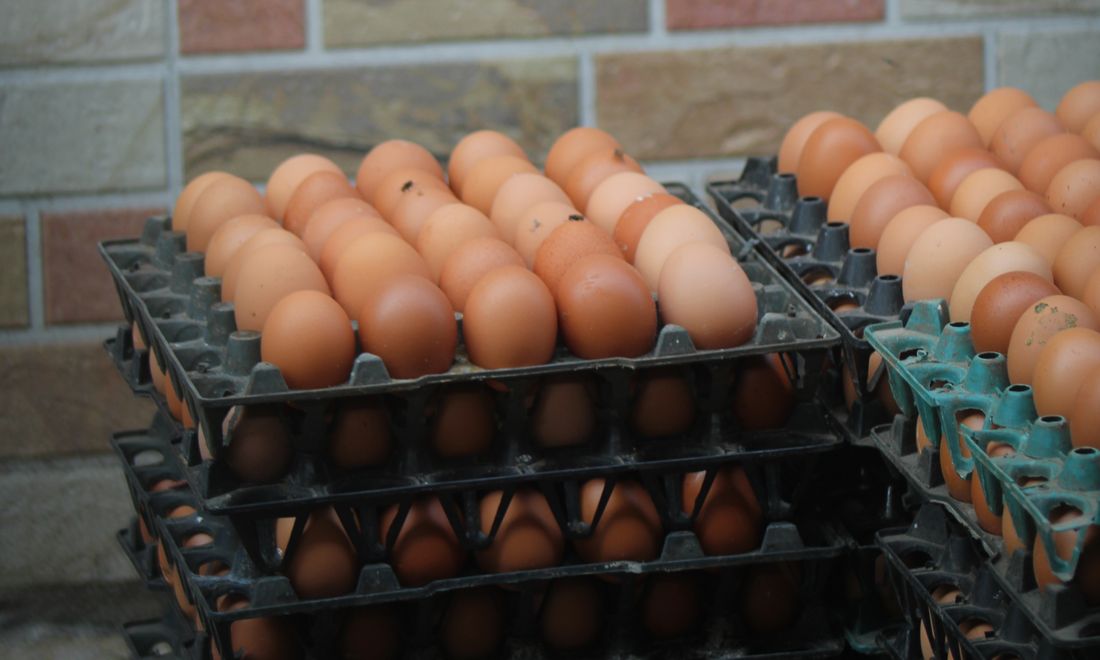
Take a hen that eats about 110 grams a day and lays 20 eggs in a 30-day month. That is 3.3 kilos of feed per hen per month, whichever option you choose.
| Item | Ready layer mash | Home mix with concentrate |
|---|---|---|
| Feed cost per kilo | GH₵8.00 | GH₵7.60 |
| Feed per hen per 30 days | 3.3 kg | 3.3 kg |
| Feed cost per hen per 30 days | GH₵26.40 | GH₵25.08 |
| Eggs per hen per 30 days (assumed) | 20 | 20 |
| Feed cost per egg | GH₵1.32 | GH₵1.25 |
The home mix comes out seven pesewas cheaper per egg. That is a real saving, but a small one. Now look at what happens when maize moves. If maize rises by GH₵1 a kilo, to GH₵7, the home mix costs GH₵0.60 more per kilo of feed. Across 3.3 kilos that adds about GH₵1.98 per hen per month, or nearly ten pesewas per egg. The advantage is gone, and the home mix is now the dearer option.
What the mix does not show
The table leaves out the cost of your time, and time is real. Weighing and mixing 300 kilos takes a morning for one person. It also leaves out spillage and dust, which can waste several per cent of a batch on a windy day, and the maize you cannot use because it has gone off in the store. For the feeding side of a laying flock, our layer feeding guide is the better read.
It also leaves out calcium. Some concentrates leave out the coarse calcium a laying hen needs, or they carry less than she needs for strong shells. Read the bag. If the calcium is not declared, ask the supplier and add a separate source exactly as the mixing guide tells you. A layer short of calcium lays soft or thin-shelled eggs, and that money does not come back.
How to mix a concentrate ration without making a mess
A good mix is a repeatable one. The steps below are what we would expect a careful farmer to follow every time.
- Weigh every ingredient on the scale you will use, not on a guess.
- Spread the maize on a clean, sealed floor in a thin layer.
- Add the concentrate on top and shovel the whole pile over three times, from one side to the other.
- Add the bran last and turn the pile once more.
- Bag the batch, label it with the date and the recipe, and keep a 500 gram sample sealed for the record.
Mix a batch the flock can finish within a fortnight. A pile of mixed feed in a humid store is a pile of mould within days, and it will not look bad until the eggs start to fall.
Reading the flock after any switch
Whatever you feed, watch the birds for a week before and a week after the change. Count the eggs each day and weigh a few eggs once or twice a week. Note how much feed goes into the trough, and how much comes back out as waste.
If lay drops by more than a few per cent and does not recover within three or four days, look at the feed first: the ratio, the maize, the batch number. A drop that comes with lots of soft shells points to calcium or to a ratio that has drifted. Our egg production guide lists the other common causes. A drop with hens sitting in the nest box longer than usual and loose droppings may be a health problem, so take that to your vet.
Need chicks for your next batch?
Send breed, number and town. We reply with price, hatch date and delivery cost in writing.
When ready mash makes more sense
Ready mash wins for smaller flocks, where the labour and the risk outweigh the saving. In our view a flock of a few dozen layers, kept by a farmer who works a full day away from the house, is better on ready mash. The saving on a home mix will not pay for the scale, the store and the Saturday mornings.
It also wins when maize prices are jumping. If you buy in small amounts at the market, you pay the swing without any bulk discount. And it wins for a new farmer. Learn to read the birds on a ready feed before you take on the mixing, because the mixing is where new farmers make most of their mistakes.
When concentrate pays
Concentrate starts to pay when you have the scale, a dry store and enough hens that one bag of maize is a few days of feed rather than a few weeks. It pays more when you can buy maize in bulk after the harvest, when the price is low, and store it dry enough to keep it for weeks.
Ghana's maize prices usually move with the seasons. They tend to ease around the main harvest and climb in the months before the next one. Check the market in your own area for a few weeks before you commit, and write down the price of your last three purchases. A home mix made from maize bought in the dip is a different business from one bought at the top. Our guide to maize in poultry feed goes through the seasonal side in more detail.
If you go this way, keep the recipe steady. Change it only when you have a reason, and record each change with the date.
Changing from one to the other
Moving between ready mash and concentrate is a feed change like any other. Plan it, blend it and measure it. The steps below keep the eggs steady through the switch.
- Count the eggs for seven days and write the average down.
- Plan the changeover over four days, blending the old and new feed.
- Keep the old bag until the new feed has run for a full week.
- Recount eggs and check shell quality on the same days each week.
- Make a second change only after you have three clean weeks of data.
Most farmers change feed for the wrong reason, which is a price they saw on a board in the morning. Make the change for a reason you can measure, then give it time to show its effect. If you are starting from scratch with a new flock, our point-of-lay pullets guide explains what to feed before the first egg, and ordering your pullets early lets you plan the feed switch around their first eggs.
Questions farmers ask
Is layer mash the same as layer feed?
In everyday talk, yes. Layer mash is the common name for a finished laying feed in mash form, and the bag tells you what is inside. Some layer feeds come as pellets or crumbles. The form changes how the bird eats, but the nutrition should be on the label. Read the protein, energy, calcium and phosphorus figures rather than relying on the name.
Can I feed concentrate to chicks or broilers?
Not on its own, and never as a layer supplement. Chick and broiler concentrates have very different protein and energy levels from a layer product. Use a concentrate made for the bird and stage you are feeding. If you cannot find the right one, buy a ready phase feed and leave the home mix for later. Our <a href="/blog/broiler-starter-grower-finisher-ghana/">starter, grower and finisher guide</a> explains the phases.
How many hens make a home mix worth it?
No single number works for every farm. The deciding factors are your scale, your storage and your time. A flock big enough that you buy maize by the tonne and mix at least every fortnight usually finds the home mix pays. Work out the cost per egg for both options, then add the hours you spend. Our <a href="/blog/when-do-layers-start-laying-ghana/">guide to when layers start laying</a> helps you plan the timing of that first mix.
What if I run out of concentrate halfway through a batch?
Do not stretch the mix with extra maize and hope for the best. Feed a finished layer feed for a few days while you get the concentrate, and blend the change over several days so the hens do not get a sudden shock. Eggs may dip slightly in a short gap, which is normal, but a clear fall that lasts more than a few days needs a look at the feed.
Is ready mash always the better quality?
No. A poor ready feed can be worse than a careful home mix. Quality depends on the miller, the ingredients and how the bag has been stored since it left the factory. Buy from a source that gives batch numbers, check each bag for mould and dust, and watch the hens. If the eggs drop after a new bag, change supplier and keep the old bag as a record.
Do hens need oyster shell as well as mash?
Some farmers offer coarse oyster shell in a separate dish beside the mash, so the hen can take extra calcium when she needs it, especially late in the day. Whether you need it depends on the calcium in your feed. Check the bag, and ask your supplier how much extra calcium to offer. Do not guess the amount, and follow the mixing guide. Our <a href="/faq/">frequently asked questions</a> page covers a few more basics.
How do I know my home mix is accurate?
Weigh the first batch twice, keep the written recipe on the wall, and send a sample for a protein test if you can. Egg count, shell quality and the hens' condition tell you the rest. If the eggs and the birds look right over three weeks, the mix is probably right. If they do not, go back to the scale before you change the recipe.


