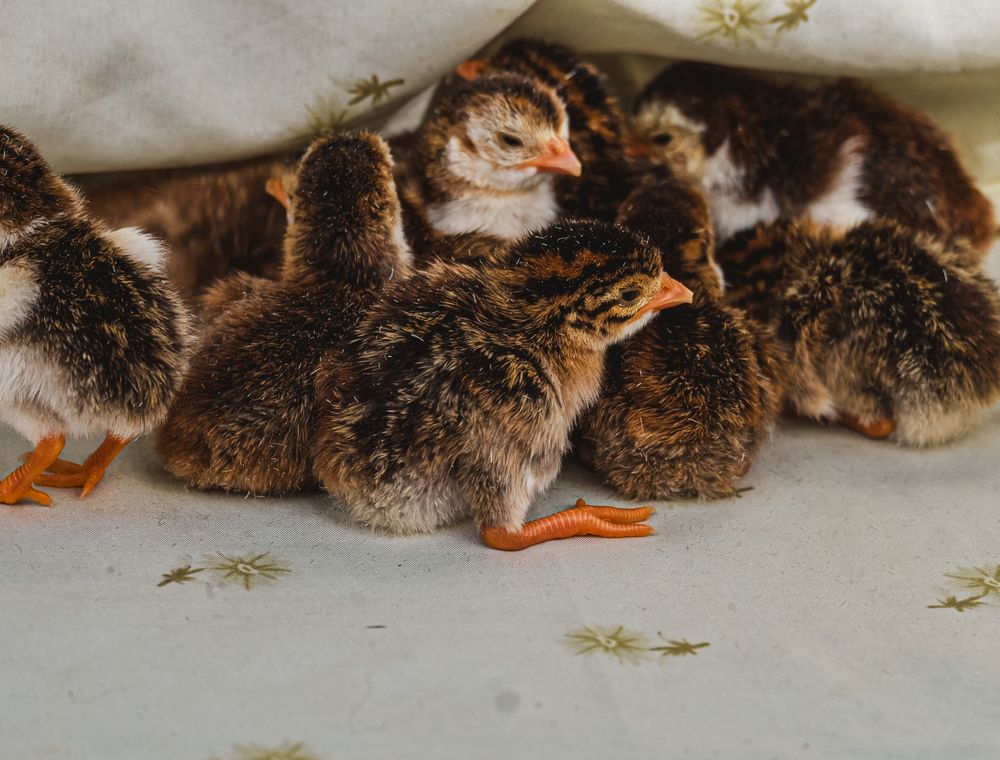
Short answer: Guinea keets do best on a game bird or turkey-style starter in the 24 to 28 per cent protein range, with about 26 per cent as a working target, then a grow-out ration near 20 per cent until the birds are close to adult size. Adult breeders and layers need 16 to 18 per cent with calcium supplied separately, and a pot of clean grit once they forage or eat grain. Feed is covered, dry and placed where the birds cannot scatter it, because guinea fowl waste more than they eat if you let them.
Key takeaways
- Keets need a starter in the 24 to 28 per cent protein range. A chick starter at 20 to 22 per cent is too thin for them in the first month.
- Move to a grow-out ration near 20 per cent once the keets are feathering well, and keep the change gradual.
- Laying guinea fowl need 16 to 18 per cent protein and calcium in a separate dish, and they need grit once they forage or eat whole grain.
- Use covered feeders. Guinea fowl scratch and scatter feed, and an open trough can lose a third of a bag in a week.
- Count feed per egg for the breeding group, not just feed per bag, so you can judge whether the flock pays.
Keets are the most fragile birds we sell
Guinea fowl keets are small, nervous and quick to chill. Our guinea fowl farming guide covers the whole life of the flock, and this one is only about the feed. A keet that is cold, dehydrated or crowded will stop eating long before it shows any other sign of trouble. Most of the feed problems we see on keet batches are really warmth and water problems dressed up as feed problems, so the feeding routine starts with the brooder.
Give the keets a warm, dry brooder with a clean floor covering, and fresh water in shallow drinkers from the first hour. The water should be cool enough to drink, and the drinkers should be set so that a keet can stand at the edge without slipping in. Put the feed in shallow trays on paper or clean litter, where the keets can see it and reach it without climbing.
Look at the keets twice a day in the first week. You are looking for birds that are huddled to one side, birds that stand with their wings drooping, and birds that have not touched the feed. Those three signs mean something is wrong with the brooder, and a different feed will not fix it.
The first four weeks on a 24 to 28 per cent starter
Keets need a starter with a protein level in the 24 to 28 per cent range, and we use about 26 per cent as the working target when we talk to farmers. Many keepers buy a game bird starter or a turkey starter that sits in that band. A standard chick starter at 20 to 22 per cent is usually too thin for keets, and the birds grow slowly and lose feathering on it.
The feed should be fine. Keets cannot crack hard pellets, and a coarse crumble will leave half the feed in the tray. A fine crumb or a mash that the birds can peck up easily is what you want for the first two weeks. Move to a slightly coarser crumb once they are feeding confidently.
Do not expect keets to eat a lot in the first days. A keet eats in small, frequent bursts, which is why the feed should be fresh and the trays should be cleaned often. Feed that sits in a tray for a day gets dusty, and dust is a route into the gut for the sort of problems you want to keep out of the brooder.
If you have a few keets from a hatch and you are not sure which feed to buy, ask your supplier for a game bird starter and check the protein on the bag. Our guinea fowl keets page explains what we supply and how the birds arrive, and the feed plan here is designed to follow on from that.
Weeks four to twelve: the grow-out ration near 20 per cent
Between about four and twelve weeks, most guinea fowl move to a grow-out ration near 20 per cent protein. The birds are building frame, flight feathers and the first of their adult weight, and the ration has to support that without pushing them to fat. Guinea fowl are lean birds by nature, and birds on a rich ration often stop ranging and spend the day by the trough. Our turkey farming guide makes a similar point about heavier birds that grow on a long finisher run.
Change the feed gradually. Mix the starter and the grow-out for three or four days, then move to the new ration alone. A sudden change in texture or colour can drop intake for a day or two, and a keet that eats less for two days in the middle of the growing period will be smaller at sale.
Watch the birds rather than the calendar. Keets that are feathering well and running about the brooder are on track. Keets that are feathering slowly, or that sit in the corner while the others feed, need a closer look at feeder space and the ration. Weigh a sample of ten birds once a week and write the average down. A flat line for two weeks is a signal to check the feed before anything else.
Guinea fowl can take a little longer than chickens to reach their final size, so do not judge a bird by its weight at week eight. Judge it by its weight trend and by how it moves when you walk past the pen.
Adults and laying hens: 16 to 18 per cent with a separate shell dish
Once the birds are adults, a maintenance or layer ration around 16 to 18 per cent protein is the usual choice. A laying hen needs calcium for the shell, and the ration should carry roughly three and a half per cent of it, well above what a grow-out ration offers. Put oyster shell in its own dish beside the feed, so each hen can take what she needs.
Guinea fowl eggs have hard, thick shells, and they lay well when the calcium supply is steady. The shell dish should be filled every morning and watched through the day. A dish that empties by midday is a warning that the layer ration is short on calcium. A dish that stays full tells you the ration is covering the need, and that is useful information in the rains, when the flock forages and the intake changes.
Keep the adults on the same ration through the laying season. A change of brand or texture in the middle of a lay can knock the hens off their rhythm for a week, and a few days of missed eggs is a cost that does not show up on the feed bill.
Foraging: what a guinea fowl finds in the rains and what it misses in the dry
Guinea fowl forage hard. Given a patch of grass, a few termites, seeds and greens, they will find a good share of their diet on the ground, and in the rains the insects are plentiful enough that a free-ranging flock can cut its feed bill noticeably. That is one of the reasons guinea fowl suit a small Ghanaian yard with some room to roam.
The dry season changes the picture. When the grass dies back and the insects go down, the birds eat more from the trough and less from the ground. A farmer who has been feeding a little in the rains can find the flock thin by the end of the harmattan if the trough is not topped up. Keep the trough full at the level the birds need in every season, and count the foraging as a bonus.
Guinea fowl will also raid other people's crops and scratch up seedbeds. If your flock ranges beyond your fence, that is a cost to add to the feed sum, even if it does not show on the feed bill.
Our free-range feeding guide covers the same ideas for chickens, and most of the advice on keeping the trough full carries across. Ducks forage in a similar way, and our duck feeding guide shows how the same trough rules apply to waterfowl.

Grit for the gizzard, and when guinea fowl need it
Guinea fowl grind their food in the gizzard, and the gizzard needs small hard particles to do that job. Those particles are grit, and they are not optional once the birds eat whole grain, scraps, seeds or outdoor forage. A flock that eats only a fine commercial starter may get by without much grit for a while, but a flock that ranges in the rains needs a pot of clean grit beside the feed at all times.
Use insoluble grit, sized for poultry, and not shell or chalk. Shell dissolves in the gizzard and does not grind, and chalk is not enough to do the job. Put the grit in a separate, shallow pot that the birds can reach, and top it up when it looks low. Keep it dry, because wet grit clumps and the birds ignore it.
Keets do not need much grit in the first weeks, but do not leave them without it once they start pecking at litter and scraps. A keet that eats a lot of litter can end up with a crop full of material that does not pass easily, and that is a problem you want to avoid before the birds are big enough to need grit in quantity. Our grit and shell article sets out what to use.

Covered feeders, because guinea fowl scatter feed
Guinea fowl scatter their feed. They peck at a mouthful, throw their heads about, and move on, and an open trough left in the yard will lose a large share of the bag in a week. The same birds that waste feed also knock it into the mud, and the damp feed then goes mouldy in the rains.
Use a covered feeder with a lip or a hood, placed under cover and off the wet ground. A simple box feeder with a slatted top works well for adults, and a shallow tray with a cover works for keets. The birds should be able to reach the feed from the front, but the feed should not spill out when they push their heads in.
Check the feeder every morning. If you find feed on the floor under the trough, the feeder is wrong for the birds. Lower the feed level, change the lip, or add a cover before you change the ration. A ration does not waste feed. A feeder does.
Need chicks for your next batch?
Send breed, number and town. We reply with price, hatch date and delivery cost in writing.
What the breeding group costs in feed per egg
A breeding group is where the feed bill becomes a business question. If you are buying fertile eggs or keets to build the group, our fertile eggs page sets out what is available, and our hatching guide explains the incubation side. Many keepers run one cock with three or four hens, which is a common starting point for guinea fowl breeding, though the right ratio depends on the birds and your own hatch results. The sum below shows how to turn the feed bill into a cost per egg, and it uses assumed numbers that you should replace with your own.
We have assumed each guinea fowl eats about 140 grams of layer ration a day, and we have assumed a feed price of GH₵3.80 per kilogram for this example only. Take one cock and four hens, so five birds. That is 700 grams a day, or 21 kilograms over a 30-day month. At GH₵3.80 per kilogram, the monthly feed bill is GH₵79.80.
Now the eggs. This example assumes two eggs a hen a week across the group, which is a conservative figure for a season. Four hens at two eggs a week gives eight eggs a week, or about 35 eggs a month. Dividing the monthly bill by the eggs gives about GH₵2.28 of feed per egg, before fertile egg sales, housing, labour and hatching costs.
If you are selling fertile eggs, the same sum tells you whether the price holds up. Fertile eggs are priced per egg in our own list, so the margin depends on how many of those eggs hatch, and how many of the keets live to sale. Track those numbers from the first batch, and you will know within a season whether the group pays.
Guinea fowl feed by stage at a glance
The guinea stages are set out below. Protein figures are typical ranges, not a promise from any one bag, and the birds' own weights and egg counts should overrule the calendar.
| Flock stage | When | Ration | Crude protein | Practical note |
|---|---|---|---|---|
| Keets | 0 to 4 weeks | Game bird or turkey-style starter, fine crumb | 24 to 28%, working target 26% | Warmth, water in shallow drinkers, feed fresh twice a day |
| Grow-out | About 4 to 12 weeks | Game bird grower | About 20% | Change over three or four days, weekly weight sample |
| Pre-lay adults | Near adult size, until the first egg | Layer or maintenance ration | 16 to 18% | Calcium introduced, shell dish set up before the first egg |
| Hens in lay | From the first egg | Layer ration, shell in a separate dish | 16 to 18% | Calcium around 3 to 3.5%, grit always available |
| Breeding cock | Through the breeding season | Same layer ration, checked for weight | 16 to 18% | Watch condition, avoid over-fat males |
The table gives you the stages. The birds decide when each stage starts, so use weights, feathering and egg counts as your guide, and treat the ages as rough.
Mistakes that show up as weight loss
When a guinea flock loses weight, the cause is almost never one thing. These are the mistakes we see most often behind a thin flock.
- A trough that is only topped up once a day, so the birds run short in the afternoon.
- A chick starter fed to keets for longer than a week or two, which keeps them light and slow.
- No grit once the birds start foraging, so the feed passes through without being ground.
- Feed left in the rain and turning mouldy, which the birds refuse, so they eat less than the trough suggests.
- A sick bird that is hidden in the flock, which gets pushed off the feeder by the stronger birds. Speak to your vet early if the same bird keeps losing weight.
The fix is usually a feeder change, a grit pot, or a quick look at the birds that are standing apart. If a feed is not the cause, our worms and deworming guide is a useful next read, and the vet should make the call. Our record keeping guide shows how to note weights and changes so the cause is easier to find next time.
A checklist for the guinea feeding routine
Work through this each month, and again any time you change the ration.
- Confirm the protein on the starter, grow-out and layer bags, and keep the bags in the right stage order.
- Check the keet brooder for warmth and water before you check the feed.
- Weigh a sample of ten birds weekly through the growing period, and write the averages down.
- Keep the shell dish filled from the first egg, and check it each morning.
- Keep a clean grit pot beside the feed once the birds forage or eat grain.
- Use covered feeders and check the ground below them for spilled feed.
- Calculate feed per egg each month for the breeding group, using your own figures.
If you are planning a batch, our guinea fowl keets page covers what we supply, and the order form is the quickest way to reserve birds. Our frequently asked questions cover delivery, boxes and what to do if birds arrive in poor condition. For questions about feed or any sick bird, call us on +233 24 915 1503 and tell us the age of the birds, what they are eating and what you have seen. Where the answer needs a vet, we will tell you so.
Questions farmers ask
What feed do guinea fowl keets need?
Keets do best on a game bird or turkey-style starter with protein in the 24 to 28 per cent range, and about 26 per cent is a sensible working target. A standard chick starter at 20 to 22 per cent is usually too thin. Keep the crumb fine for the first weeks, keep the water fresh, and keep the brooder warm and dry. Feed is only part of the picture.
When should I move guinea fowl to a grow-out ration?
Most keepers move their birds to a grow-out ration near 20 per cent protein at about four weeks, changing over three or four days. Move once the keets are feathering well and eating in a steady way. Track the average weight of a sample of birds across the grow-out, and if it stalls for two weeks, check the feeder space and the ration together.
Do guinea fowl hens need calcium?
Yes, once they are laying. Calcium needs to be well above a grow-out level, so offer oyster shell in a separate dish so each hen can take what she needs. Fill the dish every morning. A dish that empties by midday tells you the ration is short on calcium, and thin or soft shells tell you the same thing.
Do guinea fowl need grit?
Yes, once they eat whole grain, scraps, seeds or outdoor forage. Grit helps the gizzard grind food, and without it the birds may not use their feed well. Use insoluble poultry grit, keep it dry, and top it up when it looks low. Shell and chalk are not a substitute for grit in the gizzard.
How much feed does a guinea fowl eat?
As a rough working figure, a laying guinea fowl may eat around 140 grams of layer ration a day, and birds on the range may eat less when they forage well. Use your own feed records for one full season to get a figure you can rely on, and use that figure for the feed budget rather than a general average.
Why are my guinea fowl losing weight?
The most common causes are a trough that runs short in the afternoon, a chick starter kept on too long, no grit once the birds forage, feed that has turned damp and mouldy, and a sick bird being pushed off the feeder. Check each of those before you change the breed or the brand. If one bird keeps losing weight, speak to your vet early.
Is it worth feeding guinea fowl for eggs?
It can be, but only if you track feed per egg and the number of eggs that hatch. The worked example in this guide shows the sum for a small breeding group. Replace the assumed figures with your own, and compare the cost per egg with the price you can get locally before you decide how big the group should be.


