Short answer: Egg peritonitis, often called internal laying, happens when a yolk is released into the body cavity instead of entering the oviduct. The yolk sets off inflammation across the abdomen, and bacteria such as E. coli often make it worse. The hen typically develops a swollen, firm belly, stops laying and loses weight, and most cases are found too late for treatment to save her. Keep the hen apart, get your vet to confirm the cause, and focus on controlling stress, water quality and respiratory disease in the rest of the flock.
Key takeaways
- Internal laying is a yolk in the wrong place, which then becomes an inflammation problem.
- A firm, lumpy, enlarged belly with no egg laid is the pattern to act on, not the size alone.
- Once yolk is loose in the abdomen, a full recovery is rare, so early separation and a vet's call matter most.
- Stress, bronchitis damage to the oviduct and dirty water are the factors you can actually control.
- Keep the flock's record of laying and belly condition, so a second hen does not go the same way unnoticed.
The hen that waddles to the feeder
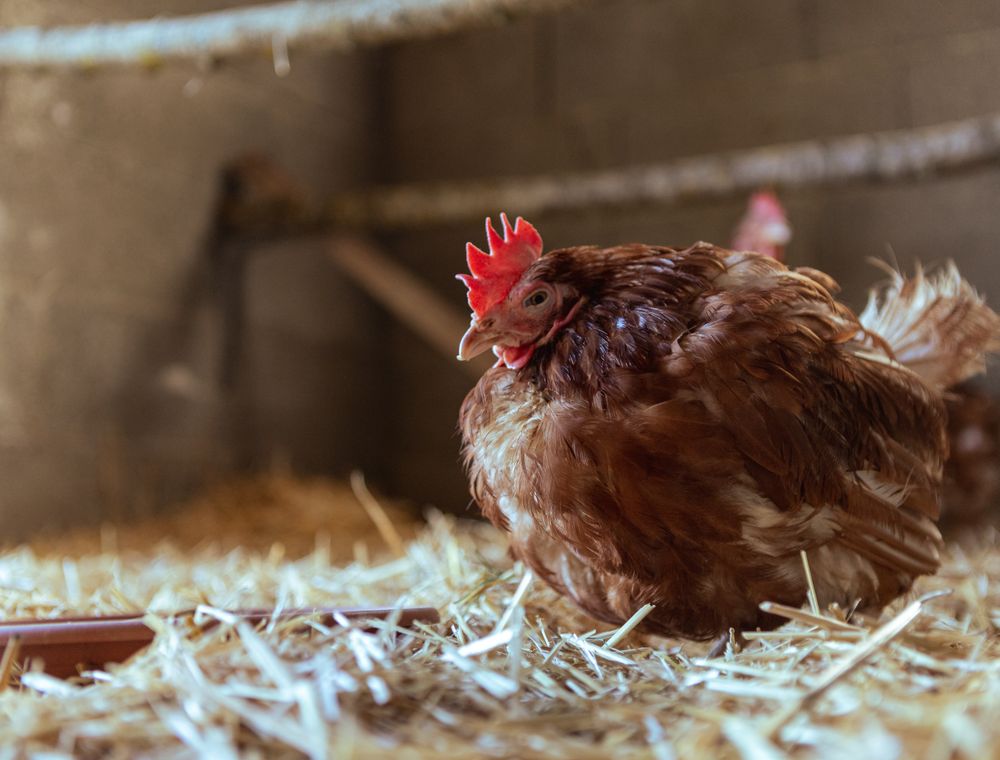
The hen walks to the feeder with her belly almost brushing the litter, stops, then walks back to the perch. She has not laid since the start of the week, and when you lift her she feels heavier than she should, with a firm, lumpy belly that does not match the size of a normal egg. You have checked the nest boxes twice. Nothing is there.
That is the typical picture of internal laying, which vets call egg peritonitis. It is not the same as a stuck egg, and it is not the same as a fat hen. The problem is a yolk that has ended up in the body cavity, where it does not belong, and the body's response to that yolk is what makes the hen sick.
In our hatchery work we deal with the chicks that come out of breeder flocks, and we talk to layer farmers about what happens after point-of-lay. Internal laying is one of the problems that shows up later, long after the chick left us, and it is one of the least understood by the people looking after the flock every day.
Yolk in the wrong place
A laying hen releases each yolk from the ovary into a funnel-shaped opening at the top of the oviduct, called the infundibulum. From there the yolk travels down the oviduct, where the white, membranes and shell are added. The funnel is supposed to catch every yolk and guide it in.
When the funnel is damaged, or the timing of ovulation goes wrong, a yolk can drop into the abdomen instead. Once it is there, it is a foreign body. The lining of the abdomen, the peritoneum, reacts to it with inflammation, and the yolk material starts to clump, thicken and stick to the organs around it. Bacteria, most often E. coli, can get into that yolk and multiply, which turns a sterile mess into a serious infection.
Over days or weeks the hen's intestines and other organs can become stuck together by sticky inflammatory material. That is why she stops eating properly, why she moves stiffly and why her belly feels solid. The body is walling off the yolk, but the wall is not enough.
Why it happens in the first place
Several things push a hen towards this, and they often work together. The common ones we hear about on Ghanaian farms are:
- Infectious bronchitis that has damaged the oviduct earlier in life, leaving a funnel that no longer catches the yolk properly.
- E. coli infection that has moved up the reproductive tract, which can scar and block the oviduct.
- Very high egg production, especially when the hen is pushed to lay consistently at a young age or is fed for maximum output without a matching balance of nutrients.
- Sudden fright or handling, such as a dog in the house or a night-time chase, that disturbs the timing of ovulation.
- Heat stress in the hot season, which cuts feed intake and disrupts the normal laying rhythm.
Notice that none of these is a single cause you can point to. The farms that see the most cases usually have a combination: a respiratory problem earlier in the flock's life, dirty water in the summer and a rushed push for eggs at the same time.

Internal laying, egg-bound and ascites: telling them apart
Three conditions can make a hen's belly swell, and they need very different responses. Mixing them up is the most common mistake we see when farmers describe a sick bird over the phone.
| What you notice | Internal laying (yolk peritonitis) | Egg-bound hen | Ascites (fluid in the belly) |
|---|---|---|---|
| Belly feel | Firm, lumpy, uneven, often hard in places | A hard egg felt near the vent, belly soft around it | Fluid that moves and gives a wave-like feel |
| Vent | Normal, no straining | Straining, sitting in the nest for long periods | Usually normal |
| Laying | Stopped, often for days or weeks | Stuck at the moment, may resume after help | Often reduced |
| Behaviour | Walks stiffly, sits low, loses appetite | Restless, sits in the nest, then stops | Breathless when active, pale comb in some birds |
| Typical next step | Separate, vet review, often culling | Urgent handling, then a vet if it does not clear | Vet review, check the flock's oxygen and water |
The egg-bound case is a blockage and a matter of hours. Our egg-bound hen guide covers the first hour. Internal laying is a longer problem, and the treatment is a different conversation.
What to feel for in the belly
Hold the hen gently, with her back against your forearm and your hand under her body, and feel the abdomen with the fingers of your other hand. A healthy hen's abdomen is soft, and the pelvic bones feel open. In a hen with yolk peritonitis you may feel a firm mass that does not move the way a fluid-filled belly does, or a series of uneven lumps in the lower abdomen.
Compare her with two or three hens of similar age that are laying normally. The difference is usually plain once you have felt both. Be careful not to press hard. A bird with inflamed tissue is painful to touch, and rough handling can make her worse.
If you are not sure, do not guess. Put her in a separate pen with water and feed within reach, and call your vet. A vet with a bird in hand can tell the difference in a minute.
What a post-mortem shows inside
Post-mortem is where internal laying is confirmed, and it is worth doing even when the hen is already dead, because the findings guide what you do next. Open the abdomen carefully and look for yolk-coloured material in the cavity. It may be thick and cheesy, or loose and runny. Look at the surfaces of the intestines, the liver and the ovary. You will often see a yellow, fibrous coating and organs stuck together in places.
Look at the oviduct as well. In some hens it is scarred, thickened or narrowed, which tells you the funnel was damaged at some point. If the material smells foul or the membranes look dark and inflamed, send a sample to a lab for culture, because that is where E. coli is usually confirmed.
Record what you find in the same notebook as the hen's age, her laying history and the feed she was on. Our post-mortem guide explains the order to work in, so you do not miss the oviduct while looking at the belly.
Can it be treated?
The honest answer is that once yolk has leaked loose into the abdomen and inflammation has spread, recovery is rare. Your vet may decide on an antibiotic to control a secondary infection, particularly if the hen is caught early and the signs are still mild, but an antibiotic does not remove the yolk that is already there. Treatment is a judgement call for your vet, and any medicine should be used exactly as they prescribe, with the withdrawal period respected before eggs or meat are sold.
Most of the time, the sensible choice is to remove the hen from the flock and cull her humanely once she is clearly losing condition. Keeping a bird that cannot eat, walk or lay is a cost to her and a risk to the others, who may peck at a visibly sick bird. Our humane culling guide sets out how to do this without making the rest of the flock anxious.
Do not put a hen with a suspected internal problem back into the laying house to see what happens. The cost of a second case, in eggs and in the time you spend on it, is almost always higher than the cost of a clean decision on the first.
The stress of a sudden change
Ovulation runs on a schedule, and it is sensitive to anything that interrupts the flock's routine. A change in lighting is the most common one on farms. Switching the lights on early in the morning, turning them off late or adjusting the programme in a rush can shift when the hens release yolks, and some of them will release at the wrong time or in the wrong place.
Feed changes do the same. Swapping a layer feed for a different brand or mixing a new batch of ingredients overnight can upset appetite and the timing of lay. Make changes gradually over a week, and write down the date in the record book so you can connect a problem to a change later.
Heat is the stress most Ghanaian farmers underestimate. In a hot house, a hen eats less, drinks more and lays less consistently. A short hot spell can be enough to disturb the cycle of a whole flock. Shade, airflow and a steady water supply are the tools that keep the cycle steady, and they are worth more than any supplement in the shop.
Need chicks for your next batch?
Send breed, number and town. We reply with price, hatch date and delivery cost in writing.
Water, E. coli and the hygiene that protects the oviduct
E. coli is a normal resident of the gut, but when it gets into the reproductive tract it can cause real trouble. The usual routes are faecal contamination of the water supply, dirty nest boxes and litter that has been wet for too long. A hen that drinks from a tank left open in the sun, or from a drinker full of droppings, is taking in bacteria every day.
Clean drinkers at least once a week, and more often in the hot months. Drain and refill storage tanks, and keep the lids closed so that leaves, dust and birds cannot get in. Change the nest box litter when it becomes damp or dirty, and keep the nest boxes dark and quiet so hens are not chased out of them. Our water supply and storage guide covers how to keep a tank clean without spending a fortune.
Good hygiene is not a substitute for vaccination or sound management, but it lowers the number of bacteria the oviduct has to fight off every day. In a flock that already has a respiratory problem, it can be the difference between one bad hen and a string of them.
Vaccination and the bronchitis link
Bronchitis protection is part of the hatchery programme your chicks receive before they leave us, but a vaccine does not finish the job on its own. The bronchitis virus attacks the respiratory tract first, but some strains also damage the oviduct, and that damage can last into the laying period. A hen with a scarred or narrowed oviduct is more likely to lose yolks into the body cavity later on.
That is why it matters to know your chicks' vaccination record and to talk to your vet about booster timing for your flock. Our poultry vaccination schedule guide gives the typical timings as examples, and your vet should set the final plan for your region and your birds. For more on the disease itself, see our infectious bronchitis guide.
When a layer flock has a bronchitis outbreak, the oviduct problems can show up months later, long after the coughing has passed. Keep the laying records for the flock, so you can see when the egg numbers and the odd cases began to change.
Managing pullets at first lay
The first few weeks of lay are the most delicate in the life of a hen. She is laying for the first time, her reproductive tract is still adjusting, and any disturbance can send her into a bad cycle. Farms that handle point-of-lay birds well tend to see fewer internal cases.
Keep the lighting programme steady through the transition, feed a layer diet that has the right calcium and protein for pullets just starting to lay, and avoid moving them into a new house or changing the flock mix during the first weeks. Our guide to when layers start laying helps you time the change. If you are buying new birds, our layer day-old chicks page is the place to start the planning.
A monthly checklist for the layer house
Work through this list once a month, and again any time a hen goes off lay without a clear reason:
- Count the eggs each day and note any drop of more than a few per cent across the flock.
- Pick up five to ten hens and feel the belly, comparing them with each other.
- Check the drinkers, clean the tanks and confirm the lids are closed.
- Change the nest box litter if it is damp, dirty or smells sour.
- Review the lighting timer and the feed, and note any change made that week.
- Look for hens standing apart, sitting low or walking stiffly.
- Post-mortem any hen that dies or is culled, and file the findings with her age and laying record.
If you are restocking after a run of cases, our prices page has the current chick figures, and you can place an order through the order form. For a quick question about a hen you are worried about, message us on WhatsApp at +233 24 915 1503, and tell us her age, her breed and what the belly feels like.
Questions farmers ask
Is internal laying contagious?
Not in the way a cold spreads. The yolk problem is inside one hen, so a healthy bird does not catch it from a sick one. The conditions that make it more likely, such as bronchitis damage, E. coli in the water and heat stress, can affect many hens in the same house, which is why one case often means you should look at the whole flock.
Can a hen recover from internal laying?
Occasionally, if she is caught very early and her vet decides to treat a secondary infection. Once yolk has spread and the organs are stuck together, recovery is rare. Plan on separation and a vet's advice, and expect that the hen may need to be culled humanely if she does not improve quickly.
How is internal laying different from egg-bound?
An egg-bound hen has an egg stuck in the oviduct, usually near the vent, and she strains. A hen with internal laying has yolk in the body cavity, usually with a firm, lumpy belly and no straining. The two can look alike from a distance, so feel the belly and check the vent before you decide.
Does a bigger belly always mean a problem?
Not always. A hen that is about to lay, or one with a full crop, can look fuller than normal. The concern is a belly that stays enlarged for several days, feels firm or lumpy, and comes with no eggs laid. Compare her with other hens of the same age, and if the belly does not settle within a short period, get help.
Should I give my hens antibiotics to prevent this?
No. Routine antibiotics are not a prevention plan and can make things worse by encouraging resistant bacteria. Your vet may use a targeted treatment for a confirmed infection, and the withdrawal period must be respected. Good water, hygiene, stable management and vaccination do far more over the long run.
Does Halaal Farms vaccinate against bronchitis?
Yes, the hatchery gives bronchitis protection before the chicks leave us, and the batch record shows the date. Booster timing after that is for your vet to set, based on your region and your flock.
What should I write down after a case?
Record the hen's age, breed, laying history, the feed and lighting changes in the previous fortnight, and the findings from any post-mortem. A note like this lets your vet see whether the problem is one bird or a pattern across the flock, and it helps you decide on changes that will hold.


