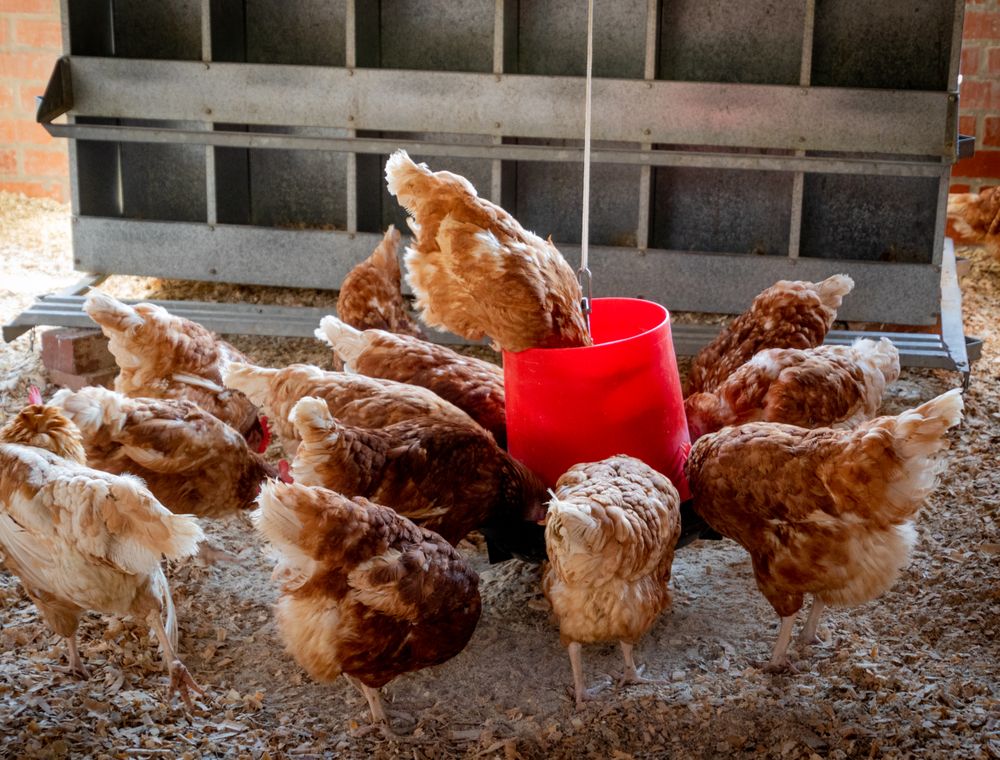
Short answer: Candidiasis, also called crop mycosis or thrush, is a yeast infection of the mouth, oesophagus and crop caused mainly by Candida albicans. It takes hold when the normal gut balance is disturbed, often after antibiotics, in young birds, and where feed and water stay damp and dirty. The usual signs are white or cream plaques in the mouth and a crop that is thick, doughy and sour, with a bird that eats less and grows slowly. A vet confirms it with a simple examination, and treatment is a vet-chosen antifungal combined with fixing the feed, the water and the antibiotic habit.
Key takeaways
- Creamy white plaques in the mouth and crop are the sign that separates this from most other crop problems.
- Yeast takes over when the gut balance is upset, so antibiotics, damp feed and young age all raise the risk.
- Look-alike problems such as vitamin A shortage and fowl pox need different treatment, so check the mouth and eyes too.
- Dry feed in sealed bins and clean drinkers do more to prevent this than any single treatment.
- The antifungal and dose are a vet decision, and the withdrawal period matters if birds are going to market.
The bird that stops eating but keeps drinking
A bird that refuses feed but keeps going to the drinker is telling you something about her mouth or her crop. Hunger tends to make a healthy bird peck, but a bird with a sore mouth or a sick crop will stand at the feeder, look at the feed and walk away. She may shake her head, let a little clear fluid drop from her beak, or sit with her feathers puffed out in the corner.
When you open the beak in a dim shed, the roof of the mouth may be coated with white or cream-coloured patches that look a little like cottage cheese. That is the sign that moves us away from the general causes of poor appetite and towards candidiasis. It is also the sign that most farmers miss, because they have never looked inside a bird's mouth on a normal day.
Make it a routine. Once a week, pick up a few birds from different pens, open the beak with a thumb and forefinger, and look. It takes thirty seconds a bird, and it is the single best way to catch this early.
What the yeast is and why it moves in
Candida albicans is a yeast that lives harmlessly in the digestive tract of many birds and animals. It is normally kept in check by the other organisms in the gut, which compete for space and food and keep the yeast from multiplying. When that balance is knocked out, the yeast grows into the lining of the mouth, oesophagus and crop, and the infection starts.
In our work with chicks and growers, the same few triggers keep coming up. Antibiotics given for a different problem can wipe out the bacteria that normally keep yeast in check. Young birds have an immature gut and a weaker local defence in the lining. Damp conditions and dirty feed or water give the yeast a place to grow. And any shortage of vitamin A makes the lining of the mouth and crop more vulnerable in the first place.
The disease is not usually passed from bird to bird in a dramatic way. It is more that the whole flock shares the same feed, water and litter, so the same conditions that gave one bird the infection will give it to others if nothing changes.
The mouth and the crop: what you should see
The mouth is the first place to look. The roof of the mouth, the tongue and the lining at the back of the throat may show cream or white patches. They can be raised, flaky or sticky, and they do not scrape off easily. Underneath, the tissue is often red and inflamed.
The crop is the second. It sits at the base of the neck, on the front of the chest, and it is where feed is stored before it moves into the stomach. On a healthy bird it feels soft and empty in the morning, and it is full and then emptied through the day. A crop with candidiasis may feel thick and doughy, and sometimes it stays full long after it should have emptied. When you open the bird after death, the lining of the crop may look thickened, yellowish-white and cheesy, with grey debris stuck to it.
Sour smell is a clue, but not a reliable one on its own. A bird with a fermented crop can smell sour, and so can a bird with yeast. You need the look inside and the feel of the crop to be sure.
Candidiasis or something that looks like it
Several conditions produce white or yellow material in a bird's mouth or crop, and they need very different responses. Getting the right name matters more than getting the right product.
| Condition | What you tend to see | What separates it from candidiasis |
|---|---|---|
| Candidiasis (crop mycosis) | Cream plaques in mouth and crop, thick doughy crop, slow growth | Plaques that look like cheese, often after antibiotics or in young birds |
| Vitamin A shortage | White or pale nodules in the mouth and throat, sometimes watery eyes or nasal discharge | Eye and nose signs, and a feed record with little or no vitamin A premix |
| Sour impacted crop | Crop full of fluid or fermented feed, bird sits with a swollen neck | Crop is full and sour but the mouth is usually clear. See our sour and impacted crop guide |
| Fowl pox (diphtheritic form) | Yellow-white membranes in the mouth, scabs on the comb or skin | Skin lesions and scabs alongside the mouth signs. See our fowl pox guide |
| Trichomoniasis (canker) | Yellow, cheesy lumps in the mouth and throat | Yellow and lumpy rather than thin and cream, and more often seen in other species |
The table is not a diagnosis. Take a sample or the bird itself to your vet if you are not sure, because a vitamin A shortage treated as candidiasis will still be a vitamin A shortage the next week.
Who gets it: young birds and birds on antibiotics
Chicks and growers are the most affected. Their gut is still building its population of good bacteria, and the lining of the crop and mouth is not as tough as in an adult. In a grower house, we see candidiasis most in the weeks after a course of antibiotics, when the balance of bacteria has been knocked over and has not yet recovered.
Birds in lay can get it too, particularly if they have been on a long course of an antibiotic for a respiratory problem, or if they are housed in damp conditions with feed that is left out in the rain. Older birds usually show milder signs, and they may simply eat a little less and lay a little less for a few days.
If you are running a flock that has had several rounds of antibiotic treatment, ask your vet to look at the pattern. Repeated courses are one of the most reliable ways to set up yeast problems in a house, and they make the next infection harder to clear.
Wet feed and the rainy-season sack
Feed is the most common route for yeast and mould into the crop, and the rainy season is the time it goes wrong. A sack of maize meal or mash stored on a concrete floor, under a leaking roof or near a wall that sweats will absorb moisture within days. Mould and yeast then grow in the feed, and the birds take them in with every peck.
We see farmers in Kasoa and along the coast keep a few days of feed loose in a bucket by the house. In the wet months that bucket is a warm, damp culture medium. The rule is simple: buy only what you can use in a few weeks, keep it off the floor on pallets, store it in a sealed bin with a lid, and throw away anything that smells musty, looks clumped or has grey-green spots.
Wet mash is a separate problem. A mash mixed in the morning and still in the feeders at noon is a crop problem waiting to happen, especially in hot weather. Mix only what the birds will finish, and remove any leftovers before the next feed. Our feed storage guide covers the mould side of this in more detail, and the toxin binders article explains what they can and cannot do.

Drinkers, water lines and the slime nobody cleans
A drinker is a warm, wet place that birds put their beaks into all day. Without regular cleaning, a film builds up inside the cup or nipple, and yeast and bacteria live in it. Birds drink the film and carry the organisms back into the crop every time they take water.
Clean drinkers at least twice a week, and every few days in hot weather. Scrub the cups or nipples with a brush, rinse them, and let the lines run fresh water through before the birds come back. Check water tanks monthly, drain them, scrub the inside and close the lids. Our water supply and storage guide shows how to keep a tank clean on a budget.
A quick test on a hot afternoon will tell you a lot. Put a finger in a drinker cup and rub it. If it feels slippery or leaves a film, the cup needs cleaning now, not on the next scheduled day.
Vitamin A: the quiet partner in this problem
The mouth and crop lining depends on vitamin A to stay healthy and to renew itself. When the supply runs short, the lining becomes thick and rough, and it is more easily colonised by yeast and bacteria. A shortage can also show up as eye and nose discharge, and in severe cases as poor growth and weakness.
Many homemade rations contain maize, cassava and little else that supplies vitamin A. If you mix your own ration, check whether a vitamin premix is included, and follow the supplier's guidance on how much to use. The details of mixing are in our guide to mixing your own poultry feed. Our vitamin deficiencies article covers the signs of a shortage in more detail.
Do not add vitamin A on your own guess. Too much of a vitamin can be as harmful as too little, and the correct amount depends on the feed, the age of the birds and the rest of the diet. Ask your feed supplier or vet to confirm the premix you are using.
Need chicks for your next batch?
Send breed, number and town. We reply with price, hatch date and delivery cost in writing.
What the vet does and what you do the same day
When you suspect candidiasis, the vet's first job is to look inside a bird and, if needed, take a sample to a lab for a microscope check. Yeast is recognisable under the microscope, and that check separates it from several of the look-alikes in the table above.
Your first job is smaller. Separate any bird that is clearly sick, stop any antibiotic course that is not needed, check and clean the drinkers, and move the feed off the floor into a sealed bin. None of that costs much, and it is the groundwork that makes any antifungal treatment work.
The vet will prescribe the antifungal, the dose and the duration for your birds, and will tell you how long to wait before the flock can be sold for meat or eggs. Please follow that exactly. Stopping early because the mouth looks clearer is the most common reason a yeast problem returns within the month.
Stop guessing with antibiotics
An antibiotic will not treat a yeast. It will kill some of the bacteria that keep yeast in check, which is one of the reasons candidiasis appears after treatment. If a bird has a mouth infection and you have been giving antibiotics for several days with no change, the honest thing is to stop and ask your vet what the infection really is.
Every antibiotic course adds risk, to the flock now and to the flock's future. The bacteria that survive a course are harder to clear next time, and the withdrawal period on the label is there to protect the people who eat the birds. Our responsible antibiotic use guide sets out how to decide when a course is justified.
A good rule is to write down every treatment you give, the date, the reason and the vet's name. That record helps the next vet spot a pattern, and it stops a bad habit from becoming a permanent one.
Prevention on a working farm
Prevention is where most of the value sits. None of these steps is glamorous, and all of them are cheap compared with a flock that stops eating for a week:
- Buy feed in quantities you can use in two to four weeks, and keep it on pallets in a sealed bin.
- Remove any feed that smells musty, looks clumped or shows grey-green spots, and do not feed it to the birds.
- Mix only the wet mash the flock will finish within the hour, and clear the feeders before the next feed.
- Clean drinkers twice a week, more often in hot weather, and drain and scrub water tanks monthly.
- Check that the feed contains a vitamin premix, and ask your supplier for the level.
- Use antibiotics only when your vet has confirmed a bacterial problem, and record every course.
- Open the beak of a few birds each week and look at the mouth and crop.
Good sanitation also helps with other feed-borne problems. For the wider picture of keeping the house clean between flocks, our disinfectants and footbaths guide is a practical next read.
What an outbreak costs in a small grower house
Put numbers on it and the case for prevention is easy. Take a house of 150 Sasso chicks, bought at our starting price of GH₵13 each. That is GH₵1,950 in chicks before any feed is bought. Suppose a yeast problem follows a course of antibiotics for a different problem, and you lose nine birds over two weeks. At GH₵13 each, the lost chicks alone cost GH₵117, and that is before the feed those birds ate, the time spent treating them and the delay to market.
The bigger cost is the slow growth. Birds that eat less for a fortnight do not catch up, so the whole batch reaches market weight later. A few extra days in a grower house means more feed, more labour and more space tied up. A dull week in the feed bin can end up costing more than the treatment you were trying to avoid.
Compare that with a sealed feed bin, a drinker cleaning routine and a single vet call. The arithmetic is not complicated, and it is one of the cheapest insurance policies on a farm.
If you are planning the next batch, our Sasso day-old chicks page has the details, and our broiler chicks page covers the other strains we hatch. Ask us on WhatsApp, +233 24 915 1503, about any batch you are rearing, or reserve through the order form.
Questions farmers ask
Is candidiasis contagious between birds?
The yeast can spread through shared feed, water and litter, so a whole flock can be exposed at once. It is not usually spread in the dramatic way a respiratory virus is. If one bird has plaques, assume the others are at risk, and fix the feed and water rather than hunting for a single carrier.
Can I treat it with household remedies?
Not reliably. Yoghurt, vinegar and similar home remedies do not clear an established yeast infection in the crop, and they can distract you from the real causes. Your vet can confirm the diagnosis and prescribe an antifungal, which should be given at the dose and duration they set.
How long does crop mycosis take to clear?
It depends on how far the infection has spread, the age of the birds and how quickly the causes are fixed. Mild cases can improve within days of good management and vet treatment. Severe cases in the crop can take longer, and some birds do not recover. Keep the sick birds separated and keep records of appetite and weight.
Is it the same thing as thrush in other animals?
Yes, the same type of yeast is involved, and the underlying trigger is similar: a disturbed balance of organisms, damp conditions and poor hygiene. The treatment in birds is different from that in mammals, so use a vet who works with poultry.
Can I sell or eat a bird that has had candidiasis?
Not until your vet has confirmed the treatment is finished and the withdrawal period has passed. Respect the period on the medicine label, and do not sell birds that are visibly unwell. If you are unsure, ask your vet before any bird leaves the farm.
Do vitamin premixes prevent it?
A balanced premix helps keep the mouth and crop lining healthy, which lowers the risk. It does not prevent yeast on its own. Dry feed, clean water, sensible antibiotic use and young-bird management do most of the work, and the premix supports them.
Does Halaal Farms supply chicks that avoid this?
The chicks come to you protected by the hatchery programme, and the batch record shows what was given. Candidiasis is driven mainly by feed, water and the antibiotic habit in the house, so management after arrival matters as much as the chick.


