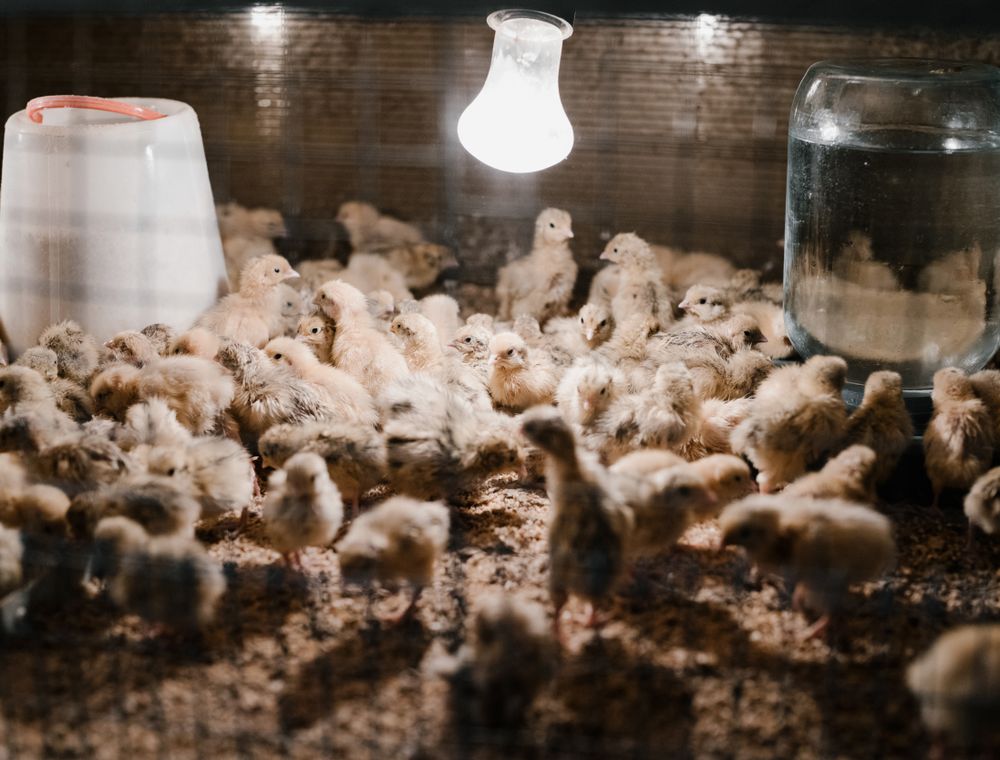
Short answer: The first few hours decide whether a day-old chick settles or sulks. Warm the brooder before the box comes in, let the chicks rest in the box in a warm room for a short while, then place them where water and feed are a few steps away. Handle them as little as possible, and judge the brood by how the chicks spread and settle, not by how loudly they peep.
Key takeaways
- Warm the brooder a couple of hours before the box arrives, and check the heat at chick height.
- Let the chicks rest in their box in the warm room for ten to fifteen minutes before you tip them out.
- Use dry, dust-free litter and a temporary ring to keep the brood in the warm zone.
- Put water within a few steps of every chick, at room temperature.
- Judge the brood by how the chicks spread and settle, not by the volume of their peeping.
- Handle them as little as possible in the first hours, and keep visitors out.
What the first hours are actually for
A day-old chick has just come out of a shell and then out of a box. It has a yolk reserve to draw on and very little else. The first hours are not really about feeding. They are about getting warm, finding water and resting enough to stand up and move without toppling over. Farmers who push food hard in the first hour often end up with chicks that are full of mash and cold at the same time, which is the worst combination the brooder can offer.
Think of the job as a handover. The chick is moving from a controlled hatchery and a closed box into your house, which may be cooler, brighter, noisier and full of new smells. Your task is to make that change small. Every step that is slow, warm and quiet reduces the work the chick has to do in its first day, and every step that is hurried or noisy adds to it.
The rest of this guide follows the sequence we recommend to buyers, from the moment the heat comes on to the point where the chicks are settled enough to be left alone.
Warm the brooder before the box is opened
Turn the heat on before the vehicle is in sight. A brooder that is still cold when the chicks arrive forces them to spend their first energy looking for warmth, and that energy should be going into growing. For most of the first week the usual target at chick level is around 32 to 35 °C, but treat that as a starting point. The chicks' behaviour is the real thermometer. Put your own thermometer at chick height, not on the wall or hanging off the lamp.
In Ghana the warmth question changes with the season and the place. In the south the day heat can make a brooder run hot if the lamp is set too low, so check it at midday as well as at night. In the north and centre, harmattan nights can drop the temperature sharply, and a brooder that was comfortable at dusk can be cold by three in the morning. A warm brooder at dusk, checked again around midnight, is the simplest insurance you can buy.
If you have a choice of heat sources, pick the one you can control in small steps. A lamp that you can raise or lower by a few centimetres lets you fine-tune the heat as the chicks settle. A heater that only runs flat out or not at all leaves you guessing.
Let them rest in the box before you tip them out
This is the step most farmers skip, and it is the one that costs the least. Once the box is inside the warm room, leave the lid on, or half on, and let it sit for ten to fifteen minutes. The chicks settle, their breathing slows, and the air inside the box warms up gradually. That is much kinder than tipping a cool, tired chick from a vehicle straight onto a hot floor under a lamp.
Then tip them out gently onto a clean surface inside the brooder ring, not all in one heap. If you have to lift a chick, lift it one at a time with both hands under the body, and set it down near the water and the feed. A chick that has been placed on its feet near the drinker will usually find the water within minutes. A chick that is dropped into a corner may spend the next hour trying to get out of it.
Do not leave the box sitting for an hour while you finish other jobs. Ten to fifteen minutes is a rest. Much longer, and the chicks start to feel the stuffiness of the box, which is a problem of its own.
Litter, dust and the starting ring
Dry, clean, dust-free litter matters more in the first hours than it will later on, because day-old chicks are at their most likely to peck at anything they find on the floor. Wood shavings and rice husk work well if they are dry and free of mould. Fine sawdust throws up dust, and dust is a real problem during harmattan. Do not use wet litter from a previous flock, and do not use anything treated with chemicals you do not know the name of.
Make a ring before the chicks go in. A ring of paper, cardboard or a low barrier, sized to the area your heat source covers, keeps the chicks in the warm zone and stops them wandering into the cold corners where they start to pile. The ring is temporary. Widen it over the first days as the chicks grow, and watch for chicks pushing against one section of it, because that usually means the heat has moved or a draught has found a gap.
For a fuller picture of how the ring is built and sized, see our guide to setting up a brooder ring. If the brood starts bunching up at night, the piling and smothering guide explains the fixes in more detail.
Water within a few steps of every chick
Water is the first thing a chick needs to find, and it should be within reach before the chicks come out of the box. Use clean water at room temperature. Not iced, and not straight from a black drum that has been sitting in the afternoon sun. Put shallow drinkers around the ring so no chick has to walk more than a few steps to reach one. Chicks drink little and often, so a drinker that runs dry for ten minutes in the first hour is a bigger problem than one that spills a little.
Some farmers add glucose or a vitamin to the first water. Ask your vet whether that suits your flock, and follow the label and the vet's advice on quantities. Our separate guide on vitamins and glucose for new chicks explains what these additions are commonly used for and where their limits are.
Once the chicks have found the water, do not stop checking it. The first afternoon is when a drinker that was full at noon is empty by three, and nobody notices until the chicks start crying.
Reading the brood: what settled and unsettled look like
The brood tells you how it feels, if you know how to read it. Use this table as a quick guide when you check the chicks through the first hours.
| What you see | What it usually means | What to do |
|---|---|---|
| Chicks spread across the ring, moving and pecking, with a soft and steady peep | Settled, warm enough, and water found | Leave them alone and check again within the hour |
| Clustered in one corner, with loud peeping | Too cold, a draught, or a gap in the ring | Check the heat and the draughts, close the gap, then recheck after ten minutes |
| Spread to the edges, gaping, panting, wings held out | Too hot | Raise the heat source or move part of the brood, and add airflow without a draught |
| Standing still with eyes closed, or a wet and sticky vent area | Chilled, unwell, or not drinking | Move them into the warm zone, check the water, and call your vet if it persists |
| Pecking at the floor and eating the bedding | Litter too fine, dusty or damp, or feed scattered on the floor | Use clean paper for the first feed, and check the litter |
The first sign of trouble is usually a sound, not a sight. Stand at the door quietly and listen before you walk in. Steady, spread-out peeping is a good sign. Sharp, loud peeping from one spot is a message worth answering at once, before you start counting or moving anything.
Handling: how little is enough
The first hours are not the time for passing chicks around the family, or for the whole neighbourhood to come and see the new birds. Each handle is a small stress, and the stresses add up. Keep visitors out of the brooder room, keep dogs and cats out of the house, and let children watch from the doorway. You will need to pick up a chick to check it, but you do not need to pick up every chick to be sure the brood is well.
Light helps as well. Keep it steady and bright enough that the chicks can see the water and the feed. Flickering or patchy light makes chicks anxious and sends them hunting for dark corners, and dark corners are where piling starts. If the light has to go off at night, make sure the heat stays on, because a dark and cold brooder is the worst combination you can offer a sleeping chick.
Keep your own movements slow and predictable. Chicks settle faster around a person who walks in the same way each time than around someone who bursts in every ten minutes to check.
Need chicks for your next batch?
Send breed, number and town. We reply with price, hatch date and delivery cost in writing.
Power cuts, and the plan you need before the box arrives
Power cuts are a fact of poultry life across much of Ghana, and a brooder that depends on one socket will go cold on the worst night you can imagine. Before the chicks arrive, decide what you will do if the lamp stops. Have a gas brooder or a second heat source ready, a charged lamp, and a torch that works. Write down the number of the person who can bring fuel or a generator, in case you need one after dark.
Test the backup before you need it. A brooder that has never run on its backup will fail on the first real night, because the plug does not fit, the gas is low, or the lamp bulb is the wrong fitting. A short test a day before the box is due takes ten minutes, and it saves a brood.
If the power cuts while the chicks are still in their first hours, the priority is the same as before: keep them warm, keep them in a tight ring, keep the water within reach, and check them every hour until the heat is back on steadily.
A checklist for the first hours
Work through this list before the box arrives and again as the chicks settle. It is written for the first few hours, not the first two days.
- Switch on the heat at least a couple of hours before the box is due, and check the temperature at chick height.
- Set up the ring, with clean dry litter inside it and paper for the first feed.
- Place shallow drinkers with clean water at room temperature around the ring.
- Test the backup heat and light, so you know they work.
- When the box arrives, carry it into the warm room and leave the lid on or half on for ten to fifteen minutes.
- Tip the chicks out gently onto the ring floor, one at a time where you need to lift them.
- Listen from the doorway, then check the spread of the brood.
- Check the water within a few steps of every chick, and again after an hour.
- Adjust the heat in small steps, and recheck after ten minutes.
- Keep visitors and pets out, and keep the lights steady.
Once the chicks are spread, drinking and moving, you can leave them to settle. Save the next checks for the full routine that follows in the first two days.
Mistakes we see in the first hours
Most early losses that are down to the brooder come from a short list of avoidable errors. These are the ones we see most often when a buyer rings us for advice.
- Pouring cold water straight from the fridge into the drinkers, which chills the chicks that drink it.
- Heaping mash on the floor so the chicks gorge and then sit chilled in a corner.
- Moving the chicks from one spot to another because the first spot looked wrong, then moving them again when the second looked worse.
- Leaving the box in a draught while the brooder is being prepared, so the chicks are chilled before they have even arrived.
- Using newspaper as the first litter, which chicks slip on when they try to walk.
- Setting the lamp so low that the chicks cannot move away from it when they get too warm.
- Counting the chicks every ten minutes, which keeps the whole brood up and stressed.
The counting mistake is the one buyers do not expect. The arrival count is done once, on the sheet, and then the chicks should be left to settle. Every extra head count is another disturbance.
Handing over to the first two days
Once the chicks have rested, found the water and settled in the warm zone, the first hours are over. The next job is watching the brood across the first two days, and that needs a different routine with its own checks and its own record. Our guide to the first 48 hours covers that rhythm, and the common chick diseases guide helps you recognise problems that appear after the first day, when the early signs are easier to miss.
If you are planning the starter feed for the first weeks, our chick starter feed guide explains what the feed should contain and how to introduce it. Keep the feed clean and dry from the first day, because wet feed in a warm brooder spoils quickly.
For buyers who want the chicks delivered to them, the delivery page explains the routes we cover, and the broiler day-old chicks page describes what we supply for meat birds. If you are in Kasoa and prefer to order locally, see the Kasoa page, and place your order through the order form or on WhatsApp at +233 24 915 1503.
Questions farmers ask
How long should the chicks stay in the box before I release them?
Ten to fifteen minutes in a warm room, with the lid on or half on, is a sensible rest. The aim is to let the box and the room reach a similar temperature and let the chicks catch their breath. Do not leave them in the box for an hour because you are busy. Move them once the brooder is ready and the room has settled.
What temperature should the brooder be when the chicks arrive?
A common target at chick level is around 32 to 35 °C in the first week, but the chicks' behaviour is the real guide. Spread out and calm means the heat is about right. Clustered and loud means too cold. Spread to the edges and gaping means too hot. Adjust in small steps and check again after ten minutes.
Is it normal for day-old chicks to sleep a lot?
Yes, within limits. Day-old chicks sleep in short bursts, wake to drink and feed, then sleep again. What you should not see is a chick that stays with its eyes closed and does not get up when you walk past. A chick like that needs a closer look at its warmth and its access to water.
Should I feed the chicks straight away?
Offer feed on a clean surface soon after the chicks have had a drink, rather than heaping it on the floor the moment they arrive. Chicks that have just come out of a box often need water before they eat much. Check that they are pecking and moving about, not just sitting.
Can I use sawdust as litter?
Fine sawdust is dusty, and dust is a problem for chicks, especially during harmattan. Wood shavings or rice husk that are dry, clean and free of mould are a better start. Whatever you use, keep it dry, because wet litter is where many early problems begin.
What do I do if the power goes off on the first night?
Have a backup heat source ready before the chicks arrive, and test it. If the power goes, keep the chicks warm with the backup, hold them in a tight and draught-free ring, and check them every hour until the power returns. Do not let the brooder go cold while you wait for the lights to come back.
Should I add vitamins or glucose to the water?
Some farmers do, and some vets recommend it for a short period. Ask your vet whether it suits your flock, and follow the label on the product exactly. Our guide to vitamins and glucose for new chicks explains the common uses and limits without giving doses.


