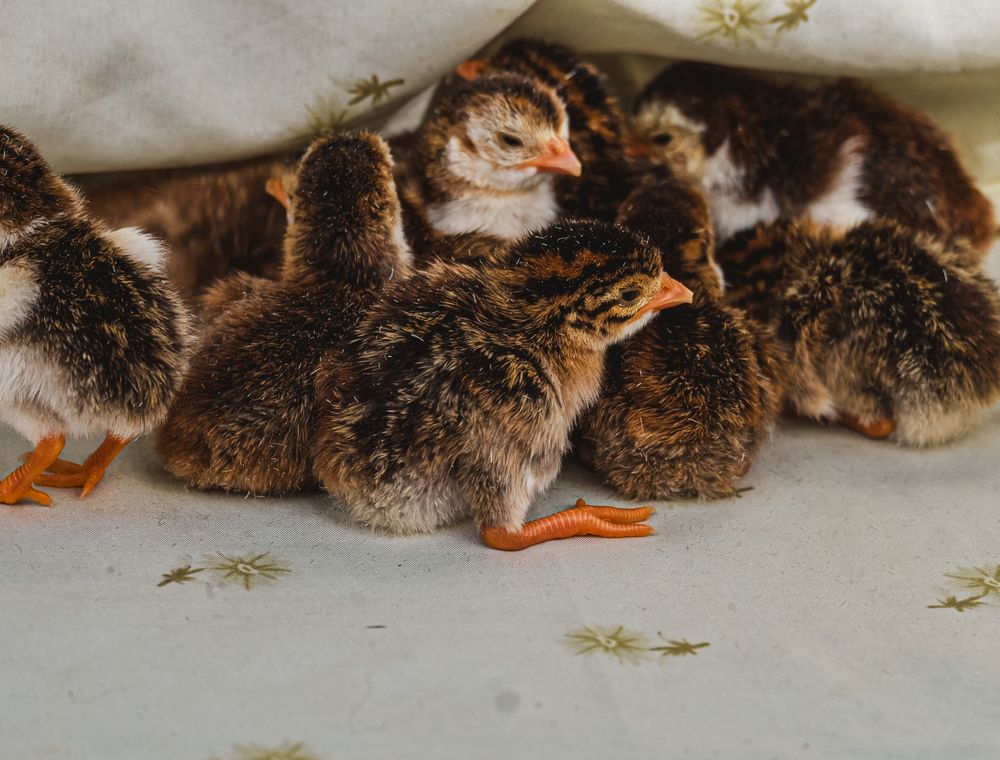
Short answer: Bookkeeping on a poultry farm means recording every sale, purchase and payment so that you can tell cash from profit. In our worked July for a guinea fowl unit, the bank balance fell by GH₵3,800 while the business made a paper profit of GH₵550, and both figures were correct. Keep one ledger, reconcile the phone and the bank every week, and keep owner's drawings apart from farm costs.
Key takeaways
- Keep the cash view and the profit view side by side, because a poultry farm needs both to survive a bad month.
- Stock you still own is an asset until it leaves the farm. Record its losses in the month they happen.
- Invoice credit sales as income when they are made, and chase them on the due date.
- Keep owner's drawings out of farm expenses, so the profit line tells you the truth about the farm.
- Reconcile the phone, the bank and the cash tin once a week, and file batch records with the receipts.
Why the bank balance and the profit never agree
A farm can be profitable on paper and short of cash in the same month, and the reason is almost always timing. A buyer takes birds this week and pays next month. You buy a stock of feed in March that lasts until June. You pay the helper on Friday and sell on Monday. None of that is hidden. It simply happens on different days, and a bank balance only shows you the day you look at it.
Profit tells you whether the business earns more than it spends over a period. Cash tells you whether you can pay the feed merchant on Thursday. A poultry farm needs both answers, and a single ledger that records both is the simplest way to stop guessing at the end of the month. If you are still writing your plan, the business plan guide uses the same categories as this ledger, which saves rework later.
The columns a poultry ledger needs, and what goes in each
You do not need software to start. You need a sheet with the same columns every time you write in it. The table shows the columns we suggest, with an example line from the worked month later in this article.
| Column | What goes in it | Example from the worked month |
|---|---|---|
| Date | The day money moved, or the day a sale was invoiced | 6 July |
| Description | What you bought or sold, with the quantity | 120 fertile eggs sold at GH₵10 each |
| Category | Feed, health, labour, utilities, stock, sales, drawings | Sales (credit) |
| Money in | Cash or mobile money received | Blank, because nothing arrived that day |
| Money out | Cash or mobile money paid | 320 for one 50 kg bag of feed |
| How paid | Mobile money, bank transfer, cash or on credit | Cash |
| Note | The house, the batch code and anything the next reader needs | House 2, batch G3 |
Keep the categories few and consistent. Twelve categories you use every week are worth more than thirty you cannot remember. Put the batch code in the note, so that a cost or a sale can be traced back to the flock it belongs to. That habit is what turns a ledger into a tool for deciding the next batch.
A worked July for a guinea fowl unit
The figures below describe an invented small unit: one house, a few hundred birds, a mix of keets bought in and fertile eggs sold on. The keet price is our list price of GH₵17 each, sold in boxes of 50 at GH₵850 a box. The fertile egg price of GH₵10 is the one on our fertile eggs page, used here for the eggs in the table. The feed, vaccine, labour and fuel costs are assumptions, so replace them with your own quotes. The method is what matters here, not the particular numbers.
| Date | Description | Category | Money in (GH₵) | Money out (GH₵) | How paid |
|---|---|---|---|---|---|
| 2 Jul | 150 guinea fowl keets, three boxes of 50 at GH₵850 | Livestock on hand | - | 2,550 | Bank transfer |
| 4 Jul | One 50 kg bag of guinea fowl feed (assumed price) | Feed | - | 320 | Cash |
| 6 Jul | 120 fertile eggs sold to a hatchery buyer at GH₵10 each, invoice issued | Sales (credit) | - | - | 1,200 owed, not yet paid |
| 9 Jul | 50 fertile eggs sold at GH₵10 each | Sales | 500 | - | Mobile money |
| 12 Jul | Vaccines and water-soluble vitamins for the flock (assumed price) | Health | - | 280 | Cash |
| 15 Jul | Casual helper, two weeks | Labour | - | 400 | Cash |
| 19 Jul | Fuel for the brooder and power for the water pump (assumed) | Utilities | - | 150 | Mobile money |
| 28 Jul | Owner takes money for household use | Drawings | - | 600 | Mobile money |
| 31 Jul | The 6 July invoice is still unpaid at month end, the buyer says August | Receivable | - | - | Still owed: 1,200 |
Two things in that table are easy to get wrong. The keets are not an expense on the day you buy them, because they are still on your farm. The eggs are income on the day you invoice them, not the day the money lands. Each of those choices separates a ledger that tells you the truth from one that only mirrors the bank balance.
Reading the month: cash, profit and what you still own
Once the entries are down, the month reduces to a handful of figures. Write them on one sheet, with a line for each.
| Measure | How we got it | July figure (GH₵) |
|---|---|---|
| Cash in | The money received in July | 500 |
| Cash out, farm | Stock, feed, health, labour and utilities paid | 3,700 |
| Cash out, drawings | Money taken out for household use | 600 |
| Net change in the bank | 500 less 3,700 less 600 | -3,800 |
| Sales earned in July | 500 received plus 1,200 invoiced | 1,700 |
| Running costs in July | Feed, health, labour and utilities, not stock | 1,150 |
| Profit for July | 1,700 less 1,150 | 550 |
| Owed to you | The 6 July invoice, not yet paid | 1,200 |
| Stock on hand | 150 keets at cost, before any losses | 2,550 |
The bank fell by GH₵3,800 and the business made a paper profit of GH₵550. Both are true. The gap is made up of the GH₵2,550 of keets you still own, the GH₵1,200 a buyer owes you, and the GH₵600 you took home. If you look only at the bank, you will think the farm lost money badly. If you look only at profit, you will forget that the keets have to be fed before they earn anything.
Keets you still own are not a loss on the day you buy them
Stock bought to raise or resell stays on your books as an asset until it leaves the farm or dies. Only the feed, vaccines, labour and power used to rear it become running costs, in the month each one is used. The keets in July cost GH₵2,550 and sit on the books as stock. Their feed becomes an expense as it is eaten. Our guinea fowl keets page lists the current from-price, and the chick price list shows how the same stock pricing works across the other breeds we supply.
Keets you keep for breeding are a different case. Your accountant may treat a breeding flock as a fixed asset and spread its cost over its laying life, in the same way a house or a vehicle is handled. Ask before you choose a method, and use the same method every year. Changing it halfway through makes one year impossible to compare with the next.
Losses on stock are real. If ten of those keets die in the first week, write them off in the month they die, with a note saying why. Do not quietly reduce the count. The record of deaths is the record you need when you plan the next batch.
Credit sales and the buyer who pays in August
A credit sale is income when you invoice it, but it is not cash until the money arrives. Track every unpaid invoice on its own list, with the buyer's name, the date, the amount and the date you expect to be paid. A receivables list is the simplest tool a small farm has for seeing cash that is on its way but not yet in the account.

Chase on the day a payment falls due, not a month later. A short message with the invoice number and the amount works better than a long apology. If a buyer pays late more than once, shorten their credit or ask for part payment before the eggs leave. Eggs and fertile stock that spoil while you wait cannot be sold a second time.
Credit is where many small poultry businesses lose money without noticing. The profit looks healthy, the cash runs short, and the farm starts buying feed on a supplier's credit. That can cost more than the margin on the original sale.
Money you take home is not a farm cost
Owner's drawings are money you move out of the business for household use. They are not payment for work on the farm, and they should not sit in the expenses column. Give them a separate category, so that the profit line shows what the farm earned and the drawings line shows what you took.
If you are a sole proprietor, the farm does not employ you in the ledger, so there is no salary line for your own time. Your hours are real, but a farm ledger cannot price them honestly. Record the cash you take out, date it, and let the profit figure show what remains for the business and for you together. That is the figure a lender will want to see.
Need chicks for your next batch?
Send breed, number and town. We reply with price, hatch date and delivery cost in writing.
Reconciling the phone, the bank and the cash tin every Friday
Once a week, compare three sources: the mobile money statement, the bank statement and the cash tin. Every farm payment in those sources should match a line in the ledger. Anything that does not match is one of three things: a missing ledger line, a payment made from a personal wallet by mistake, or a fee you did not note. Find it that week, while the messages are still on the phone and the buyer remembers the order.
- Export the mobile money statement for the week, and the bank statement if you have an account.
- Match every farm payment to a ledger line with the same amount and date.
- Count the cash tin and write the balance in the ledger.
- Record bank charges and mobile money fees on their own line, so they do not hide in feed.
- Write down any unexplained payment and find out what it was before the next Friday.
Receipts, batch records and what your accountant will ask for
An accountant can turn a shoebox of receipts into a ledger. They cannot tell from the receipts how many birds were in the house on the day the feed went in, or which batch a vaccine was for. That is the job of the batch record. Our hatchery sends one with each delivery, listing the vaccinations done before the chicks left the farm. File it with the receipts, and write on it the date the batch went into the house and the count you took on arrival.
Our poultry record keeping guide sets out the daily records that feed into the ledger, and the registration guide covers the business name and tax number that should appear on every invoice. When you sit down with an accountant, bring this list:
- Receipts for every purchase, numbered where you can.
- Invoices for every sale, including credit sales, with the buyer's name and tax number if they have one.
- Bank and mobile money statements covering the whole period.
- A stock list of birds on hand at the start and at the end of the period.
- The batch records, with arrival counts and weekly mortality.
- A wage record for any casual helper, with dates and amounts paid.
Keep these for as long as the tax authority requires for your return. Ask the Ghana Revenue Authority, or your accountant, for the current period, and keep a scanned copy in a second place in case the originals are damaged.
The house that wears out: depreciation in plain terms
A brooder house, its fittings and its water lines lose value every year, even when they look sound. Depreciation is how the books record that slow loss. Take the cost of the house, divide it by the number of years you expect it to last, and charge that amount to each year. Suppose the house, fittings and water system cost GH₵18,000 and you expect six years of use. That is GH₵3,000 a year, or GH₵250 a month, charged against the farm's profit.
Depreciation is not cash. You do not pay it out each month. It exists so that the profit figure does not pretend the house is free to run. A farm that never depreciates its house will look more profitable than it is, and the owner will be surprised the day the roof needs replacing. The feasibility study guide shows where this charge belongs in a full cycle budget.
A monthly routine that takes an hour, not a weekend
- Enter every receipt and payment from the week into the ledger, while the details are still fresh.
- Reconcile the phone, the bank and the cash tin with the ledger.
- Update the receivables list and chase anything past its due date.
- Update the stock count: birds on hand, deaths, sales and transfers between houses.
- Work out the month's sales, running costs and profit, and write them on one sheet.
- Compare the month with the batch plan: feed used per bird, mortality and the average price received.
- File the sheet and the statements in the monthly folder, and back up the ledger file.
The sheet in step five is the one to show a lender or a partner. The comparison in step six is the one to read before you order the next chicks. If your plan needs fresh chicks, the order form is the place to start, and WhatsApp +233 24 915 1503 will confirm the price in writing before you pay. Questions about orders are answered on our FAQ page.
Questions farmers ask
Do I need an accountant for a small poultry farm?
Not for the day-to-day ledger, but you will want one for your first tax return, for any loan application and for decisions about structure or depreciation. Choose an accountant who has worked with small agricultural businesses, and ask for a fixed fee for the year-end work. Keep the monthly ledger yourself, so the accountant spends less time on rescue work.
Is a notebook enough to keep farm books?
A notebook works if the entries are complete, dated and sorted into the same categories every time. The risk is that it gets written in a hurry, is lost in the rain or is never totalled. Many farmers move to a spreadsheet after a few months and keep the notebook as a backup for cash receipts. Whichever you choose, total it at the end of every month.
What is the difference between cash and profit?
Cash is the money in your bank, mobile money and cash tin right now. Profit is what the business earned over a period, counting sales when you invoice them and costs when you use them up. A farm can show strong profit and weak cash if buyers pay late or stock is bought ahead of sales. You need to watch both.
Should I count the keets I bought as a cost?
Not on the day you buy them, if you still own them. Stock stays on the books as an asset until it is sold, dies or is used. Its feed and other rearing costs are the running costs. Record any losses in the month they happen, and use one consistent method every year.
How do I record money I take out for family use?
Record it as drawings, in a separate category from the farm's expenses. That shows what you took from the business without distorting the profit line. Keep each entry dated, and note what the money was for where you can. If you take money out every week, a fixed weekly amount is easier to track than irregular sums, and it makes the monthly reconciliation quicker.
How many years must farm receipts and statements be kept?
Keep receipts, invoices, statements and batch records for as long as the tax authority requires for your return. Ask the Ghana Revenue Authority, or your accountant, for the current period. Store the originals away from damp and rodents, and keep a scanned copy somewhere else.
What do I do when a buyer never pays?
Stop selling on credit to that buyer, and write off the amount in the month you decide it is not coming, with a note of why. Ask for the outstanding amount in writing and keep a record of each reminder. That record helps if you later need to claim the debt, or explain the figure to an accountant.


