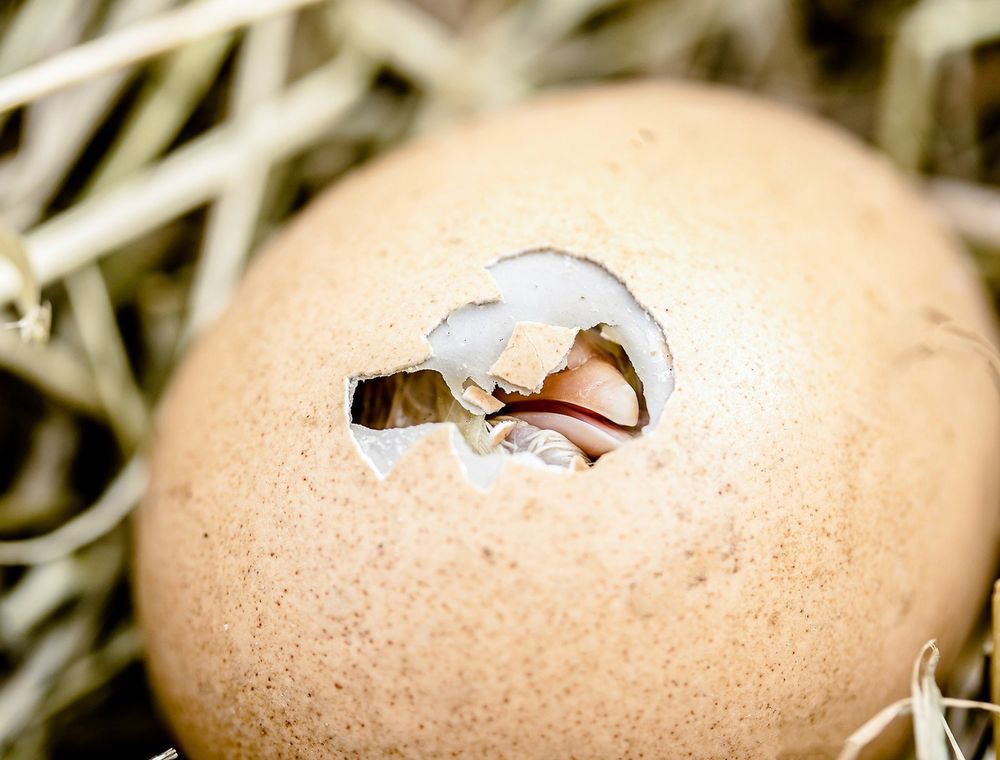
Short answer: Omphalitis is an infection of the navel and yolk sac in newly hatched chicks, usually caused by bacteria such as E. coli or staphylococci that enter before the navel has closed. Infected chicks have swollen, wet or discoloured navels and yolks, look dull, huddle and often die between days two and seven. The bacteria can come from dirty eggs, the hatcher, transit boxes or the brooder. Count and check navels on arrival, keep the brooder clean and dry, and ask your vet to examine any group that shows a pattern.
Key takeaways
- The navel is an open door for the first few days, and bacteria use it.
- A navel that stays red, wet or swollen past the first days is an infection until your vet says otherwise.
- One chick is a warning, but a pattern across boxes or days points to the hatch, the transit or the brooder.
- Count and photograph on arrival, so the box and the problem can be matched.
- Do not open, clean or treat chicks at home without your vet's guidance.
How the bacteria get in
Bacteria can reach the navel at three points in a chick's life: in the egg, during the hatch and in the first days on the farm. Each leaves a different pattern, and the pattern tells you where to look.
- In the egg: dirty or cracked shells, and eggs that were wet during storage. Bacteria can move through a damaged shell into the developing chick before it hatches.
- During the hatch: a dirty setter or hatcher, a damp environment that keeps the navel wet, and a chick that stays half-hatched for too long.
- After hatch: a dirty box, a wet or messy brooder, litter full of droppings, and a chick that spent hours chilled or damp in its box.
If swollen navels appear in every box from one hatch, look at the eggs and the hatch. If they appear in one box only, look at that box and how it travelled. If they appear in the brooder after a few days, look at the litter, the water and how the chicks have been handled. Our guide to telling a healthy chick from a weak one covers the box-side check in more detail.
What a yolk infection looks like
The yolk sac is where the most serious infections sit. A chick with a yolk infection often looks normal at first, then goes quiet and stops moving about. When you pick it up, the abdomen may feel swollen, soft or tight, and the yolk may be the wrong colour.
- Yolk that is yellow-green, grey or dark, rather than pale yellow.
- Yolk that is watery, thick or has a sour smell.
- An abdomen that stays swollen instead of shrinking over the first days.
- A chick that sits hunched, with half-closed eyes and no interest in feed or water.
A bad smell is one of the most reliable signs, and most farmers do not expect it. It is faint, sour and unpleasant. If you notice it on a chick that otherwise looks fine, do not dismiss it. Count those chicks, separate them and call your vet.
Egg and setting hygiene: where the risk starts
If you set your own eggs, the first defence against omphalitis happens before the eggs go in the setter. A clean, sound, dry shell is the best protection a chick has. Dirty eggs are a common route for bacteria, and a cracked or wet shell can let them in before the chick has breathed any air at all.
Our articles on choosing fertile eggs and storing fertile eggs cover the selection and the storage. Washing is a separate question with its own rules, and our note on washing and cleaning table eggs explains why most farms should leave eggs they plan to set unwashed.
Set clean eggs in a clean setter, keep the trays dry and check that the water pans are not growing slime. Remove broken eggs as soon as you see them, because a broken egg can contaminate the eggs beside it. The incubator routine itself is in our guide to cleaning and disinfecting an incubator.
The first 72 hours in the brooder
The brooder can either help the navel close or keep it open. In the first three days the chicks sit close to the heat, stand in the litter and peck at whatever lies on the floor. The litter has to be clean, dry and free of droppings, and the water has to be clean enough that the chicks drink without fouling their feet.
Pasty vents are a related problem. A chick with dirty, sticky feathers around the vent is sitting in droppings and may pick up bacteria from its own bottom. Our article on pasty butt in chicks covers the causes and the cleaning.
Keep the brooder floor covered with fresh, dry material from the start. Litter that is changed once a week is not enough when the chicks are this small. Do not wash a chick's navel or apply anything to it unless your vet tells you to, because handling a healing navel can reopen it. Follow your vet's advice on anything beyond keeping the chick clean and dry, including the first days of feed and water support, and keep an eye on the brooder conditions described in our first 48 hours guide.
Need chicks for your next batch?
Send breed, number and town. We reply with price, hatch date and delivery cost in writing.
The box and the road
A chick that spends hours in a hot, crowded box has a navel that is still open while it is being stressed. Heat and crowding slow the healing, and the box floor can carry droppings and damp from the chicks that came before.
The transport side is covered in our guide to transporting day-old chicks and our article on chick mortality in transit. The point here is about timing. Infection that shows at hatch or on arrival usually started earlier, while infection that appears on day three or four more often started in the brooder. The date of the first swollen navel tells you which part of the chain to examine first.
Counting and photographing on arrival
The first habit we ask every buyer to build is counting the chicks on the spot, before the box goes into the brooder. Count the dead on arrival, count the weak chicks, and look at the navels of a sample of the rest. Then send a photo on WhatsApp the same day.
That habit gives you a record that helps your vet and helps us. Losses are settled against the next hatch only when the count and the photo reach us that same day. Without a same-day count, a claim becomes guesswork, and so does the diagnosis.
- Count the chicks in each box before you open the lid fully.
- Note the dead, the weak and any chick with a swollen or open navel.
- Check ten or so chicks from the middle of the box, not the edge, for navel condition.
- Photograph the box and the affected chicks, with the box number visible.
- Message us on WhatsApp at +233 24 915 1503 the same day.
A worked example: six swollen navels in a box of fifty
Say you open a box of fifty Cobb 500 chicks, listed at 20 GH₵ a bird, and find six with swollen navels and two dead. That is eight chicks out of fifty, or 16 per cent of the box, before rearing has even begun. At the starting price the eight chicks are worth 160 GH₵. The bigger cost is the brooder time, the feed given to chicks that will not grow, and the vet visit if the problem spreads. Check our current prices if you want to rerun the numbers with your own order.
| Scenario | What it usually means | What to do |
|---|---|---|
| One chick with a swollen navel in a box | A single case, often a weak chick or a bad moment in transit | Isolate it, watch it, and note it in your record |
| Six chicks in one box, two dead | A box-level problem, from the hatch or the road | Count on arrival, photograph it, and message us the same day |
| One or two swollen navels in each of five boxes | A pattern across the hatch, the transit or the brooder | Call your vet, send the box numbers and dates, and review the brooder |
A single bad chick is a lesson. Six in one box is a question. The same six spread across five boxes is a system problem, and it deserves a message to us and a visit from your vet.
Questions farmers ask
How long does the navel take to close?
It usually dries and closes within the first few days, often by day three to five, though it varies between chicks and hatches. A navel still open after about a week is not healing on its own. Ask your vet to look at it, because it may be infected or the yolk may have a problem.
Can I clean the navel or put something on it?
Not without your vet's guidance. Cleaning can break the scab and open a new route for bacteria. Keep the brooder clean and dry and let the navel do its job. If your vet wants a product applied or added to the water, follow their advice on the product, the timing and the withdrawal period.
Should I treat the whole brooder?
Only on your vet's advice. The right decision depends on the bacteria involved and the age of the birds, and treating a whole flock has withdrawal implications for birds you sell later. Clean the brooder, separate the affected chicks and let your vet decide the next step.
Is omphalitis contagious?
Not in the way a virus is. The bacteria live in the environment, so chicks share the risk when they share dirty litter or equipment. A few affected chicks can become more if conditions stay dirty. Isolate the worst birds and clean the brooder thoroughly.
Is it the hatchery's fault?
Sometimes, and sometimes not. A navel infection that shows at hatch or on arrival may have started earlier, while one that appears on day three or four more often started in the brooder. That is why we ask for the count, the photo and the box number. With those, we can see whether a box is a pattern or a one-off.
Can a chick with an infected navel recover?
Some do, especially mild cases caught early. Chicks with a serious yolk infection often do not. Survivors can grow unevenly, so weigh a sample of the group each week. Your vet can advise whether to keep, separate or cull birds that are not thriving.
Can I keep a chick with a swollen navel with the others?
Keep it apart, warm, dry and with easy access to water and feed, and watch it closely. A chick that cannot stand or drink should be humanely culled on your vet's advice rather than left to suffer. Separating it protects the rest of the brood.
What should I send my vet?
A photo of the affected chicks and their navels, the box number, the hatch date and the arrival date, the count of dead and weak chicks, and a description of the brooder, the litter, the water and the feed. One or two dead chicks, sealed in a bag and kept cool, help the vet more than any description.


