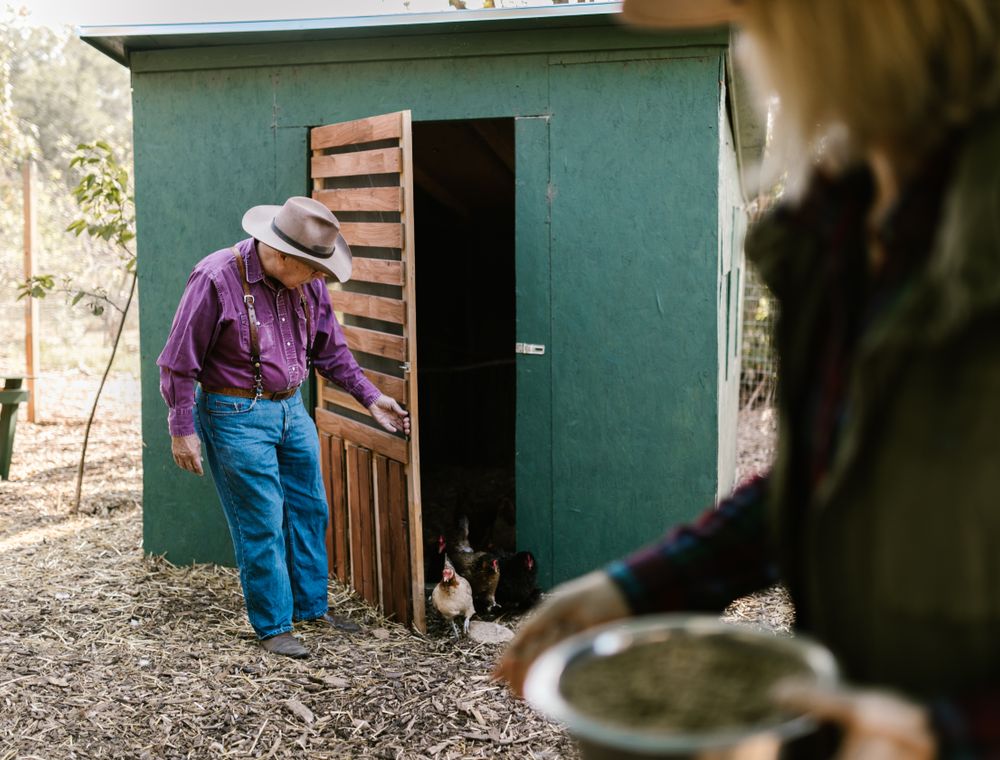
Short answer: Hire for reliability and honesty, then teach the work on paper and on the floor. Most small farms need one dependable stockperson before anything else, and the first two weeks decide whether that person stays. Write the daily task list, the biosecurity rules and the record sheet before the first worker starts. In our example, an 800-bird layer house needs one full-time stockperson and a helper on cleaning days.
Key takeaways
- Write the daily task list before you advertise the job. You cannot judge a candidate against a job you have not described.
- Hire for reliability and honesty first. Chicken work can be taught in a fortnight, but a person who hides dead birds cannot be trusted with a flock.
- Teach biosecurity on day one, with the footbath and boots, before the new worker touches a single bird.
- Keep a signed agreement that covers hours, pay, days off and what happens to dead birds.
- Check the work with a walk and a record sheet, not with shouting.
Write the day down before you advertise the job
Most farmers hire the wrong person because they hire for a feeling. The applicant seemed keen. He was polite on the phone. Then in the third week the water line runs dry at noon and nobody notices for two hours.
Start with a task list instead. Walk your house from the gate to the back wall with a pencil and write down everything a person has to touch in a normal day: feed, water, egg collection, the mortality count, cleaning the drinkers, sweeping the walkway, topping up litter, the feed store and the record sheet. Put a rough time against each job.
Take an example. An 800-bird layer house with two rows of nests and a manual feed line keeps one person busy for most of the morning, and the cleaning takes an afternoon on alternate days. Once that is on paper you know whether you need one worker, one worker and a helper for cleaning days, or two people full time.
Then the advert writes itself. Something like: feeds and waters 800 layers, collects eggs twice a day, keeps the mortality record, starts at 6 a.m. A candidate who reads that knows what the job is. The one who says yes to everything has not understood it yet.
If you are still deciding how many birds the house should carry, our layer chicks and broiler chicks pages list what each breed needs. The worker’s load follows from that number, so settle it first.
The three jobs most small farms have to fill
Farms under a few thousand birds usually end up with three kinds of work. Keep them separate in your head, even if one person does two of them.
| Role | Main daily tasks | Skills that matter | Warning sign |
|---|---|---|---|
| Stockperson | Feed, water, mortality count, checking heat and birds at each round | Patience with birds, careful counting, notices small changes | Records written at 6 p.m. instead of at the pen |
| House hand | Cleaning drinkers, sweeping, removing litter, footbaths, washing crates | Stamina, thoroughness, keeps to the cleaning order | Clean house, but dirty boots or a footbath full of feathers |
| Egg and sales hand | Collecting and grading eggs, counting crates, dispatching orders, phone messages | Honest with money and numbers, clear with buyers | Crate counts that never match the sales book |
On a small farm the stockperson and the house hand are often the same person. That works if you schedule the cleaning days and do not let cleaning slide whenever the feed delivery is late, which it will be. Those trade-offs get more serious as the flock grows, which is the subject of scaling to a commercial farm.
Interview for habits, then test them on the floor
Ask questions that reveal habits. What did you do the last time an animal died on you? Did you tell the owner, and how soon? How do you feel about picking up a dead bird? Someone who says “I buried it and told you the same day” is worth more than a graduate who can name every vaccine.

Then take the candidate to the farm for two hours and watch them work. Give a simple test. Ask them to count 50 chicks into a box without losing one, or to fill a water line and find the leak you have left on purpose. You learn more in twenty minutes on the floor than in an hour across your desk. Pay them for the trial morning. It is fair, and it stops people turning up just to see the farm. If you want to see a working house before you hire, farm visits are by appointment, and the about page explains how we run ours.
- Ask about a time they got something wrong and what they did next.
- Ask what they would check first if the birds went quiet at feeding time.
- Ask when they last saw a sick bird and what they did about it.
Put the agreement in writing, even for one worker
Verbal promises are where most farm disputes start. A short agreement, signed by both of you, covers the points that cause arguments later.
- Hours, start time and the weekly day off
- Monthly pay, the day it is paid, and any deduction rules
- Who answers for feed, eggs or birds that go missing
- How dead birds are handled and recorded
- Phone use in the house, visitors allowed in the pens, and the footbath rule
- What notice each side must give before leaving
Be careful with deductions. Taking the cost of disease losses out of a worker’s wage is hard to defend, and it breeds resentment. Deduct only where the loss clearly comes from carelessness, such as a gate left open, and write down what counts. Check the current national minimum wage with the Labour Department before you settle a figure, because the rate changes and paying below it puts the farm at risk. Many of the same mistakes show up in the beginner mistakes we see most, and an unclear agreement is near the top of that list.
A two-week training plan that starts with the footbath
A new worker should learn the house in the order that protects the birds. Biosecurity comes first, not last, because one careless walk from a dirty yard into a clean house is the quickest way to lose a flock.
- Days 1 and 2: the footbath, the boot change at the door, hand washing, and who may enter the house. Walk the line between clean and dirty areas with them, out loud.
- Days 3 to 5: feed, water and the feeder check. Measure feed with the scoop you use every day, and show them where the water pressure drops at the far end of the line.
- Days 6 to 8: the mortality round. Count the dead birds, record them, lift them with gloves and bag them for disposal the way you have agreed.
- Days 9 to 11: egg collection, grading and cleaning, or brooding checks if you also run chicks. Teach the difference between a sick bird and a stressed one.
- Days 12 to 14: the whole round alone, with you walking behind at a distance. Then review the record sheet together.

At the end of the second week, sit down with the sheet. Where is it blank? Where are the numbers suspiciously neat? Neat numbers are often a sign that yesterday has been copied into today.
If you bought your birds from us, the batch record we send with each order lists the vaccines given at the hatchery. Show it to the worker on day one. It gives them the reason behind the vaccine calendar, which is easier to follow than a list of dates on the wall.
The biosecurity rules workers break first
The same few breaches show up again and again on farms that lose birds. They are almost never malicious. Someone is tired, the footbath is empty, and a neighbour’s child wants to see the chicks.
- A worker moves from a sick house to a healthy one without changing boots. Fix it with separate boots for each house, kept at the door of each.
- The footbath holds dirty water because nobody refilled it. Refill it at the start of every round and write the time on the bucket.
- Dead birds lie on the walkway until afternoon. Remove them at the first round, not the last.
- Friends, relatives and other workers wander into the pens. Write the visitor rule and post it at the gate.
- Feed bags are opened in the house and left uncovered. Keep feed in a closed bin, and wash the scoop each week.
Pay attention to the first worker who asks why the footbath matters. That is a good question. Answer it properly. The worker who understands the reason keeps the rule when you are not standing there, and that is the only time it really counts. Our fuller guide to the farm-wide routine is in biosecurity on a poultry farm.
A record sheet a worker can fill in without thinking
The sheet should take less than ten minutes at each round. If it takes longer, the worker will fill it in from memory at the end of the day, and the numbers will drift.
| Time | What to record | Why it matters |
|---|---|---|
| 6:00 a.m. | Birds found dead overnight, house temperature, water flow at the far end | Overnight deaths often point to heat, water or disease |
| 10:00 a.m. | Feed given in kilograms or scoops, refills, anything odd in the birds | Feed records show waste and theft early |
| 4:00 p.m. | Eggs collected, eggs cracked, mortality count, cleaning done | A drop in eggs often shows before the birds look ill |
Keep the sheet on a clipboard at the house door, not in the office. A record is only useful if it is written at the pen, by the person standing next to the birds. For more on the fuller log, see poultry record keeping in Ghana.
Need chicks for your next batch?
Send breed, number and town. We reply with price, hatch date and delivery cost in writing.
Supervise with a walk and a number, not a shout
You do not have to stand in the house all day. You need a routine that tells you what is happening while you are somewhere else.
Walk the house at least twice on a working day, once early and once in the afternoon, and not at the same time the worker does their round. Check three things each time: the birds, the water and the sheet. Then compare the sheet with what you see. If the sheet says two dead and you find five, that is a conversation about the count, not about the birds.
Shouting does the opposite. A worker who is shouted at hides mistakes, and hidden mistakes are what empty houses. Ask a question first: what did you see on the round this morning? Most of the time the honest answer is the one you need, and it arrives sooner than you expect.
Keeping a good worker past the first season
The cheapest worker you will ever have is the one who already knows your house. Replacing a stockperson costs you the training weeks, the mistakes made while the newcomer learns, and the birds that suffer in between.
A few things help without a large budget. Pay on the same day every month. Agree a limit for salary advances in advance, so nobody has to ask in a panic. Praise good work in front of the others and say exactly what it was. A small bonus tied to things the worker controls works better than a sales bonus, because sales depend on the market and not on them. Examples are a clean record sheet for the month, or cracked eggs kept under a level you both agreed.
Example only: a stockperson on GH₵ 700 a month who stays two years instead of changing every six months saves you months of training across that period, and fewer birds are lost while each new person finds their feet. Most farms never write down what turnover costs them. Try writing it down once and the figure will surprise you. For a full worked example of labour sitting alongside birds and feed, see the honest numbers on poultry farming.
When to let someone go, and how to do it cleanly
Some problems do not improve with another talk. Selling birds without a record, taking feed home, lying about the mortality count, or ignoring the footbath after two written warnings are all reasons to end the work. Write each warning down with the date and what you saw. It protects you both.
Pay what is owed on the day they leave, in full, and collect the keys, tools and records before they walk out. Ask for the batch and feed sheets to be handed over. Change the gate code or the lock the same day. A former worker who still holds a key is a risk to every bird on the farm, and that is not an exaggeration.
Before the next person starts, check these
Run through this list before any new person sets foot in the house. Most first-week problems come from one of these being missing.
- The daily task list is written and pinned at the house door.
- The signed agreement is in both your hands, with a copy for the worker.
- Boots, gloves, overalls and a working footbath are ready before day one.
- The record sheet is printed, with the house name on every page.
- The visitor rule is posted at the gate.
- A named person is on call when you are away, with the vet’s number and yours on the sheet.
If you are still planning the number of birds you will need, our day-old chicks page explains what each order contains. When the house is ready, send us the size and the week you want the birds on WhatsApp at +233 24 915 1503, or use the form at the order form. Questions about ordering and delivery are in our FAQ.
Questions farmers ask
How many workers does a small poultry farm in Ghana need?
It depends on the number of houses, how many birds you keep and whether eggs are collected by hand. Write the daily task list first, time each job, and add up the hours. For one house of a few hundred birds, one dependable stockperson often covers the round, with a helper on cleaning days. Once you run several houses or more than about a thousand birds, most farms split the stockperson role from the cleaning and the sales work.
Should I pay a poultry worker monthly or per bird?
Pay a fixed monthly wage and add a small bonus for clean records and low breakage. Paying per bird invites people to hide deaths and rush the round, because their money depends on the count. A fixed wage keeps the focus on the birds.
Can I take the cost of dead birds out of my worker’s pay?
Be very careful. Birds die from disease and weather even in well-run houses, and a worker cannot prevent every loss. Deduct only where the loss clearly comes from carelessness, such as a gate left open or a footbath ignored, and write the rule into the agreement. Check the rules with the Labour Department before you deduct anything.
How long does it take to train a new poultry worker?
The routine work, feeding, watering, counting and cleaning, can be learned in about two weeks with a clear plan. Spotting a sick bird early takes much longer, often a few months of working alongside you. Plan for the first season as the training period, and expect the record sheet to improve gradually.
What should a worker do when birds die overnight?
Remove the dead birds with gloves, count them, and write the number, the time and the house on the sheet. Check the water flow and the house temperature. If the number is above normal, or several birds die together, phone the owner straight away. Keep a dead bird for the vet to see if you are asked, and never handle a suspicious bird with bare hands.
How do I stop eggs and feed going missing?
Weigh feed in and out, count crates at collection and again at dispatch, and keep feed in a closed bin with one key. Have the worker sign the sheet at the end of each day, and do a spot check at a different time each week. Put the rule in the agreement so that everyone knows what happens if the numbers do not match.
Do I need a written agreement for just one worker?
Yes. A short agreement signed by both of you takes less than an hour to write and prevents most disputes about hours, pay and responsibility for losses. Keep the original and give the worker a copy. Verbal arrangements are where most farm arguments start.


