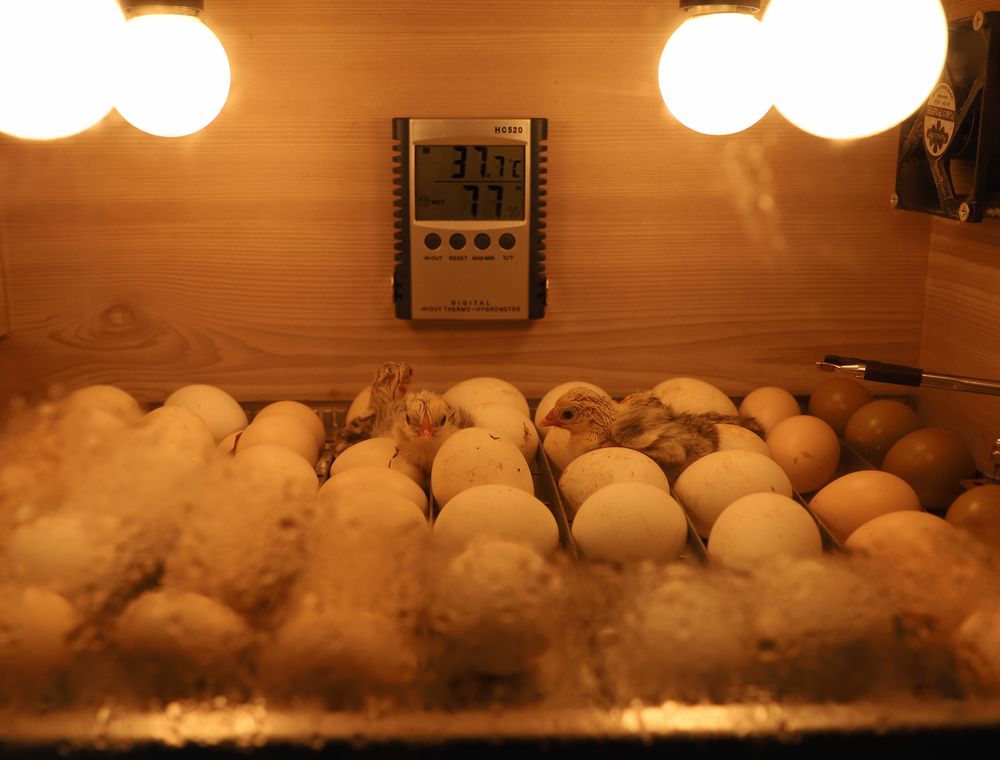
Short answer: Fumigation kills germs in the air and on surfaces, but it only works on a surface that is already clean and dry. Clean and dry the machine and room first, then fumigate under the product label and your supplier's protocol, with the room empty and well ventilated. For most routine work, a good physical clean and a label-approved disinfectant do the job with far less risk to the people in the hatchery.
Key takeaways
- Clean and dry before any fumigation; gas cannot reach germs buried under shell dust and grease.
- Treat fumigants as hazardous chemicals, and keep people, children and pets out of the room while they work.
- Use gas for the jobs that need it, such as an enclosed setter or hatcher, not every routine wipe-down.
- Ventilate fully before anyone re-enters, and check the room with your own senses and a proper gas meter where you have one.
- Write down every fumigation with the date, the room, the product and who did it.
Fumigation is a gas, not a cleaning method
Many growers ask us for a fumigation schedule as if the gas would clean the setter for them. It will not. A fumigant can only reach what it touches. Shell fragments, dried yolk, dust and feather fluff sit between the gas and the germs underneath, and the gas loses the contest.
At our hatchery in Kasoa we think of fumigation as the last step of a clean, not the first. The order is always the same: remove the solid matter, wash away the grease, dry the surfaces, and then decide whether gas is needed at all. If the machine is clean, a label-approved disinfectant may be enough for the day-to-day. If the machine is dirty, no gas in the world will fix it.
Our article on cleaning and disinfecting an incubator between hatches covers the routine clean in detail. This piece is about the room, the gas and the people around it.
Cleaning first: why fumigation fails on a dirty machine
The most common failure we see is a machine that is fumigated straight after a hatch. The trays still have shell in the corners, the water pan has a film of dirt, and the fan housing is clogged with fluff. The gas goes in, the room smells strong, and the machine comes out looking fine. Two weeks later the chicks in the next set are dying in the first week with the same bacteria they came in with.
Start with dry work. Brush out the shells and fluff from the trays and the cabinet with a stiff brush, and collect the debris in a bag. Do not dry-sweep in a closed room, because the dust goes straight into the air and onto the next set of eggs. Then wash with warm water and a neutral detergent, rinse, and leave everything to dry completely.
Dryness matters for two reasons. Moisture dilutes most disinfectants and can stop some gases working evenly. A damp machine also gives bacteria a place to multiply after the treatment is over. In Ghana's humid months, drying can take a full day, so plan the work around it.
What the traditional fumigant is, and why we are careful
The fumigant most growers have heard of is formaldehyde, usually generated from a formalin solution, often with a second chemical to release the gas. It is effective against many bacteria and fungi, and it has been used in hatcheries for decades. It is also a serious irritant and a known carcinogen, and it is the reason we are careful.
Formaldehyde reaches the eyes, nose and throat quickly, and high exposure damages the lungs. Repeated short exposures add up. For that reason, many hatcheries have moved routine work to less hazardous products. Where fumigation is still used, it is done with strict controls, and many suppliers now advise against it altogether in rooms that people use every day.
We do not give fumigant quantities or mixing steps in this article. Those belong on the product label and in your supplier's written protocol. If you are unsure whether your product is safe for your room, ask the supplier or a vet with hatchery experience before you open the container.
Safety first: the people in the room
The room is only ready when the people are out of it. Before you open any fumigant, check the following every time, not just on the first day.
- Clear the room of people, children, pets and open food.
- Put on the protective gear the label lists, including eye protection and a suitable mask or respirator.
- Seal the room only as far as the protocol allows, and post a clear sign on the door.
- Keep a source of fresh air and a route out that you can reach without going through the gas.
- Have someone outside who knows what you are doing and knows what to do if you feel unwell.
- Keep the phone of your vet and the nearest clinic on the door.
If anyone has coughing, watering eyes, headache or chest tightness after a fumigation, get them into fresh air at once. Do not go back in to check. Tell the doctor or clinic what product was used, and bring the label if you can.
Pregnant women, children, people with asthma and anyone with a history of chest problems should stay well clear of fumigation work. Ask someone else to do the job, or change to a product that does not need the same precautions.
Fumigating a setter or hatcher, step by step
When the protocol calls for gas in an enclosed machine, the steps below are the sequence we follow in outline. They do not replace the label, so read that first and adjust for your product.
- Empty the machine completely: no eggs, no chicks, no trays with shell in them.
- Clean and dry the cabinet, trays, water pans and fan housing as described above.
- Close the machine, switch off the heating and the fan as the label directs, and remove any water that could react with the product.
- Place the fumigant in the container the label specifies, away from any heating element, and close the machine.
- Leave the machine for the contact time on the label, without opening it.
- Ventilate the room and the machine fully before you open the door to anyone else.
- Record the date, the product, the time and the person who did the job.
Note the word fully. A machine that is opened too soon will release gas into the room, and a room that is opened too soon will carry gas to the next person through the door. Ventilation takes longer than most people expect, and a fan running for an hour is often not enough in a closed building.
Fumigating eggs, and when it belongs in the routine
Eggs are sometimes fumigated after collection and before storage, especially when the hen house is dirty or the eggs are heavily soiled. Our view is that good collection and clean handling do more for egg hygiene than fumigation does, because gas cannot clean a shell that is already caked with manure.
If you do fumigate eggs, do it in a separate, ventilated space from the storage room, and never in the same room where people eat or sleep. Eggs that have been fumigated can carry residue into the storage area, so keep the stored eggs covered until the gas has cleared. Follow the protocol your supplier or vet gives you, and do not repeat the process on the same eggs every day.
For eggs you plan to set, the best protection is to keep the eggs clean from the nest onward. Our notes on storing fertile eggs cover the storage side, and managing a breeder flock covers the nest and collection routine that keeps eggs clean before any gas is needed.
The hatch room, trolleys and the things around the machine
A machine can be spotless and the room still infects every set. Hatch rooms collect dust from the feed store, droppings from the rats in the roof, and footprints from the yard. Floors need to be washed, not just swept, and walls and ledges wiped down once a week in the rainy season.
Trolleys, baskets and egg trays are the quiet carriers. A tray that moves from the dirty yard into the clean room without washing is a common source of contamination. Keep one set of trays and trolleys for the clean area and another for the yard, and wash the clean set after every use.
Shoes matter as much as the gas. Keep a footbath at the room door and change into hatchery boots, and do not let anyone walk from the feed store straight to the setter. Our article on biosecurity on a poultry farm sets out the wider rules for the site.
Need chicks for your next batch?
Send breed, number and town. We reply with price, hatch date and delivery cost in writing.
Alternatives to gas for routine work
Most routine jobs do not need a fumigant. The table below sets out the common options and where each one fits. The right choice depends on the product label, your room and the people who work in it.
| Method | Good for | Watch out for |
|---|---|---|
| Dry brushing and scraping | Shell, fluff and debris before any wash | Dry sweeping in a closed room spreads dust |
| Warm water and neutral detergent | Grease, yolk and dirt on trays and cabinets | Rinse well; residue blocks disinfectants |
| Label-approved disinfectant (wipe or spray) | Surfaces between hatches and on trolleys | Dilution and contact time as printed on the label |
| Formaldehyde-based fumigation | Enclosed machines where your protocol still uses it | Toxic; strict protective gear, sealing and ventilation |
| UV lamp in an empty room | Surfaces and air in an unused room | Does not clean dirt, and shadows protect germs |
In practice, most hatcheries use the first three every week and keep gas for the occasional deep job. If your routine relies on gas every week, the problem is probably the cleaning, not the lack of gas.
Keeping a record of every fumigation
A fumigation with no record is a fumigation you cannot learn from. Write a line for every job in the hatchery log, with the date, the room or machine, the product name and batch, the person who did the work, the ventilation time and any problems. If someone felt unwell, write that down as well, with the time.
The record helps in two ways. It shows you whether the machine is being cleaned properly before the gas goes in, and it gives you a paper trail if a set of chicks goes badly and the vet asks what was done to the room. Our article on poultry record keeping sets out a simple book that covers this.
Common mistakes we see
Growers who run into trouble with fumigation usually make the same few mistakes. Most are about timing, and a few are about trusting the gas too much.
- Fumigating a dirty machine and expecting the gas to clean it.
- Opening the room before the gas has cleared, usually because the job is late and the next set is waiting.
- Using more product than the label says on the theory that more is safer. It is not, and it adds risk to everyone in the building.
- Fumigating a machine with water still in the pan, or with a heater switched on.
- Letting a child or a helper into the room to fetch something during the contact time.
- Skipping the record because the job feels routine.
If you are setting up a hatchery or planning to change your room protocols, our hatchery page explains how we run ours, and you can reach us on WhatsApp at +233 24 915 1503 with questions about your own set-up. For day-old chicks in the meantime, our imported chicks and order form are the fastest way to get started.
Questions farmers ask
Do I need to fumigate my incubator between every hatch?
Not necessarily. A thorough physical clean and a label-approved disinfectant wipe between hatches covers most routine needs. Keep fumigation for deeper jobs, such as after a disease outbreak or when your protocol or vet calls for it. Frequent gassing without a clean first does not add protection.
Is formaldehyde fumigation safe to use at home?
It is hazardous and needs strict controls, including protective equipment, sealed rooms and full ventilation. Many suppliers now advise against it in rooms people use. If you are considering it, ask your vet or supplier for a safer product that fits your room, and never use it in a space where people sleep or eat.
How long should I wait before going back into a fumigated room?
Wait for the time the product label gives, then ventilate fully with fresh air moving through the room. Do not rely on the smell alone. If you feel eye or throat irritation, leave at once and get fresh air. Re-entry time varies by product, so check the label every time.
Can I fumigate eggs in the same room where I store them?
It is better to keep fumigation separate. Gas and residue can settle on stored eggs and the surfaces around them. Use a separate, ventilated space for any egg treatment, and keep stored eggs covered until the room has cleared.
Does fumigation kill everything in the hatchery?
No. Fumigation reduces many bacteria and fungi, but it does not remove dirt, and it cannot reach germs under grease or shell. Viruses and some spores need stronger or different treatment. Think of gas as one part of a clean, not a guarantee of sterility.
What should I do if someone is unwell after fumigation?
Move them into fresh air at once and keep them there. Do not send anyone back into the room to check. Take them to a doctor or clinic, and tell staff what product was used and when. Keep the label with you if you can, because it lists the first aid the product needs.


