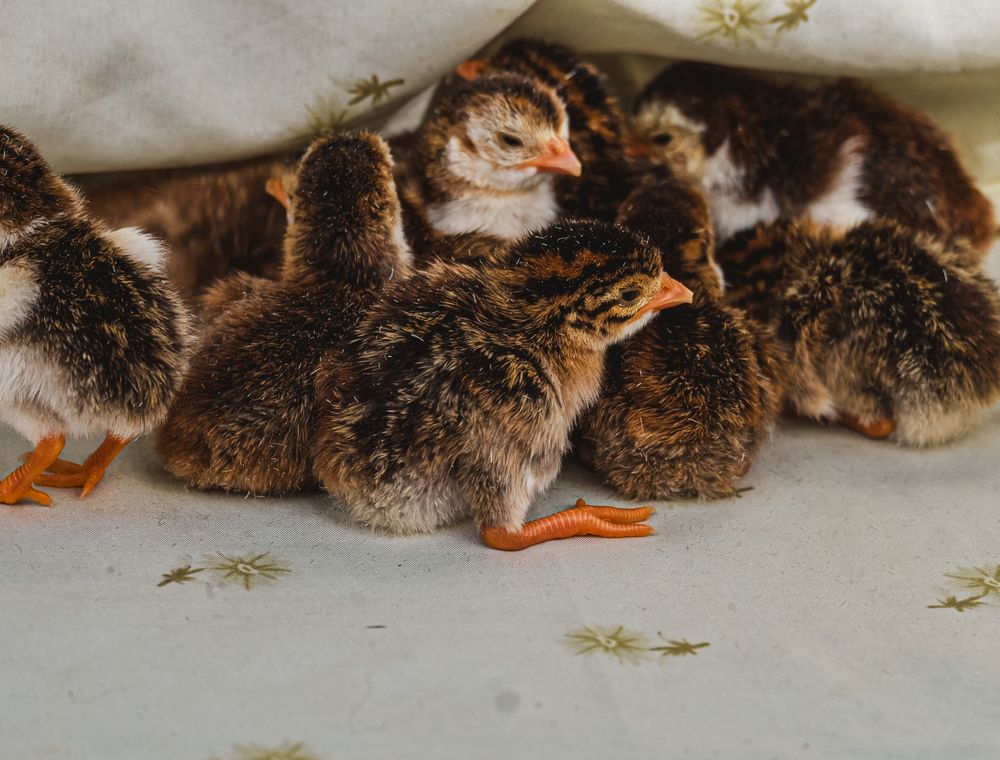
Short answer: Blackhead, or histomoniasis, is a protozoan disease that hits turkeys and guinea fowl much harder than chickens. It spreads through droppings and through the eggs of a caecal worm that lives in the bird's gut. Keep young turkeys and guinea fowl away from chickens, watch for bright yellow droppings and drooping wings, and call your vet the same day you see them.
Key takeaways
- Blackhead is caused by a protozoan, Histomonas meleagridis, carried inside caecal worm eggs.
- Turkeys and guinea fowl die of it; chickens often carry it with few visible signs.
- Yellow, sulphur-coloured droppings and drooping wings are the early warning, not the dark head.
- Keeping species apart and clearing the caecal worm reduces the risk more than any single treatment.
- No vaccine in our hatchery programme covers blackhead, so management is the whole defence.
Why the guinea fowl go first when blackhead is in the shed
The first thing most farmers notice is not a sick bird. It is a keet that stands at the back of the pen with its wings hanging a little low, while its pen mates are still running to the feeder. By the next morning that keet is dead, and the bird beside it is looking the same way. We hear this story at least once a rainy season from farmers who bought a healthy group of keets from us a few weeks earlier.
Blackhead moves quickly through guinea fowl and turkeys. A flock can go from no visible trouble to a serious loss in a few days, which is why waiting to see whether the bird recovers is the costliest choice you can make. Chickens are a different story. They usually carry the parasite in the gut without showing much, so a farm that keeps only chickens may never see blackhead, while the same parasite could be killing its guinea fowl in the next pen.
If you keep guinea fowl or turkeys alongside chickens, treat blackhead as a real risk every single season, not a rare event.
What the parasite is and how the birds pick it up
Blackhead is caused by Histomonas meleagridis, a single-celled organism that lives in the liver and caecum (the two blind pouches at the junction of the small and large intestine). It is a protozoan, not a bacterium, so antibiotics do nothing to it. That one fact explains a lot of failed treatments we have heard about on farms.
The protozoan on its own does not travel far. It needs a passenger. The caecal worm Heterakis gallinarum lives in the same part of the gut, and its eggs leave the bird in the droppings. Inside those eggs the protozoan can survive for a long time, sometimes for years in moist soil. When a turkey or guinea fowl pecks at contaminated litter or soil and swallows an infected worm egg, the chain starts again.
So there are three things to break in the chain: the worm, the protozoan carried by the worm, and the bird's exposure to fresh droppings on the ground. A farm that clears only one of them keeps getting hit.
- Caecal worm eggs are the main way the disease enters a flock on most farms.
- Direct contact with fresh droppings from infected birds spreads it too, especially in crowded pens.
- Earthworms can carry caecal worm eggs in some setups, so free-range runs need thought.
- Wet, warm ground keeps eggs viable far longer than dry, hot ground does.
Why turkeys and guinea fowl are hit harder than chickens
Turkeys and guinea fowl are the birds the disease is most dangerous to. The reason is partly how the parasite multiplies inside them and partly how their immune systems respond. In turkeys, the liver damage can be severe and quick. Guinea fowl show the same pattern, and farmers often describe them as the first birds to collapse in a mixed run.
Chickens, especially the modern layer and broiler breeds, can be infected and still look reasonably well. That is why blackhead has a reputation for being a turkey disease in many textbooks, and why so many chicken keepers in Ghana have never heard of it. A chicken can act as a quiet carrier, shedding the protozoan and the worm eggs without much sign. The problem is that a carrier chicken can then infect the turkey shed next door.
Our rule at the hatchery is simple. If you plan to keep turkey poults or guinea fowl keets, keep their brooding and rearing area completely separate from your chickens from the first day. A shared yard is where the trouble usually begins.
The signs to check every morning
Blackhead gets its name from the dark, bluish or purplish colour that can spread over the head and wattles of an affected bird. That sign is real, but by the time you see it the bird is usually far along. Look for these things in order, starting with the droppings, because they often change before anything else.
- Droppings. Look for bright yellow or sulphur-coloured droppings. Healthy droppings are brown or greenish and firm. Yellow and loose droppings on several birds at once is a warning you should act on that day.
- Posture. Birds stand hunched, with wings drooping and feathers ruffled. They separate from the group and sit still in corners.
- Appetite and water. Feed intake falls and the birds drink less. Some stop eating completely a day before they die.
- Head colour. Check the head, comb, wattles and, in turkeys, the snood. A dark, cyanotic tint is a late sign.
- Weight and weakness. A bird that cannot keep up with the group and loses condition quickly is in trouble.
Walk the pen with the lights on in the early morning. Birds that are sick are usually standing still, not running, so you have to look for the ones that are not moving.
Blackhead, Newcastle and coccidiosis: how to tell them apart
Several poultry diseases look alike at first glance. A sick turkey with a drooping wing and a dull look could be blackhead, Newcastle disease, coccidiosis or several others. Getting the diagnosis wrong costs time, and time is what you do not have. The table below gives the differences farmers most often mix up. It is a guide to what to ask your vet about, not a way to diagnose a bird yourself.
| Feature | Blackhead | Newcastle disease | Coccidiosis |
|---|---|---|---|
| Most affected | Turkeys and guinea fowl, young birds most at risk | All birds, chickens included | Chicks and growers, mainly in litter |
| Droppings | Bright yellow, sulphur-coloured, loose | Green, watery, sometimes with mucus | Blood or dark, bloody mucus |
| Head | Dark or bluish, cyanotic | Often normal, swollen in some cases | Usually normal, pale if anaemic |
| Breathing and neck | Usually quiet, no gasping | Gasping, twisted neck, paralysis | Usually quiet |
| Speed of spread | Moderate to fast in a mixed run | Very fast across a flock | Fast within a crowded pen |
Two things stand out. Newcastle usually brings breathing trouble and nervous signs, which blackhead does not. Coccidiosis puts blood in the droppings, which blackhead does not either. If the yellow droppings and drooping wings are present without respiratory signs, blackhead should be near the top of the list for turkeys and guinea fowl.
Newcastle is a notifiable concern and needs a vet urgently. We cover Newcastle and our vaccine timing in our poultry vaccination schedule for Ghana guide, which is worth reading alongside this one.
How the Ghana climate makes the problem worse
Blackhead loves the conditions that the rainy season brings to the Central Region. Warm, wet ground keeps caecal worm eggs alive for longer, and the eggs develop faster when the soil stays damp. In Kasoa, the months from roughly April to July often see a sharp rise in the questions we get about droopy turkeys and guinea fowl, and the farms that lose birds are nearly always the ones with muddy, shaded runs that never fully dry.
The harmattan works the other way. From December to February the air is dry and dusty, and the ground dries out. The eggs do not die, but fewer of them stay active on the surface. That is not a reason to relax. Many farmers who lost birds in a rainy spell carry the eggs into the dry season in the litter and in the soil under their houses, and the next wet season restarts the infection.
Festive demand adds another layer. Turkeys sell well around Christmas and at Eid, and many farmers buy in new poults a few weeks before the season. Those new birds arrive into the same ground their predecessors used, so a shed that was never properly cleared becomes the source of the next outbreak.
Keeping the species apart on a small farm
Most small farms in Ghana cannot build three completely separate sheds. You can still do a great deal with what you have. The aim is to make sure chickens never share ground, litter, feeders or drinkers with turkeys or guinea fowl, and that fresh droppings from one group never reach the other.
Here is the checklist we give farmers who ask us how to run turkeys next to chickens. Tick each one before you put the poults in.
- Separate pens, not just separate corners of the same pen.
- Separate feeders and drinkers for each species, and never move them between pens without washing them.
- Separate people where you can. If the same person moves between the two groups, they should change footwear or wash boots at the entrance.
- No free-ranging of chickens into the turkey or guinea fowl yard, even for a few hours.
- Keep the litter dry. Remove wet patches daily and replace litter that stays damp at the base of the feeders.
- Do not raise turkeys or guinea fowl on the same litter you used for chickens last season.
- Keep a note in your batch book of which pen had which birds, so you can trace a problem back quickly.
When we sell turkey poults or guinea fowl keets, we tell farmers the same thing. The birds leave our hatchery clean and vaccinated for the diseases we cover, but the ground they land on in your farm is entirely your responsibility.
Need chicks for your next batch?
Send breed, number and town. We reply with price, hatch date and delivery cost in writing.
Worming, litter and the caecal worm link
Because the caecal worm is the usual carrier, controlling worms in turkeys and guinea fowl is part of blackhead control. Many farmers worm their birds on a routine schedule and assume that is enough. It helps, but it does not replace clean ground. A worm treatment kills worms inside the bird; it does not clean the litter, so new eggs keep arriving.
Ask your vet to recommend a worming plan that suits your species, your rainfall and your flock age. Do not share medicines between species without checking first, and never use a product your vet has not approved for turkeys or guinea fowl. The right product, the right timing and the right withdrawal period are the vet's job, not something a farmer should guess from a neighbour.
Litter management matters just as much. Replace or turn litter that has become wet and caked. Remove droppings from the pen daily during the rainy months. Where you can, let the ground rest for several weeks between flocks. Many farmers in the Central Region turn their turkey runs over to maize or vegetables for a season, which breaks the cycle of eggs in the soil.
For general worm control in chickens and a broader view, our guide to worms and deworming in chickens in Ghana covers the basics.
What to do when a bird is already showing signs
When you find a bird with yellow droppings and a drooping wing, your first call is to a vet, not to the feed shop. Birds decline quickly, so the sooner the vet sees the flock, the more options there are. While you wait, you can reduce the spread without making things worse.
- Isolate the sick birds into a separate, clean pen if you can do so without stressing the rest of the flock.
- Keep water clean and fresh and make sure every bird can reach it. A sick bird that cannot drink dehydrates fast.
- Remove fresh droppings from the pen several times a day, and do not let your helpers walk from the sick pen into the healthy one with the same boots.
- Record the time signs started, how many birds were affected and how many have died. Your vet will ask.
- Do not add new birds to the affected shed until the vet says it is safe.
Do not dose the whole flock on your own guess. Wrong medicine, or the wrong dose, can make things worse and leave residues in birds you plan to sell. If you need medicine, follow your vet's advice and their written schedule.
Birds that have already died should be removed and disposed of safely, away from the flock and away from water sources. Burn or bury them deep, and wash your hands and boots before you return to the healthy birds.
What our hatchery vaccinates for, and what it does not
People sometimes assume that a vaccinated chick cannot get blackhead. That is not how it works. Our chicks leave the hatchery vaccinated against Marek's disease, Newcastle disease, Gumboro (infectious bursal disease), infectious bronchitis and coccidiosis, and each batch comes with a batch record. None of those vaccines is a blackhead vaccine. Blackhead is not covered by any routine vaccine in our programme, so the defence on your farm is management, not a vaccine certificate.
That is worth saying clearly, because a farmer who believes the chicks are protected against everything will relax their litter and fencing. We would rather you know the limits. The same goes for turkey poults and guinea fowl keets: they are vaccinated for what we cover, and the rest is down to the farm.
If you are buying turkey poults from us, ask about the vaccination record and keep it with your flock file. Pair it with the turkey poults for Ghana page to plan the species split before the birds arrive. Guinea fowl buyers should read the guinea fowl keets page alongside it, and anyone who wants to see how we handle the batch record before paying can check our frequently asked questions. If you are ready to order, the order form asks only for your region and bird numbers, and our team will confirm the delivery cost in writing before any money changes hands. For a farm in the Central Region, the Kasoa collection point is the quickest route, and anything further away goes out through our delivery service.
Starting the next flock on clean ground
The best time to stop blackhead is between flocks. Once the birds are in and the litter is contaminated, you are managing an infection. Before the next batch of guinea fowl keets or turkey poults arrives, a clean restart gives them the best chance.
Remove all litter from the pen and dispose of it away from your sheds. Scrape the floor and let it dry in the sun for as long as the weather allows. Wash feeders, drinkers and any equipment with a proper poultry disinfectant, following the label, then let everything dry before the birds return. Where possible, rest the ground for several weeks, or grow a crop on it.
A harmattan period is useful for this. Dry air and sunshine do a lot of the work for you, provided the pen is not left shaded and damp. Plan the clean-out for the dry months when you can, so the new flock starts in a shed that has had a proper rest.
If you are planning a new turkey or guinea fowl enterprise, the guinea fowl farming guide and the turkey farming guide for Ghana both cover the housing and rearing plan in more detail.
Questions farmers ask
Can chickens get blackhead in Ghana?
Yes, but chickens usually show little or no sign. They often carry the protozoan and the caecal worm eggs quietly. That makes them a risk to turkeys and guinea fowl kept nearby, even when the chickens look healthy. Keep the species apart and ask your vet about the chicken flock too.
Is blackhead the same as Newcastle disease?
No. Blackhead is caused by a protozoan called Histomonas meleagridis, while Newcastle disease is a viral infection. Newcastle usually causes breathing trouble, twisted necks and green droppings. Blackhead gives bright yellow droppings and a dark head, with less breathing trouble. Your vet can confirm which one you have.
Can I cure blackhead with antibiotics?
Antibiotics do not kill the protozoan that causes blackhead, so they are not the right treatment on their own. Some farmers use antibiotics to cover secondary infections. Any medicine should be chosen and dosed by your vet, who can also advise on withdrawal periods if the birds are for sale.
Do the chicks from Halaal Farms protect against blackhead?
Our chicks are vaccinated against Marek's disease, Newcastle disease, Gumboro, infectious bronchitis and coccidiosis, and each batch has a record. None of these is a blackhead vaccine. Blackhead prevention relies on separating species, keeping litter clean and rotating ground, and your vet can help you plan that.
How long do the eggs of the caecal worm survive in the ground?
They can survive for many months in moist, shaded soil, and in some conditions for longer. Dry, sunny ground kills them faster. This is why a rested, dried-out pen is far safer than one that stays damp and shaded through the rainy season.
Can I keep turkeys and chickens in the same yard if they are in separate pens?
It is much safer than sharing a pen, but the yard still matters. Shared ground, shared drinkers, and birds that walk between pens can carry droppings and worm eggs. Keep the pens apart, use separate equipment, and never let chickens range freely in the turkey area.
What should I do with dead birds?
Remove them promptly and dispose of them away from the flock and water sources. Burn them or bury them deep. Wash your hands and boots before returning to healthy birds. Ask your vet to look at a few birds if you are unsure of the cause, since a post-mortem gives a clear answer.
When is blackhead most likely in Ghana?
The rainy months are the highest risk, when the ground stays warm and wet and caecal worm eggs develop quickly. Turkeys raised for Christmas or Eid are also at risk when new birds are put onto ground that was not properly cleared from the last flock.


