Short answer: A bakery buys eggs by the count and a caterer buys them by the event, so a crate price tells you very little about either. Agree the egg size, the count per delivery and a per-egg price in writing, then plan for the few weeks each year when orders spike. Take a deposit on event orders before you commit feed to them.
Key takeaways
- Price a bakery per egg, and show the crate equivalent only as a second line.
- Get the egg size the recipe needs before the first delivery, and keep size classes in separate labelled trays.
- Plan a bakery account against your lowest weekly count, and plan caterer orders against your reliable daily average.
- Take a deposit on event orders before you buy feed for them, and write the cancellation rule down.
- Count and grade every tray at the farm and sign the delivery slip, so a short count never becomes an argument.
Bakers count eggs, shops count crates
Ask a baker how many eggs the shop uses in a week and you will usually get a shrug and a rough guess. Ask how many cakes they bake on a Saturday and the answer comes back quickly. That gap is the whole business. A baker works backwards from a recipe: six eggs for a sponge, two for a tray of rolls brushed with egg wash, a dozen for a custard that has to set. A shop owner thinks in crates. A bakery thinks in eggs, and every egg goes into a formula.
So when a bakery rings you, do not quote a crate price on the first call. Ask what they bake on a normal day and what they bake on a heavy day. Get the egg count for each product, then the number of batches per day. The figure you send back should be eggs per day and eggs per week. Crates only come into it later, when you work out your own collection run.
We have seen new suppliers lose a bakery account for one reason more than any other. They quote a crate price, the baker divides it out, the per-egg figure looks high next to what the baker already pays, and nobody explains what was in the crate. Write the per-egg price on the quote. If you want to add the crate equivalent, put it underneath in brackets.
Size classes: what a sponge can forgive and what it cannot
Most bakers will live with one small egg in a tray. What they will not live with is a tray where the eggs range from small to huge. A sponge recipe written for medium eggs will come out dry or heavy if half the batch is around 45 grams and the other half sits near 70. The ratio of white to yolk shifts, the crumb changes, and the baker blames the flour, the oven or the supplier, usually in that order.
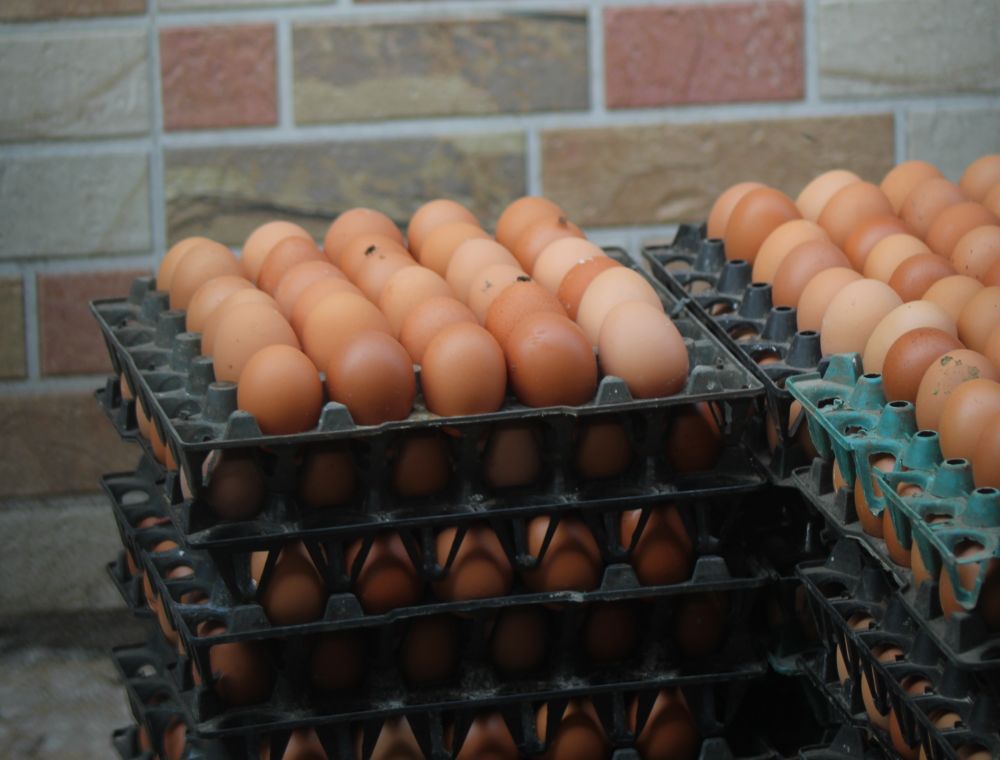
Before any delivery, sort into at least two classes and keep them in separate trays. Mark the tray, not the egg. A baker who knows tray two is large will adjust the recipe without ringing you. Small eggs go to a buyer who sells them as a bundle, or to a household that cooks at home. They do not go into a bakery tray with the medium stock.
Shell condition matters as much as size. A cracked egg is harmless in a soup pot, but it is a problem on a scale when a baker is weighing yolk and white for a pastry cream. Reject cracks at the farm, before the crate is closed. Our guide to what buyers check on a crate covers the rest of the shell and cleanliness tests. The one cracked egg that reaches the bakery is the one the baker remembers at the next order.

| Size class | Rough weight | Where a bakery uses it | What to watch |
|---|---|---|---|
| Small | Under about 53 g | Bundles for home cooks, small buyers | Keep out of the bakery tray |
| Medium | About 53 to 63 g | Sponges, bread, most daily bake | Keep the spread tight across the tray |
| Large | About 63 to 73 g | Rich cakes, custard, pastry cream | Price a little higher and label the tray |
| Very large | Over about 73 g | Few bakery recipes ask for them | Sell as a separate premium tray |
Getting the eggs to the oven clean, dry and on time
A bakery starts before most of the town is awake. The ovens are lit around five, and the people who open the shop expect their stock before seven. If your delivery lands at half past eight, the baker has already bought from someone else for the day. Agree the time on the first call and keep to it for a month before you ask for more.
Eggs in a closed van in Kasoa heat go off faster than the label suggests. Keep the crates in the shade, out of the sun on the tailgate, and do not stack them in a sealed box with a warm engine next to them. We grade dry and brush off the dirt. We do not wash eggs for bakeries unless the buyer asks for it and we can get them cooled straight after, because a wet shell is a door for bacteria.
- Collect the day's eggs twice: once at mid-morning and once before dark, so the shells are not stuck with dirt.
- Grade by size and reject cracks, double yolks and dirty shells at the farm.
- Pack each size class in its own tray and mark the tray with the count and the date.
- Load the van last, keep the crates off the floor and out of direct sun.
- Hand over the count on the spot, and write it on the delivery note the baker signs.
The signed delivery note is not bureaucracy. It is the record that settles the argument when a tray is short two eggs on a Monday. Without it, the baker says you shorted them, you say they miscounted, and the account is finished before the next order.
A per-egg price a baker can check on the back of a receipt
Take a bakery making 40 cakes a week at six eggs each. That is 240 eggs, which is eight crates of 30. At the crate price we list for table eggs, GH₵50, the bakery would pay about GH₵400 a week, or GH₵1.67 an egg. A standing order at a fixed weekly count is worth a lower price to you, because you are not chasing a new buyer every Tuesday. Say GH₵1.55 an egg for a steady 240 a week, and the bakery pays GH₵372. That is GH₵28 less than the list, and it is a fair trade for the certainty.
The table below is the way we would lay it out for a baker who wants to compare. Notice that the per-egg price falls as the volume rises, but only up to the point where your collection costs stop falling too.
| Eggs per week | Crates of 30 | Price per egg | Weekly value |
|---|---|---|---|
| 120 | 4 | GH₵1.60 | GH₵192 |
| 240 | 8 | GH₵1.55 | GH₵372 |
| 480 | 16 | GH₵1.50 | GH₵720 |
| 720 | 24 | GH₵1.45 | GH₵1,044 |
The figures are an example for planning, not a price list. If you have not yet worked out your own cost per egg, our step-by-step pricing guide takes you through it. Put your own cost per egg next to them before you agree a single line. If a 480-egg order means you have to buy in eggs from another farm to fill the gaps, the price has to go up, not down.
The bakery will also ask whether the price includes delivery. Answer that on the quote in one line. Delivery inside the town is part of the per-egg price in most cases we would suggest. A delivery across the other side of Kasoa is a separate charge, written down before the first crate moves.
The caterer who rings on a Thursday for a Saturday event
Caterers buy differently. A caterer may go three weeks without a call and then need five hundred eggs by Saturday morning for a wedding, a funeral or a church thanksgiving. Nobody is wrong in that pattern. It is simply lumpy, and lumpy orders are where a small farm gets hurt, because the eggs have to exist on the day, not on the day you were told about them.
Here is a sum that catches people out. A caterer plating breakfast for 250 guests wants two eggs each for an egg dish. That is 500 eggs, or 17 crates once you round up. If your flock lays 300 eggs on a good day, you cannot fill that from one day's collection. You have to collect across three or four days and grade carefully, and that only works if you knew by Monday.
So plan event orders from the flock's average, not from its best morning. If you are not sure what your lay rate really is, our egg business numbers show how to turn it into crates. Take the last four weeks of collection, add them up, divide by 28, and that is your reliable daily number. Anything above that is a bonus you can offer, not a promise you make on the phone.
- Ask the event date, the guest count and the dish or the bake.
- Ask for the egg count per dish, not a rough guess of crates.
- Confirm how many days you have, and whether the eggs are needed graded, washed or both.
- Tell the caterer your reliable daily count, before you say yes.
Three weeks before Christmas, Easter and a wedding season
The bakery calendar is not flat across the year. December is the big one. Fruit cake, sponge for family visits and the trays of pastry that go out for Christmas Day all arrive in the same three weeks. Easter gives a shorter spike. The dry months bring weddings, and a bakery that supplies the cake makers sees its orders climb on the weekends they fall.
Plan the flock to match the spike, not to match the average. If you know that December will draw twice your normal bakery count, start more birds in the spring so they are in full lay by November. Hens that come into lay in the weeks before a rush are a gift. Hens that come into lay during the rush are a liability, because they lay small and soft-shelled eggs while they settle in.
Talk to the bakeries in October, not in the second week of December. A baker who has booked eggs for the season will tell you the volume and the days. A baker who has not booked will ring you with a crisis, and a crisis is the worst time to take on a new supplier. We cover the wider festive planning in our guide on the Christmas, Easter and Eid peaks, and the same logic applies to eggs as to birds.
Deposits for event orders, and what happens when the date moves
An event order is a promise you make to someone else's calendar. Take a deposit before you buy feed for it. A common approach is about a third up front and the balance on collection, and you keep the deposit if the caterer cancels inside a week of the date. Write the terms in the message thread, so that both of you can scroll back to them.
Dates move. A funeral moves a day, or a wedding moves because the bride's family wants a different church. If the date moves a day or two, you can usually hold the eggs in a cool, dry place and deliver them fresh. If it moves two weeks, do not hold the eggs. Eggs age, and a custard made with eggs that are three weeks old does not set the way the caterer expects. Offer the eggs to a regular bakery at the usual price, and keep the event deposit against your next order for that caterer.
The rule we would give any small farm is simple. Keep a deposit that covers the feed you have already committed, and never hold a volume you cannot sell within the week.
Need chicks for your next batch?
Send breed, number and town. We reply with price, hatch date and delivery cost in writing.
Keeping a bakery account when the baker is tempted by someone cheaper
A baker switches supplier for two reasons, price and trouble. Price is the easy one to meet and the one people argue about. Trouble is harder, and it usually shows up as small things: a tray that arrives with four cracked eggs, a delivery that is an hour late twice, a phone that goes unanswered on a Friday afternoon.
Visit the bakery once a month, even if it is only ten minutes. Ask the baker what the rejects looked like, not whether they were happy. Bakers rarely volunteer a complaint, but they will tell you the thing that cost them a batch if you ask in the right way. Ask which product gave them trouble and whether the egg size was the reason.
Tell the baker early when the flock is going through a rough patch. A hen that is moulting, a batch that came in late from the hatchery or a week of harmattan dust that dropped lay all happen on real farms. A baker can plan around a warning of three days. What loses a bakery is finding out at the door, with a tray of nothing in front of them. The same terms that hold a shop account, set out in our guide to selling eggs to shops and hotels, hold a bakery account as well.
Matching the flock to a standing bakery order
A bakery order is only as good as the hens behind it. A young flock in its first lay months gives a steady count and good shells. Around the second year, lay falls off, the shells thin, and the moult can stop collection for weeks. If you have promised a bakery 240 eggs a week, you need to know when the flock will start to slide, and you need the next flock coming in before that date.
Plan the replacement in two steps. Bring in the next group of layers before the current group drops below about 80 per cent of its peak count, so the two overlap for several weeks. That overlap costs you feed and housing for a while, but it saves the bakery account. If you wait until lay is already falling, the gap lasts months.
For a brown-egg bakery supply, the Hy-Line Brown is a common choice we ship as layer day-old chicks, from GH₵23 each in a box of 50 at our starting prices. Check the breed guide before you decide, because a brown-egg layer and a white-egg layer lay to different schedules and the bakery may care about the shell colour in a way you do not expect.
Keep a simple tally of daily lay for every house. A notebook is enough. The number you write down each morning is what lets you answer the bakery honestly when they ask whether the next week is safe.
Where we would start: one bakery before two caterers
If we were starting to sell eggs to bakeries from a small flock, we would take one bakery first and leave the caterers for later. One steady account teaches you more about grading, delivery and counting than three lumpy caterers do. It also gives you a reference the next buyer will ask for.
We would keep the first bakery at a volume you could fill from your worst week, not your best. If the flock averages 200 eggs a day and drops to 150 in harmattan, a bakery that wants 240 a week is a good first customer. A bakery that wants 1,000 is a problem you do not need yet. Once you have the count worked out, the order form on our homepage is the quickest way to start, and WhatsApp on +233 24 915 1503 reaches someone who can answer questions about the batch.
Only after two months of clean deliveries would we say yes to a caterer. If you are building a flock big enough for this, our bulk page covers larger orders, quoted one at a time. Caterers pay well for a big morning, and they will push for a deadline you cannot always meet. A caterer who knows your count and respects it is worth more than one who calls on Thursday and expects a miracle on Saturday.
Checklist before your first bakery or caterer order
- Get the product list and the eggs per product, not a guess at crates.
- Agree the size classes and the tray labels in writing.
- Set the delivery time, the day and the place, and keep to them for a month.
- Write the per-egg price on the quote, with delivery shown as its own line.
- Count and grade every tray at the farm and note the count on the delivery slip.
- Take a deposit on any event order and write the cancellation rule in the thread.
- Know your reliable daily count from the last four weeks of collection.
- Tell the buyer early when lay drops or a batch of birds is late.
If you are short on any of these, do not take the order yet. A bakery forgives a slow first week. It does not forgive a broken promise in the second. We answer the questions we hear most often on our FAQ page.
Questions farmers ask
How many eggs does a small bakery in Ghana use in a week?
There is no honest single number, so count it with the baker. List every product, the eggs per batch and the batches per week, then add the lines together. A cake shop making sponges every day can use several hundred eggs a week. A bread-led bakery may use far fewer. Once you have the total, plan your flock against the lowest week, not the highest.
Do bakeries pay more for large eggs?
Not always. A bakery that bakes rich cakes or custard often wants large eggs and will pay a little more for them, but a bread bakery may prefer medium eggs and does not care about the extra weight. Ask which recipes use which size before you price. Put the large eggs in a separate tray with a clear label, and price them as their own line so the buyer can see what the premium pays for.
Should I wash eggs before I deliver them to a bakery?
We do not wash eggs for bakeries as a default. Washing removes the protective bloom on the shell and, if the water is cooler than the egg, can pull contamination inside. Brush off dirt dry and grade out the worst shells. If a buyer insists on washed eggs, wash them just before delivery, use clean water at a temperature that is not colder than the egg, and keep them cool until they leave the farm.
How do I price eggs for a caterer's event order?
Start with the count the dish needs, then add a margin for breakage and the cost of collecting across several days. Quote a per-egg price for the event and a separate delivery charge. Take a deposit before you buy feed for the extra eggs, and say in writing that the price holds only if the count is confirmed a week before the date.
How much notice does a caterer need for eggs?
For a normal event, a week is safe for the count you can fill from your reliable daily collection. For a large order that needs collection across several days, ask for two weeks. A call on Thursday for a Saturday event is a request you should be able to answer honestly, but only if your flock can cover it. If it cannot, say so, and offer the count you can fill.
Should I take a deposit from a caterer?
Yes, for any order that needs you to buy in feed or hold eggs back from another buyer. A third up front is a common and reasonable approach. Keep the deposit if the caterer cancels inside a week of the event, and say that in the message thread before you start collecting. A caterer who refuses any deposit is telling you something about how they will pay the balance.
What if I cannot fill a bakery order in a festive week?
Tell the baker on the day you know, not on the day of delivery. Offer the count you can fill and say when you expect the rest. Do not invent a promise to keep the account. A baker who is warned can buy the difference from another source and still keep you for the normal weeks. A baker who is surprised at the door usually goes elsewhere for good.


