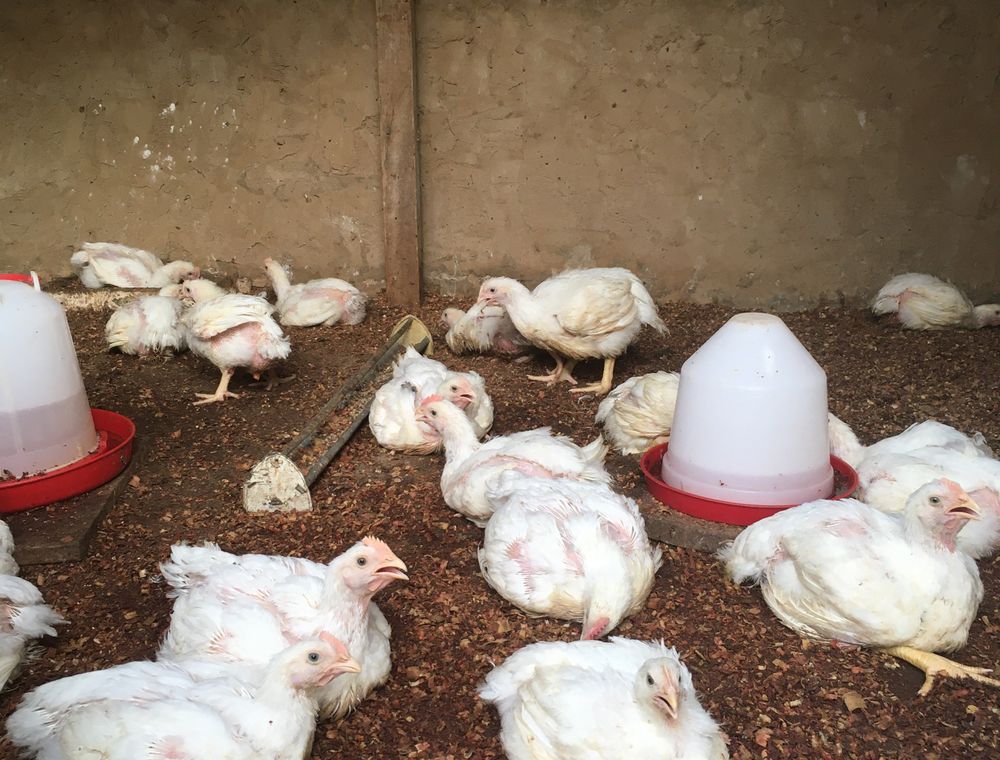
Short answer: Ascaridia galli is the large white roundworm of chickens. It has a direct life cycle: eggs leave in the droppings, mature in warm moist litter, and are swallowed by the next bird with no intermediate host. Young growers are hit hardest, showing poor growth, a pot belly and loose droppings. Control rests on sanitation, dry litter, age separation and a deworming plan agreed with your vet.
Key takeaways
- Ascaridia galli is a large, white roundworm that spreads directly from bird to litter to bird.
- The eggs survive in the litter for months, so a dirty house keeps the infection going between flocks.
- Growers aged roughly two to four months show the worst growth losses.
- Keeping ages apart and keeping litter dry break the cycle more reliably than treating birds alone.
- Deworm on your vet's advice, and restock only after the ground has been cleared and rested.
The first one usually turns up on the slaughter board
Most farmers first see a roundworm when a bird is opened. The slaughter board is where you find out that a bird which looked fine on the outside has been carrying a bunch of long, pale, cream-to-white worms in its small intestine. In Ghana the worms are often found when a farmer dresses a few birds for the Saturday market, or when a grower has been sold on at a lower price because it never filled out.
The worms do not have to be seen to be costly. A flock can carry them for weeks while the birds look reasonable, and the first sign is simply that the group is not gaining weight at the rate it should. Once you know what to look for, the signs are easier to read.
Opening a bird is not a diagnosis you can make from the outside, but it is a good habit for a few birds every month. Keep one or two in the cold box for your vet if you see strange weight loss.
A large white worm with no middle man
Ascaridia galli is the chicken roundworm. Adults are cream to white, round and fairly large, up to around 13 centimetres in the females, and they live in the small intestine. Because they are so big, a heavy burden can physically block the gut, and a worm that moves around can irritate the lining enough to cause bleeding and weakness.
The important difference from tapeworms is how the parasite moves between birds. Roundworm eggs leave the bird in the droppings, and they do not need an insect to become infective. In warm, moist litter they develop inside the shell over the coming days and weeks. When another bird swallows an egg that has reached the infective stage, the cycle starts again in the new bird. That is why a dirty house is a problem for every bird that enters it.
Some larvae can also use earthworms, cockroaches and beetles as carriers, which lets them survive in the environment and reach birds that were never on the litter. Those carriers are a secondary route, but they matter on farms with a lot of damp, bare ground.
How the eggs survive in the litter
The eggs are tough. They can stay alive in the soil or litter for months, and in some conditions for longer. Warmth and moisture help them develop, but they are not destroyed by the cold, and a single egg is enough to start an infection. That is the trap for a farmer who thinks a house is clean because the birds have been removed and the floor has been swept.
A house that was cleared quickly, with the litter left in a heap and the floor wet for a week, leaves a reservoir of eggs. When the next batch arrives, the eggs are waiting in the same place. If the new birds are kept in the same house without any rest or disinfection, they start picking up eggs from the first day.
Breaking that reservoir means clearing the litter fully, removing it from the area, and letting the floor dry in the sun. Many farmers in the Central Region move the litter to a distant heap and cover it, so the eggs cannot be picked up by birds that scratch in the area.
Why the growers take the worst of it
Growers aged roughly two to four months are the birds most likely to show serious damage. They are old enough to be out on the litter, they are eating and scratching constantly, and their immune systems are still building up. A worm load that an adult hen tolerates can slow a grower down for a month, and that is the month when the birds should be putting on the most weight.
Adult birds carry the worms too, and they keep shedding eggs into the litter. That is the reason a grower flock on the same ground as an older flock often suffers more. The older birds may look healthy and quietly feed the infection to the young ones.
On our side of the hatchery, we always recommend keeping ages apart, and we tell farmers buying day-old chicks that the rearing house is where most of the battle is won or lost.
Signs in growers and layers, side by side
The signs look different depending on the age and the purpose of the flock. Use the table to see what to watch for, and remember that most of these signs have other causes too.
| Bird type | Common sign | What it can point to | Practical check |
|---|---|---|---|
| Growers, about 2 to 4 months | Slow weight gain, uneven flock, pot belly | Heavy roundworm load in the gut | Weigh a sample weekly and compare with the growth chart |
| Growers with loose droppings | Watery or pasty droppings, dull birds | Worm load, coccidiosis or a feed change | Check droppings for blood and the water supply |
| Point-of-lay pullets | Late start to laying, small eggs | Worms slowing development | Compare lay start with your batch record |
| Adult layers | Dropping egg numbers, thin birds | Worm load or other gut problems | Check egg numbers against feed and light hours |
| Any bird | Worms seen in droppings or vomited | Heavy roundworm burden | Save a fresh sample and call your vet |
The pot belly is the sign farmers ask about most, and it is worth a closer look. A bird with a swollen belly that is losing weight may have a gut problem, but a swollen belly on its own is not proof of worms. Ask your vet to examine the bird before you treat the flock.
The pot belly is not always worms
A grower with a rounded, hard or swollen abdomen that stays swollen after the other birds have moved on is a bird worth examining closely. Worms can cause a distended gut, and in heavy cases the worms can clump and cause a partial or complete blockage. That can make the bird stop eating and lose weight quickly.
Other conditions also cause a swollen belly, including fluid build-up linked to heart or liver problems, egg-related problems in layers and gut infections of other kinds. Treating the flock for worms when the real cause is something else costs money and can delay the right treatment.
Keep a note of how many birds are affected, how long the belly has been swollen and whether the birds are eating. Give that to your vet, and ask them to look at a bird rather than rely on your description alone.
Litter, humidity and the rainy season trap
Ghana's rainy season is the period when roundworm eggs develop fastest. Damp, warm litter is the ideal medium, and a house with poor air movement holds the moisture for days after a shower. In the Central Region we see the worst problems in the months when the rains are steady, when the floor stays wet between showers and the birds are pecking at the same corners.
The harmattan is a different story. Dry air and dust do not favour the eggs in the same way, and the litter can dry quickly if the house is ventilated well. Many farmers in the north see a sharp drop in roundworm problems in the dry months. That is a good time to clear out the old litter, rest the house and prepare the next batch, rather than a time to relax the routine.
The mistake we hear about most is the farmer who keeps the same litter in the house for a full season because it looks dry on top. The eggs are not on the top. They are in the wet layer underneath, and the birds find them every time they scratch.
Need chicks for your next batch?
Send breed, number and town. We reply with price, hatch date and delivery cost in writing.
A sanitation routine that works in a crowded yard
Most farmers cannot build a new house for every batch. The routine below works in the houses most of our customers already have, and it does not depend on expensive equipment. It is a list of habits, not a single treatment.
- Remove wet litter from around drinkers and feeders every day, and replace it with dry material.
- Keep the drinkers from leaking onto the floor. A leaking nipple or a cracked trough creates a permanent wet spot.
- Scrape the floor and remove the top litter when a batch is sold, and take the old material well away from the houses.
- Let the floor dry in the sun for as long as the weather allows before the next litter goes in.
- Wash feeders and drinkers thoroughly between batches, then dry them before the birds return.
- Keep young birds out of the older birds' yard. If you cannot separate them, rear the young birds on a clean area with their own feed and water.
- Keep a record of when each house was cleared and rested, so you can see the rest periods in your own records.
None of these steps is glamorous, and none will cure a flock that already has a heavy worm load. Together they stop the reservoir from building up and make your deworming programme work when you do use it.
Working with your vet on diagnosis and treatment
Deworming for roundworms is a vet's call. The choice of product depends on the age of the birds, whether they are laying, the withdrawal period if they are going to market, and whether the flock has been dewormed recently. Some products are used routinely on growers, and others are reserved for specific situations. Your vet knows which applies to your flock.
Bring the vet a fresh sample of droppings if they ask for one, and a dead bird if you have one that is worth examining. Tell them about the batch history: when the birds came in, what the house was like, and whether the flock has been on the same ground before. A vet who knows the history can confirm whether the worms are the main problem.
Your worms and deworming guide sets out the broader worm control picture, and our common chick diseases guide covers the other problems that can look like worms in growers. Always follow your vet's advice on products, timing and withdrawal. For the wider health calendar that sits around deworming, our poultry vaccination schedule for Ghana shows where worm control fits between vaccine days, and the FAQ answers the most common questions we get from growers in their first season.
Restocking after an outbreak without bringing the worms back
A roundworm outbreak leaves a house with a lot of eggs. Restocking too soon is the reason the same problem appears again within two months. Clear the house, dispose of the litter, wash and disinfect the equipment and let the floor dry. Then rest the house for as long as you can, ideally several weeks.
If the house is the only one you have, you can still reduce the risk. Start the new batch on fresh litter over a clean floor, keep the feeders and drinkers raised so the birds do not sit in wet droppings, and remove droppings every day from the first week. Ask your vet to plan a deworming programme from the start so you are not reacting late.
When you are ready to restock, our broiler day-old chicks and breeds page cover what each type needs from the house. We confirm the batch details and the price in writing before you pay, and our current prices are published on the prices page. Farmers in the north can see our northern delivery details, and every chick leaves our hatchery vaccinated for the diseases we cover, with a batch record that goes home with you.
Questions farmers ask
What does a chicken roundworm look like?
Ascaridia galli is a cream to white, round worm, usually several centimetres long and larger in the females. It lives in the small intestine. You may see worms in the droppings or when a bird is opened, but a vet can confirm the diagnosis from a sample.
How do chickens catch roundworms?
Mainly by swallowing eggs that have been in the litter long enough to become infective. Some larvae can also be carried by earthworms, cockroaches and beetles, which can pass them on to birds that eat them. A clean, dry house is the best defence against both routes.
Can roundworms in chickens affect people?
Ascaridia galli does not normally infect people, but good hygiene is still important. Wash your hands after handling litter, droppings and birds, and keep young children away from the rearing area.
How long do roundworm eggs survive in the ground?
They can survive for months in litter and soil, and sometimes longer. Warm, moist conditions help them develop, while dry, sunny conditions reduce their numbers. This is why resting and clearing the floor between batches matters so much.
Why are my growers not putting on weight?
Roundworms are one common cause, but feed quality, water supply, coccidiosis and other gut problems can produce the same picture. Weigh a sample of birds each week, check the droppings and ask your vet to look at the flock before you change the feed or the medicine.
Should I deworm my whole flock every few months?
Not without your vet. The right schedule depends on the age of the birds, whether they are laying, the withdrawal period and your local conditions. A regular deworming plan only works if the house is also kept clean and dry.
Can I restock immediately after an outbreak?
It is safer to wait. Clear the litter, disinfect the equipment, let the floor dry and rest the house for as long as you can. Starting a new batch on contaminated litter is the most common reason for the problem coming back within weeks.


