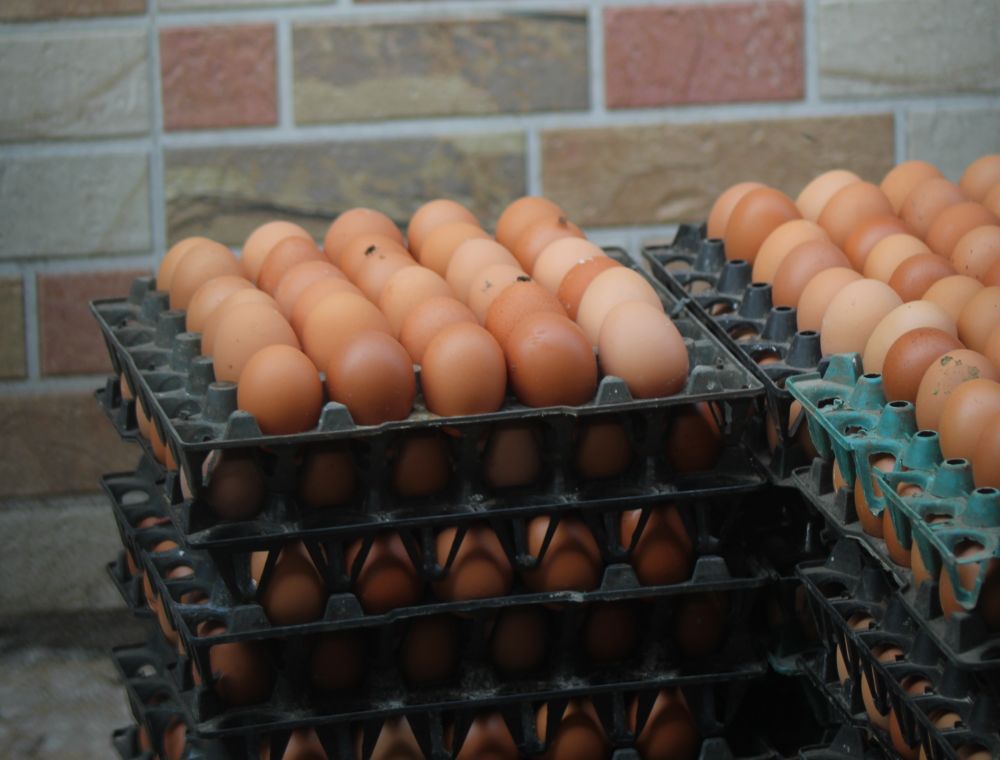
Short answer: The Marans is a French dual-purpose breed from the Marans area near La Rochelle, valued for very dark brown eggs. Many lines are quoted at about 120 to 160 eggs a year, with hens weighing around 3 kg and cocks around 3.5 kg. In Ghana the breed needs shade, extra water and a protein-rich ration, and its egg colour is strongest in young hens and fades as they age. Check the line with your source before you plan a dark-egg business around it.
Key takeaways
- Dark egg colour is the reason most people ask for the breed, and it is the first thing to test in your own market.
- Many lines lay about 120 to 160 eggs a year, with some lines higher. Ask the source which line you are buying.
- Hens weigh about 3 kg and cocks about 3.5 kg, so the breed is heavier than most village birds and needs more water in the heat.
- Egg colour is strongest in young hens and softens as they age, so judge the colour over a full season.
- Crossing a Marans with a light-egg hen dilutes the colour in the next generation.
- Plymouth Rock chicks are our listed dual-purpose alternative, and Marans chicks are not on our standard price list.
Dark eggs are the reason people ask, not the whole answer
A Marans egg is close to the colour of dark chocolate, and that colour is the reason most people ask for the breed. The trouble is that the colour is the part that varies most from hen to hen, so a buyer who expects every egg to look like the picture is often disappointed in the first season.
The rest of the breed matters too. A Marans is a heavy, calm, dual-purpose bird. It lays well, weighs more than most village birds, and makes a reasonable table bird. Those qualities are easy to overlook when the egg colour is the only thing you can see, so this guide looks at the whole bird as well as the shell.
We cover where the breed came from, the numbers you can expect, why the colour fades, how the heavy body copes with Ghanaian heat, and what to check before you commit to a dark-egg flock. Our breeds overview lists the other lines we work with.
A French market hen and the town that named her
The Marans takes its name from the town of Marans in western France, in the Charente-Maritime area near La Rochelle. The region has a long history of farming and coastal trade, and local flocks were kept for eggs and meat for generations before the breed had a formal name.
In the nineteenth century, breeders in the area worked to fix the traits that people wanted: a sturdy body, good laying and a very dark egg. The exact mix of local fowls and imported stock is still argued over, and any account that gives you a neat recipe should be treated with caution. What is clear is that the dark egg became the selling point, and the breed was shaped around it.
That history is useful for a Ghanaian keeper, because it explains the bird's habits. A Marans was bred for a cool, temperate climate, not for a hot, humid compound. It does well here with the right management, but it asks more of the keeper than a light village hen does.
Eggs, weight and what to expect in the first season
The Marans is a medium-to-heavy dual-purpose bird, and its figures depend on the line. The numbers below are those most often quoted for a healthy adult in good condition.
| Measure | Marans hen | Marans cock |
|---|---|---|
| Mature live weight | About 3 kg | About 3.5 kg |
| Eggs per year, good management | About 120 to 160 for many lines, some higher | Not applicable |
| Egg colour | Dark brown, close to chocolate in young hens | Not applicable |
| Age at first egg | Around 6 months | Not applicable |
| Egg size | Large | Not applicable |
The first season is the one to plan around. A young Marans hen often lays her darkest eggs in her first few months of laying, and the first clutch may look different from the eggs that follow. Do not judge the flock on the first week's eggs. Judge it on the whole season.
The heavier body means more feed and more water than a light village hen. A Marans hen will eat more than a Fayoumi, so the ration bill is higher, and the weight is higher too. That is worth knowing before you set your budget.
Why the colour fades, and what it tells you
Egg colour in a Marans is a genetic trait, but it is not fixed. The shade depends on the hen's age, the line, the season and her general health. Many keepers report that the darkest eggs come from young hens in their first laying cycle, and that the colour softens as the hens get older. Stress, poor feed and a sudden change in routine can lighten the shell for a few days.
That means a single egg tells you very little. Look at the colour across a week or a month, and compare the eggs from the same hens over time. A flock whose eggs are slowly lightening as the birds age is behaving normally. A flock whose eggs suddenly lighten all at once is telling you something about feed, stress or disease.
If you plan to sell the eggs, keep one crate of your Marans eggs apart and note the dates they were laid. That gives you a record of the colour over time, and it gives buyers something specific to compare.
A calm, heavy hen with a slow start
The Marans is a calm bird. Hens tend to be steady and quiet, and they are rarely the first to start a fight at the feeder. They forage without too much fuss, but they are not the sprinters of the village flock. A Marans that is chased by dogs will take a while to get going again, because her body is heavier and her reaction is slower.
The breed takes its time to mature, and a young Marans can look awkward for a few months while she fills out. Do not judge the flock too early. A bird that looks slow at four months may be a steady, reliable layer at seven.
Cocks are heavier and can be firm with each other, so keep one cock with a small group of hens rather than several cocks in one small pen.
Heat in a heavy body
This is the Marans's real challenge in Ghana. A heavy bird makes more body heat, and it has a harder time shedding that heat in the hot part of the day. A Marans in full sun at midday will pant, drop her feed intake and lay fewer eggs, often before the keeper notices there is a problem.
Give the flock shade that every bird can use at once, and set the feeder and the water in the shade. Feed the main ration in the cool of the morning and again in the evening, and keep the midday feed light if the day is very hot. Water is the first thing to check on a hot day. Two water points are the minimum, and both should be clean, cool and shaded.
Harmattan days are kinder to the breed. The cool mornings suit a Marans well, but the dust does not, and the dust bath should be kept clean and covered. Our vaccination schedule guide covers the timing that matters through the year, and your vet can tell you what to watch for in your own area. A lighter bird handles the same heat differently, and our Fayoumi guide sets out that contrast.
Mud, wet ground and the rainy season
The rainy season is hard on a heavy bird that spends its day on wet ground. Mud builds up on the feet and legs, and a wet bird on cold, muddy ground can chill just as a frizzle or a silkie would. A heavy Marans needs a dry, drained area to stand on, and a roof over the feeder and drinker.
Check the feet after heavy rain. Mud packed between the toes can carry dirt into small cuts, and a limping bird should be looked at quickly. Keep the coop floor dry, change damp litter promptly, and do not let the run turn into a bog at the door.
A wet Marans should be brought under cover and dried gently in a still, warm corner. Do not put her straight onto a cold, damp roost, because she will chill fast and stop eating.
Feed: protein, calcium and a worked example
A Marans laying hen needs a complete layer ration with a protein level in line with the feed label, and oyster shell in a separate dish for calcium. A heavy hen that is short on either will lay fewer eggs, and her shells may soften before the flock looks ill. Our feed formulation basics guide explains how to check the balance.
Here is a worked example for ten Marans hens. At about 125 grams each a day, the flock eats 1.25 kg a day. A 50 kg bag therefore lasts about 40 days, if the hens are not scavenging much. In the rains, when scavenging drops, the bag runs down faster, so plan for the wet months rather than the dry ones.
Keep the bag off the damp floor and out of the rain. Damp feed grows mould quickly, and mouldy feed can make birds ill. Check the bag for lumps and a sour smell before you pour it into the feeder.
Need chicks for your next batch?
Send breed, number and town. We reply with price, hatch date and delivery cost in writing.
Hatching and keeping the dark-egg line
If you want to keep dark eggs in your flock, the rule is simple: keep dark-egg birds and breed from the best of them. Crossing a Marans with a light-egg hen will dilute the colour in the next generation, and the chicks will lay a range of shades that does not match the picture your buyers expect.
Choose cocks from a dark-egg line when you hatch, and keep a note of which hen laid the eggs you set. Marans hens are not always reliable sitters, so most keepers use an incubator, with 21 days of incubation and turning as your manual directs. Keep the hatch records with the egg colour records, so you can see which families lay the darkest eggs.
Expect some variation even within a careful line. The colour is inherited, but it is also shaped by age, season and feed, so one good hen does not guarantee a flock of identical eggs. If you need volume more than colour, our layer chick page is the better starting point.
Mistakes that dull a dark-egg flock
The breed rewards careful management, and it punishes the shortcuts that work with lighter birds. Here are the slips we see most.
- Judging the flock on the first week's eggs instead of a full season.
- Feeding a light village ration to a heavy layer, then wondering why the shells are thin.
- Leaving the birds in full sun with one water point in the far corner.
- Keeping several cocks in one small pen, so they fight and the hens are bruised.
- Crossing the flock with a light-egg hen and expecting the dark colour to stay.
- Leaving wet feed or damp litter where the birds can reach it.
Most of these come down to the same thing: treating a heavy bird like a light one. Fix the shade, the water and the ration, and the flock usually settles down.
Marans or Plymouth Rock: a plain comparison
Families often ask whether a Marans or a Plymouth Rock makes more sense for a yard that wants eggs and a bird for the pot. Both are heavier dual-purpose birds, and both suit a family flock. The difference is the egg, and the question is whether the dark egg is worth the extra management.
A box of 50 Plymouth Rock chicks comes to GH₵350 at our listed starting price of GH₵7 each, before delivery. Marans chicks are not on our standard price list, so message us on WhatsApp at +233 24 915 1503 and we will tell you what we can source. You can see our full range on the day-old chick prices page, and our where to buy guide explains how to choose a reliable source.
Whether a dark egg earns you more depends on your own market. Some buyers pay for it, and some do not notice. Test it locally before you build a business around it, and do not assume that the colour alone will sell the eggs.
A checklist before you commit to a dark-egg flock
Go through these points before you commit, and write the answers down.
- Ask which line the birds come from, and whether the parents were chosen for egg colour.
- Confirm the expected adult weight and egg count, and write them down.
- Build shade that every bird can use at once, before the birds arrive.
- Set out two clean, cool, shaded water points.
- Put a roof over the feeder and drinker, and a dry, drained area at the coop door.
- Buy a layer ration and check the protein figure on the bag.
- Keep an egg colour record alongside the egg count, so you can see the pattern over the season.
When you are ready, our order form is the place to start for the chicks we can supply, and our delivery page sets out how we get birds to you in any of the 16 regions. For common questions, see our FAQ.
Questions farmers ask
Why are Marans eggs so dark?
The dark colour is a genetic trait that breeders selected for in the Marans area of France. The shade is strongest in young hens and depends on the line, the age of the hen, the season and her health. Some lines produce deeper colour than others, so ask the source about the line before you buy.
How many eggs does a Marans lay?
Many Marans lines are quoted at about 120 to 160 eggs a year, with some lines higher, according to breeders. Feed, shade and stress all affect the count. Track your own flock for a few weeks so you have a realistic baseline before you plan around the number.
Do Marans eggs stay dark all year?
Not usually. The colour is strongest in young hens and often softens as the hens age. Stress, a change in feed or a period of illness can also lighten the shell for a few days. Judge the colour across a season rather than from one egg.
Are Marans good for meat?
They are a heavier dual-purpose bird, with hens near 3 kg and cocks near 3.5 kg when mature. They make a reasonable table bird, but they grow more slowly than a commercial broiler, so do not expect a fast meat crop from a Marans flock.
Can Marans handle Ghana's heat?
They can, with management. A heavy body makes more heat, so the birds need shade every bird can use at once, extra water and a feeding routine that avoids the hottest hours. The breed does best in the cooler mornings and in the harmattan, when the air is cooler.
Can I get dark eggs from a cross?
Crossing a Marans with a light-egg hen will dilute the colour in the next generation. If you want to keep dark eggs, breed from dark-egg birds and choose cocks from a dark-egg line. Keep records of which hen laid the eggs you set, so you can see which families lay the darkest eggs.
Are Marans suitable for free-range?
They can be, but they need a dry, drained area and a shaded place to rest. A heavy bird that is chased by dogs or kept in mud will struggle, so supervise free-range birds in a compound and keep a secure run for the wet season.


