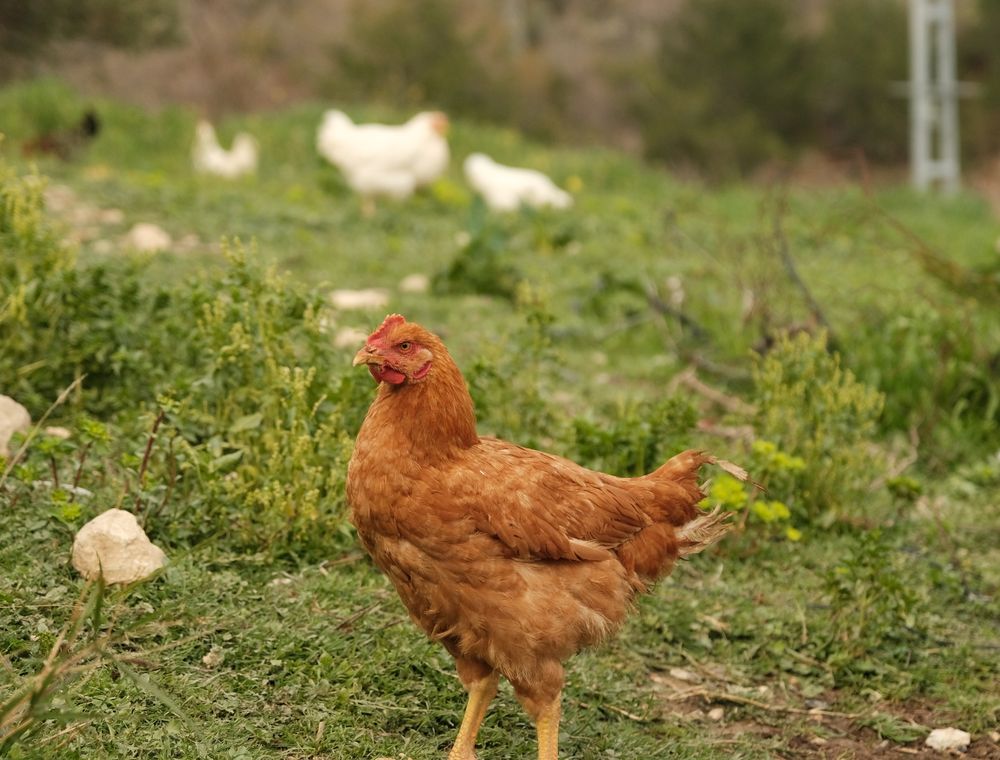
Short answer: Integrating poultry with crops and fish works on a Ghana farm because the manure you pay to haul away can feed maize, garden eggs and pond plankton. The catch is timing and dose. Fresh litter scorches seedlings, and too much manure crashes pond oxygen at dawn. Dry or compost the litter first, let the water tell you when to stop, and get the birds and crops working before you add a pond.
Key takeaways
- The manure you pay to haul away is the link that makes the whole system work.
- Dry or compost litter before it goes near seedlings or any crop you eat.
- Let the Secchi disc and the dawn check set the manure dose, not the calendar.
- Keep pond water off raw leafy vegetables and fruit eaten without cooking.
- Add the pond last, once the birds and the land already pay their way.
Why the litter heap is the link that makes the system work
Most farmers we talk to see their litter as a bill. It is a heap of nitrogen that someone has to haul away, and in the rains it starts to smell. Integration starts from the opposite idea: that heap is the cheapest fertiliser on the farm, if you let it do its job.
The principle is simple. Birds turn feed into meat or eggs and into manure. Crops use the nutrients in that manure. Fish feed on the plankton that grows in water fed by the same manure. Each part pays a little for the one before it. On a small Ghanaian holding the loop can close within a few hundred square metres, which is why it suits a family farm better than a large commercial site.
What it does not do is make the farm bigger or the birds cheaper to rear. It makes the money you already spend go further. If your litter is hauled away at a cost and your maize field is bought in fertiliser every season, the loop is worth the trouble. If you have no field and no water, it is not.
We would not start with fish. Start with the birds and the crops, watch how the manure behaves for a full season, and add a pond once the loop works on land alone. If you are buying the first flock that will feed it, our broiler day-old chicks and layer day-old chicks pages lay out the choices, and our breeds guide compares how each strain handles heat.
What each part gives the others, and what it needs back
Think of the farm as three parts that trade with each other. The table shows what moves in each direction.
| Part | Gives the others | Needs back from the others |
|---|---|---|
| Layers or broilers | Litter and manure, plus some feed waste that spills into the house | Grain, a dry house, clean water and small amounts of leaf or maize offcuts |
| Tilapia or catfish in a pond | Plankton-rich water and sludge that settles on the bottom | Oxygen that stays high enough at dawn, and a balanced feed when the plankton runs short |
| Maize, garden eggs, okra and pepper | Grain and leaves for the birds, shade, and crop residues | Nutrients taken up from manure and pond water, and a market for the surplus |
Notice that the crops are the sink for the nutrients. If the crop side does not take up the manure, the nutrients end up in the pond or in the drain. The pond then turns green and later black. That is the most common reason integrated systems fail on small farms, and it has nothing to do with the fish.
Fresh litter burns: dry it, then let it rest
Fresh litter is hot, wet and full of ammonia. Spread it on a seedbed and the seedlings scorch or stop growing. We have seen farmers put a barrow of fresh layer manure around young tomato plants and lose them within a week. The damage is chemical, not a disease, and it is avoidable.
The fix is time. Dry the litter on a hard, shaded floor, turning it every few days, until it is crumbly and no longer sharp-smelling. In the harmattan, litter can dry in a few days. In the rains it can take a fortnight, and the pile must be covered so the rain does not wash the nitrogen out of it.
If you need fertiliser in a hurry, compost the litter first. Our composting guide explains how to build the heap and how to tell when it is ready. Composted litter is the safer choice for anything you plan to eat, because the heat of the heap has already killed most of the pathogens that fresh litter carries.
Keep birds out of the drying area. Loose birds scratch a heap apart, bring in mites and spread wet litter where you do not want it. A simple wire fence around the heap solves most of that.
Feeding a fish pond without starving it of oxygen
Manure feeds plankton, and plankton makes the water green. Green water is what you want, up to a point. Too much manure, or manure that goes in every day regardless of what the water looks like, gives a bloom so thick that the plants and plankton use up the oxygen at night. The fish look fine at dusk and are dead or gasping at the surface at dawn.
Learn the water before you learn the fish. A black and white Secchi disc, lowered on a string, tells you how deep you can see. In a healthy tilapia pond the disc should be visible at roughly 25 to 40 centimetres. If you lose it at 15 centimetres, the bloom is too dense and the manure stops that day. If you can still see the bottom at 60 centimetres, the water is too clear and needs a light dose.
Check the colour too. Green is usually a healthy plankton bloom. Brown or dark water after a manure load is a warning, especially after rain has washed in from the heap. A foul smell from the bottom is the last warning, and by then you are already behind.
Dawn is the time to check. Most fish farmers aim to keep dissolved oxygen comfortably above the level where fish struggle, which for tilapia is usually taken as around 3 to 5 milligrams per litre before sunrise. Fish that come to the surface at first light or crowd at the inlet are telling you the level is low. Stop the manure, add fresh water if you can, and speak to your local fisheries officer before the next dawn.
Taking pond water to the field, and keeping it off raw vegetables
Pond water and sludge make good fertiliser for maize, cassava and tree crops. The nutrients in them have already been turned into forms the plants can use, because the plankton has done the work. Carry it in buckets and a watering can, or use a small pump and a hose, and water along the furrows rather than over the leaves.
Be strict about what you irrigate with it. Water that has been in a pond with fish and manure can carry faecal bacteria from the birds. Do not use it on leafy greens, and keep it off any fruit you eat raw. Garden eggs and okra are usually cooked, so they are the safer crops to water from the pond. Tomato and pepper are often eaten raw, so keep the pond water to the furrow and away from the fruit, and wash everything well before it leaves the farm.
Sludge from the pond bottom is richer than the water but heavier and slower to work. Scoop it out in the dry season, spread it on a concrete apron to dry, and mix it into the planting hole when it crumbles. Do not dump wet sludge onto a seedbed, because it will sour and it will stink for days.
Matching the manure to the crop calendar
Timing matters more than quantity for most crops. Apply manure before planting, so the nutrients are there when the roots need them. Apply a second, smaller dose at the first top-dress, and avoid heavy nitrogen once a fruiting crop has started to flower. The table is a starting point for a small holding. Your extension officer can adjust it for your soil.
| Crop | When and how to apply | What goes wrong when it is wrong |
|---|---|---|
| Maize | Dry litter or compost worked into the planting row, then a side dose three to four weeks after emergence | Too much nitrogen gives leaves and little cob |
| Garden eggs | Compost in the planting hole, and a light side dose at the start of flowering | Heavy manure pushes leaves at the cost of fruit |
| Okra | Compost in the seedbed, then a light top-dress every few weeks | Fresh litter scorches young seedlings |
| Pepper and tomato | Compost only, worked in before transplanting | Fresh manure and salts near the roots cause wilting and poor fruit set |
| Cassava | One dose at planting is usually enough | Extra nitrogen favours foliage over tuber set |
Keep a note of when each bed received manure. A crop that yellows at six weeks is far easier to diagnose when you know the litter went on three weeks earlier. For more on how to read and sell litter, our guide to using and selling poultry manure covers the drying and bagging side in detail.
Laying out the farm so the loop takes less than a day
A loop works when the walk from the house to the heap to the field is short and mostly follows the slope. Put the heap where rainwater runs away from the pond and the house. If the pond sits downhill of the litter heap, every heavy shower carries nutrients and bacteria straight into the water. Put the pond upslope of the crops so you can run water out by gravity, and put the litter heap on a hard base where a barrow can reach it in the wet season.
Keep the pens and the pond apart with a fence. Wild birds and free-roaming poultry move between a pond and a house faster than most farmers expect. Netting over the pond edge keeps birds from dropping faeces directly into the water.

Measure the walk before you build anything. On a good layout the daily round for litter, feed and water is a few hundred metres, and the morning work takes under an hour. If you are still choosing the ground, our site selection guide covers slope, water and access in more detail.
Who does the work, and what it costs in hours
The loop is labour, not magic. On a farm with one flock and one small pond, the extra work is usually a few hours a week, mostly carrying litter, checking water and turning heaps. Count it honestly, because the person who does it is the one who gets tired first.
| Task | How often | Time for a small loop (illustrative) |
|---|---|---|
| Check the pond at dawn and note colour and depth | Daily | 10 minutes |
| Turn and dry the litter heap | Every two or three days | 30 minutes |
| Carry dried litter or compost to the beds | Weekly, before planting or top-dressing | 2 to 3 hours |
| Test the pond with the Secchi disc and log it | Weekly | 10 minutes |
| Scoop and dry sludge from the pond bottom | Once or twice a year | A full day |
Add up what you actually do before you start, and compare that with the fertiliser and litter disposal you no longer buy or pay for. If the sum does not favour the loop, run it on the land first and leave the pond until you have the rhythm. If you are starting the birds that will feed the loop, WhatsApp us on +233 24 915 1503 with your house size and we will tell you what a flock of that size needs. Our current chick prices are on one page, and you can place an order from the order form.
Need chicks for your next batch?
Send breed, number and town. We reply with price, hatch date and delivery cost in writing.
Risks: medicines, sprays and the wrong fish
Three risks cause most of the trouble we hear about, and none of them is the fish itself. The first is medicines. Litter from a flock that has been treated with antibiotics or other drugs can carry residues. Ask your vet before you spread litter from a medicated flock, and keep the withdrawal period in mind. The same applies to anything used in the pond. If the label or your vet says no to a product near fish, do not use it near fish.
The second is spray drift. A herbicide or insecticide sprayed on crops close to the pond can kill fish or the plankton that feeds them. Keep sprays away from the pond edge, use a shield on a knapsack sprayer in windy weather, and read the label for water warnings before you buy.
The third is disease that moves between sites. Wild birds can carry avian influenza, and shared equipment, boots and visitors can carry much more ordinary disease. Our biosecurity guide covers how to keep visitors, wild birds and equipment out. Keep the pond fence and net in good repair, use disinfected boots at the house door, and keep a clear line between the pens and the water. Our FAQ covers common questions about chick health records and biosecurity at the hatchery.
On the species question, choose fish you can source reliably and that suit warm water. Tilapia is the common choice on small Ghanaian farms because it copes well with warm water and feeds on the plankton that manure creates. Catfish tolerates lower oxygen but is less forgiving when the pond is overloaded. Start with one species in one pond, and learn that before you add a second.
A season plan for the harmattan and the rains
Ghana's seasons change the loop more than most farmers expect. In the harmattan the air is dry and dusty, the nights turn cold and the water cools with them. Fish feed less and digest more slowly, so reduce the manure and the feed and keep the dawn checks going. Dust settles on the heap and can dry it fast, but an uncovered heap also blows litter into the pond.
In the rains the risk flips. Runoff washes nutrients and bacteria from the heap into the pond, and a heavy storm can overflow the pond and carry sludge out onto the field. Cover the heap with a tarpaulin or a roof, divert the drains away from the pond, and skip manure for a few days after a big downpour. Plan the main planting for the start of the rains, but time the litter so it is dry before the first heavy storms arrive.
The minor rains from September to November are the season farmers tend to forget. The rain is lighter but the water still turns quickly after a heavy night. Keep the dawn checks going through it, and read the water colour after each storm before you add anything more.
Worked example: one season on a small pond and half a hectare of crops
The table below sets out one season on a holding with a small pond, a half-hectare of crops and a single flock. It is a rhythm to adapt, not a rule, and the times are approximate. Adjust it to your own rainfall and to how many fish you stock.
| Period | Pond work | Land work | Birds and heap |
|---|---|---|---|
| March | Start dawn checks as the rains settle, with a light first manure dose | Prepare maize seedbeds with dried litter | Dry out the last batch of litter |
| April to June | Skip manure for a few days after storms | Plant maize, then a side dose of compost | Cover the heap and move litter under cover |
| July | Watch oxygen as the water warms | Compost in the garden eggs and okra beds | Restock the litter shed |
| September to November | Minor rains: check colour after each storm | Transplant pepper and tomato with compost | Clean and dry the house between flocks |
| December to February | Harmattan: feed less and watch for cold water | Dry pond sludge for next season | Turn the heap weekly |
Keep a notebook for the whole season, because the first year is where you learn the difference between a green pond and an overloaded one. Most of what you record will look unimportant in March and will explain itself by July.
Mistakes we see on mixed farms
- Adding fish before the birds and crops work alone. A pond on a farm that cannot yet dry its litter goes black within a month.
- Manuring the pond on a fixed schedule. The water should set the dose, not the calendar on the wall.
- Letting the pond overflow onto leafy vegetables. Rainy-season overflow is the most common way pond water reaches what people eat raw.
- Putting fresh litter straight onto seedlings. Scorch looks like a disease, so farmers blame the seed and buy more of it.
- Forgetting to count the work. A loop that eats a whole weekend will be dropped in the second season, usually in the middle of planting.
Checklist for your first integrated season
- Litter dried or composted before it touches a crop.
- Pond fenced, netted at the edges and set upslope of the litter heap.
- Secchi disc reading and a dawn check written in the notebook every day.
- Manure stopped the same day the water turns dark or the fish crowd the surface.
- Pond water kept off leafy greens and off fruit eaten raw.
- Heap covered in the rains and dried in the harmattan.
- Medicated flock litter checked with your vet before it goes on a crop or into the pond.
- Work hours written down for a full month before you decide to expand.
Questions farmers ask
Can I keep fish and poultry together in one pond?
Keep chickens out of the pond itself. Their droppings and any disease they carry move straight into the water, and birds on the pond edge are hard to keep clean. Keep the flock in its own house and bring the litter to the pond in measured doses, dried first. If you keep ducks, give them a separate water source and keep the fish pond netted.
How much manure should I put in a fish pond?
No single number works for every pond. Use the water as your guide. Add manure in small doses, check the Secchi depth and the colour each morning, and stop when the disc disappears at around 15 centimetres or the water turns dark. Your fisheries officer can help you set a starting dose for your pond size and the number of fish you stock.
Is fresh chicken manure safe to put on vegetables?
Not directly. Fresh litter is hot, wet and high in ammonia, which scorches young plants and can carry bacteria. Dry it until it is crumbly and no longer smells sharp, or compost it first. Keep compost off the leaves of crops you eat raw, and wash all produce well before it leaves the farm.
What fish is best for a small integrated farm in Ghana?
Tilapia is the common choice because it copes with warm water and feeds on the plankton that manure creates. Catfish tolerates poor oxygen better but is harder to manage when the pond is overloaded. Choose the species you can buy reliably, and start with one pond before you build a second one.
Can pond water be used to water vegetables?
Yes, with care. Use it on maize, cassava and tree crops, and water along the furrows rather than over the leaves. Keep it off leafy greens and off any fruit you eat raw, especially tomato and pepper. Pond water can carry bacteria from birds and fish, so avoid using it for a few days after a heavy manure load.
Does the harmattan stop the loop?
It slows it. Fish eat less when the water cools and the air is dry, so reduce manure and feed and keep the dawn checks going. Dust can blow onto an uncovered heap and into the pond. Keep the heap covered and the pond edge clear, and plan the big field jobs for the start of the rains.
Do I need a permit to keep fish on my farm?
Rules on fish farming, water use and stocking can vary by district and by the kind of water source you use. Speak to your district fisheries office before you dig or stock a pond, and ask whether any permit applies to taking water from a stream or borehole. This article gives general guidance, and your local officer will have the current requirements.


