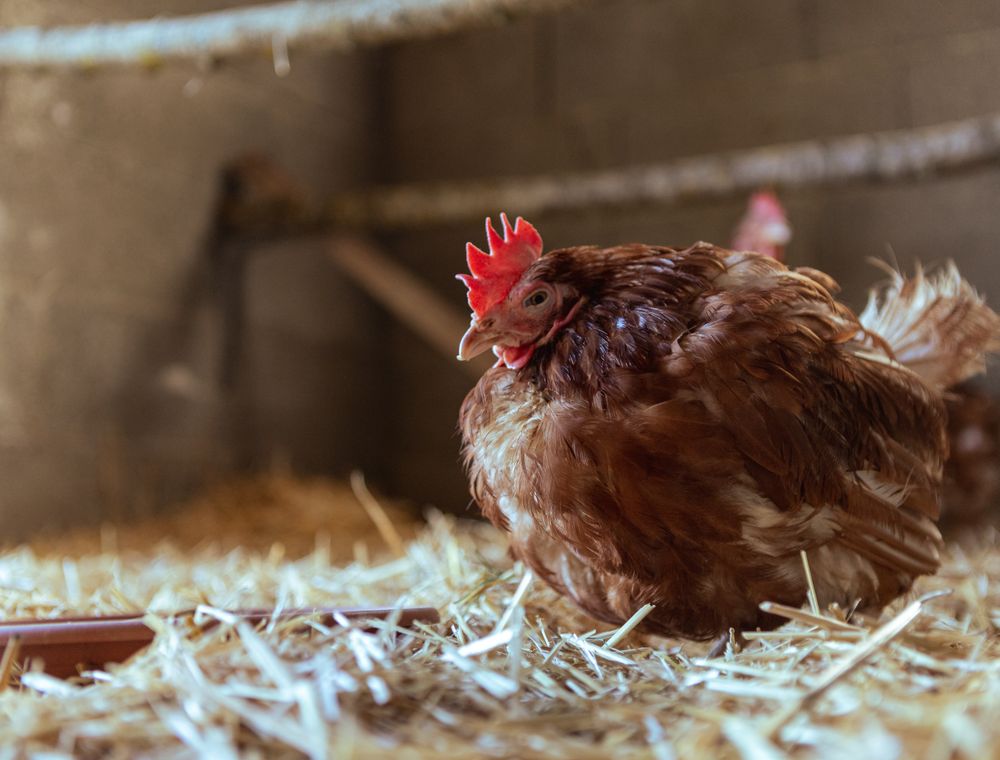
Short answer: Tapeworms in chickens are flat, segmented worms that live in the small intestine and feed on the nutrients your birds are eating. They need an intermediate host, usually a beetle, fly, ant or earwig, which a chicken swallows while scratching. Thin birds, slow growth, dropping egg numbers and white rice-like segments in the droppings are the signs; control means managing insects, keeping litter dry and following your vet's deworming plan.
Key takeaways
- Chicken tapeworms need an insect middle host, so they reach your flock through scratching and pecking.
- A heavy burden costs feed efficiency and egg numbers long before a bird looks obviously ill.
- White, rice-grain segments in the droppings or around the vent are a clear sign to call your vet.
- Controlling flies, beetles and ants around the houses cuts the source more reliably than deworming alone.
- Deworm on your vet's schedule, and keep records so you can see whether the problem is returning.
They take the feed you paid for
Tapeworms rarely kill a chicken on their own. What they do is quieter and, for a business, more expensive. A bird carrying a heavy tapeworm load eats well, drinks normally, and still grows slowly, lays fewer eggs and looks a little dull by the end of the month. The farmer sees a flock that seems fine but never quite catches up with the one that was supposed to be ahead of it.
We have heard that exact description from farmers who keep layers in the Central Region, and the cause is almost always the same. The worms are sharing the food. They sit in the small intestine and draw on the protein, energy and vitamins that your birds were supposed to convert into weight and eggs. When you work out what a kilogram of feed costs, a flock that loses a share of it to worms is losing real money every week.
So the question for a tapeworm problem is not only whether the birds are sick. It is how much of your feed they are keeping for the worms.
A flat, segmented worm and what it is built to do
Chicken tapeworms are cestodes. Unlike roundworms, which are long and tube-shaped, they are flat and made of many segments joined in a chain. The head, or scolex, has hooks or suckers that grip the wall of the intestine. Behind it, the chain grows new segments all the time. The older segments at the back are full of eggs and break off to leave the bird in the droppings.
Several species infect chickens in Ghana, and they differ in size and in which insect they use as a middle host. Some are a few millimetres long and easy to miss. Others grow to several centimetres. For a farmer, the important thing is the life pattern they share. They do not multiply inside the bird in the way some parasites do. They rely on a steady supply of new eggs passing out of the bird and reaching the right insect.
That dependence is the key to controlling them. The worm is always living in your birds or in your insects, so the control has to hit both sides of the cycle.
The insect middle host and why it matters
Tapeworm eggs passed in droppings are not infective to a chicken directly. They have to be eaten by an intermediate host, which is an insect or sometimes another small invertebrate. Inside the insect, the egg hatches and develops into a stage that can infect a bird. The chicken then swallows the insect while scratching in litter, pecking at the ground or catching flies. Common middle hosts include beetles, flies, ants and earwigs, depending on the tapeworm species.
This is where Ghana's warm, humid conditions help the parasite. Dung beetles around a cattle kraal, the flies that gather around wet droppings in a poorly managed pen, and the ants that come up after the first rains can all carry the stage that infects your flock. A house that is cleaned only once a month, with damp litter kept in a corner, creates a steady supply of insects for the birds to eat.
You cannot remove every insect from a farm, and you should not try. What you can do is stop the insects breeding in your litter and droppings, and make sure the birds are not spending their days scratching in heaps of wet manure.
The signs, what they suggest and what to check
Tapeworm signs are easy to dismiss because most of them look like ordinary poor performance. The table below pairs each sign with the other causes you should rule out. It is a checklist for talking to your vet, not a diagnosis.
| What you see | What it can suggest | What to check first |
|---|---|---|
| Thin birds that eat well | Heavy worm burden drawing nutrients | Weigh a sample of birds and compare with the batch record |
| Dropping egg numbers in layers | Worm load, or a feed or lighting problem | Check the feed mix, light hours and time since last deworming |
| White, rice-grain segments in droppings or on feathers near the vent | Tapeworm segments passing out | Collect a fresh sample and show it to your vet |
| Pale comb and wattles | Anaemia, possibly from heavy worm load or other parasites | Check for lice, mites and blood in the droppings |
| Diarrhoea with weight loss | Heavy intestinal burden or another gut problem | Check water, feed freshness and coccidiosis risk |
| Uneven flock growth | Some birds carrying more worms than others | Mark the slowest birds and watch them for a week |
Two signs carry the most weight: white segments in the droppings, and a flock that stays behind its own growth chart even though feed and water are right. If you see either, plan a vet visit rather than waiting for the birds to look ill.
What the segments look like in the droppings
Many farmers have seen the segments without knowing what they were. They look like small, flat, creamy or white pieces, sometimes the size of a grain of rice, and they can be stuck to the droppings or to the feathers around the vent. Fresh segments may move slightly. Older ones dry and turn brown or yellowish.
Do not rely on how a segment looks to name the species. The shape only tells you it is probably a tapeworm. Bring a fresh sample in a clean container, not wrapped in old newspaper, to your vet. A sample taken the same day is far more useful than one that has dried out in a bag for a week.
Some farmers also see the segments in the feed trough, which means birds are shedding them in the feeding area. That is a sign the worm load is high across the house, not just in one bird.
Why scavenging flocks carry more worms
A flock that scratches around a compound all day, picking up whatever moves, is exposed to every insect it can find. That is the situation in many village and peri-urban flocks, and it explains why tapeworms are common in birds that look healthy enough to the owner. Chickens that range over ground that never dries, or that feed near kitchen waste and dung heaps, eat a steady stream of middle hosts.
The start of the rains is a particular trap. In April and May the first rains bring flying termites and ants out of the ground, and chickens that were kept indoors through the dry season suddenly have a feast. Many farmers in Kasoa tell us their birds seem to go wild for insects in the first week of the rains. That is the week to tighten your insect control and check the litter, not the week to relax.
On a larger farm, the same principle applies. The birds that live in a well-managed house with dry litter and regular droppings removal have far fewer insects to eat than birds in a dirty, shaded run.
Insect control without poisoning the flock
Insect control is the step most likely to be done badly. Spraying the house with a strong chemical while the birds are inside is dangerous, and it can leave residues in eggs and meat. Insect control that works is the boring kind: stop the insects breeding and remove their food and shelter. Here is the checklist we give farmers who want to cut the middle hosts.
- Remove droppings from the house at least every few days, and every day in the rainy season.
- Keep litter dry. Turn it, replace the wet patches and never let a heap of damp litter sit in one corner.
- Keep the feed in sealed bins. Spilt feed attracts beetles and flies that the birds then eat.
- Cover or move manure heaps well away from the pens, and do not let the birds range on them.
- Use screens or closed doors on the house during the rainy months, to keep out flies.
- If you use any insect product, choose one that is labelled for poultry and follow the label. Ask your vet first.
Cleanliness is the cheapest part of the programme and the one that gives the most. A farmer who spends an hour a day on droppings and litter will see far fewer tapeworm problems than one who buys a new product each season.
Deworming on your vet's schedule
Deworming is the treatment step, and it should follow your vet's plan. Tapeworms are treated with products that are specific to cestodes, and the right choice depends on the species, the age of the birds, whether the flock is laying, and the withdrawal period if the birds are for sale. A product that is fine for a layer flock may not suit a flock being raised for the table, and the reverse is also true.
Deworming on its own does not stop reinfection. If the insects and the droppings are left as they are, the birds will pick up new worms within weeks. That is why the treatment and the hygiene work together. Our worms and deworming guide explains how the different worm types fit into a yearly plan, which helps you see where tapeworm control sits alongside the others.
Keep a written record of each deworming: the date, the product name, the birds treated and the vet who advised it. When the signs come back, that record tells your vet how long the birds were free and whether the problem is a re-infection or something new.
Need chicks for your next batch?
Send breed, number and town. We reply with price, hatch date and delivery cost in writing.
The numbers to track on a tapeworm farm
Feed conversion and egg output are the two numbers that show a tapeworm problem first. Most farmers do not track them closely enough to see the change. Start with a simple weekly record and you will spot a dip before the birds look sick.
For a layer flock, record the eggs collected each day and the feed used each week. For a meat flock, weigh a fixed sample of birds every week against the growth chart you were given with the batch. If the weights drop, or the eggs drop without an obvious change in feed or lighting, that is the point to call your vet and to check the droppings.
If you buy from a feed mill, keep the bags and the batch numbers. Feed quality is not usually the cause of a tapeworm problem, but a change in feed without a change in performance tells you the problem is in the birds or the house. If you are unsure how to set up a weekly record sheet, our frequently asked questions cover the basics of rearing and what to expect from a day-old chick batch.
What a layer flock loses when worms are heavy
A laying hen that carries a heavy worm load does not stop laying. She lays fewer eggs, the shells can be weaker, and the bird takes longer to recover after a dip. For a farmer with a flock of a few hundred layers, the difference between a good month and a bad one can be a few crates of eggs. Those crates are sold, and the feed was bought.
If you are starting a layer flock, the right time to plan worm control is before the birds start laying. Our layer day-old chicks page covers what to expect from the batch, and the breeds page sets out the differences between laying strains that help you plan the house and the feed. Our feed formulation basics guide is worth reading too, because a balanced ration gives the flock more reserve to handle a worm load without collapsing.
Do not blame the feed mill for every drop in egg numbers. Look at the worms, the house and the light before you change the mix.
The mistakes we see on tapeworm farms
Most tapeworm problems come from the same few mistakes. Farmers who avoid them rarely have a serious problem twice.
- Deworming once and stopping. A single treatment clears the worms in the bird at that moment. New infection comes from the insects, so the flock is back where it started within weeks.
- Ignoring the litter. A house with wet, caked litter is a factory for the insects that carry the worm.
- Keeping mixed ages together. Older birds that carry worms shed eggs into the same ground the young birds use.
- Buying a product from a shelf and dosing by guess. The wrong product, the wrong timing or the wrong amount is a waste of money and can harm the birds.
- Not weighing the birds. A farmer who never weighs a sample will not see the slow decline until it is serious.
None of these is hard to fix. They just need someone to decide the flock matters enough to check every week.
Planning the next batch so the worms do not come with it
Between flocks is the best time to break the tapeworm cycle. Remove the old litter, clean the house and let it dry. Wash the feeders and drinkers, and check the house for insects and fly larvae before the new birds arrive. Where you can, rest the floor for a few weeks, because the middle hosts need the litter to survive.
When the new batch comes in, start the rearing period on clean, dry litter and keep the droppings removed daily. Plan the deworming with your vet from the start, so you are not reacting to the first sign of trouble. Keep the records from the first day, so that when you need them they are already there.
For a fuller picture of the rearing area, our guide to starting a poultry farm in Ghana on a budget shows where these hygiene costs fit into the first season. You can also order your next batch or ask our team on WhatsApp at +233 24 915 1503 which breed suits your plan, and we will confirm the price and delivery cost in writing before you pay. We deliver to all 16 regions, and chicks leave our hatchery the day they hatch.
Questions farmers ask
What do tapeworms look like in chickens?
The adult worm is a flat, segmented ribbon that lives in the small intestine. You are more likely to see the segments, which look like small creamy or white pieces, often compared to grains of rice. They can be in the droppings or stuck near the vent. A vet can identify the species from a fresh sample.
How do chickens get tapeworms?
They eat insects that carry the larval stage, such as beetles, flies, ants and earwigs. The insects pick up tapeworm eggs from droppings, so a chicken scratching in damp litter or near manure can swallow an infected insect without knowing it.
Can tapeworms in chickens infect people?
Chicken tapeworms are not normally a concern for people who handle birds and eggs, but washing hands after handling birds and droppings is a good habit anyway. Ask your vet if you have any specific concern about your flock or your household.
Will my chickens lay fewer eggs with tapeworms?
A heavy worm load can reduce egg numbers and egg size, and it makes the birds less efficient at turning feed into eggs. Egg numbers can also drop because of feed, lighting or stress, so check those before you conclude that worms are the cause.
How often should I deworm my flock?
There is no single answer for every farm. Your vet should set a schedule based on the species, the age of the birds, the rainfall in your area and whether the birds are laying. Keep a written record of each treatment so you can see the pattern over time.
Does cleaning the house alone get rid of tapeworms?
Cleaning cuts the source of the infection, which is essential, but it does not clear worms already living in the birds. You usually need both: a vet-approved treatment for the birds and regular removal of droppings and dry, turned litter to stop reinfection.
Is tapeworm a problem for birds raised for meat?
Yes. Tapeworms reduce growth and feed efficiency, which lowers profit on a meat flock even if the birds do not die. Weighing samples each week helps you see the problem early, and the withdrawal period of any product must be respected before birds are sold.


