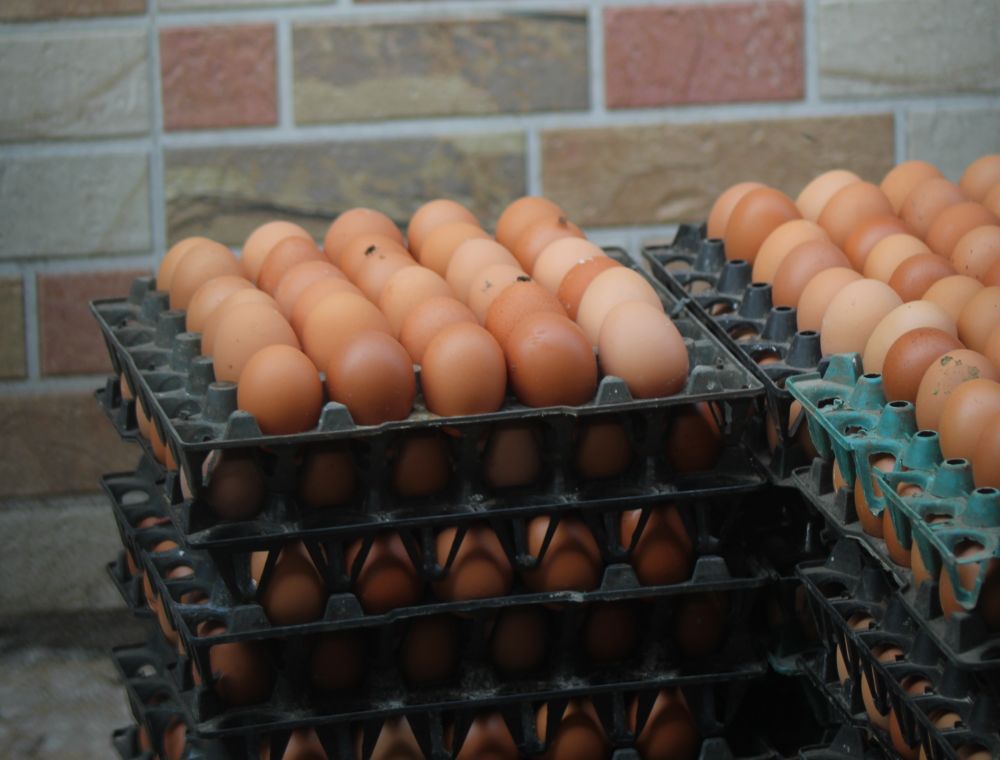
Short answer: An egg delivery business in Ghana makes its money on route density, not on the egg itself. Ten stops on one loop will pay a rider, while thirty stops spread across the city usually will not. Collect and chill eggs the same morning, price each run from fuel, rider time and breakage, and keep a daily sheet of crates out, crates back and cash in. Prove one loop before you buy a vehicle.
Key takeaways
- Route density decides profit: ten stops on one loop beat thirty stops spread across town.
- Price each run from fuel, rider time and breakage, then spread the cost across the stops you actually serve.
- Rent a vehicle until one loop has run at full crate count for six weeks in a row.
- Limit credit per buyer and take mobile money on the doorstep wherever you can.
- Keep one sheet per morning and total it by route at the end of each week.
Why the route makes the money, not the egg
Thirty stops spread across Accra will lose you money by the end of the month. Ten stops on one loop will pay the rider, fill the tank and leave something over. That is the first thing we tell anyone who rings us about starting an egg round, and it is the lesson most new delivery people learn the expensive way.
The egg is the cheapest part of the business once it leaves the henhouse. What eats the margin is everything between the tray and the customer's kitchen: the rider's hours, the fuel, the crates that come back late or not at all, and the eggs that crack on a pothole. A crate that would sell well in Kasoa town can cost you more than it earns if it takes two hours of stop-start traffic to reach it.
So measure in stops per litre of fuel, not in crates per week. Nine shops within a kilometre or two of each other can carry more eggs per hour than one hotel across town. Density is the lever, and every other part of this article exists to protect it.
Be honest with yourself about the first year. Expect the loop to be thin, the rider to sit idle for an hour in the middle of the morning and the cash to arrive late. None of that means the idea is wrong. It means the loop needs more buyers on it before you add a vehicle or a second rider.
The first ten buyers: who pays on time
Start with buyers who already buy eggs every week and who you can reach without a detour. In practice that means provision stores, small supermarkets, bakeries, chop bars that sell egg sandwiches in the morning, and households on a standing order. Hotels and restaurants can wait. They ask for invoices, longer credit and proof of supply, and they will test you on your first missed delivery.
Before any buyer goes on the list, ask three questions. Will they sell through the eggs fast enough to reorder within the week? Can you reach them and still get back to the farm before the midday heat? Will they pay on the day, or on the Friday after? A buyer who answers yes to the first two and no to the third is still worth having, but only with a credit limit written in your book.
Keep the list short at the start. Ten regular buyers who each take three to five crates a week make a better business than forty buyers who take a crate when they remember. Ten buyers give you a predictable crate count, and a predictable count is what lets you plan collections from the farm.
The five checks that matter before a buyer joins a round:
- Their weekly egg use, estimated by them and checked by you over two weeks
- Travel time from the previous stop on the loop, in minutes rather than kilometres
- Payment habit: mobile money on the day, a week late, or never
- Whether they return crates, and how many are still out at their shop
- Who receives the eggs, and whether that person can sign the delivery sheet
If you are still deciding how big the flock behind the round should be, our layer day-old chicks page explains the choices, our breeds guide compares the laying strains, and our Kasoa collection is the quickest way to start. Send us a message on +233 24 915 1503 before you commit to a vehicle, and we will talk the flock size through with you.
Mapping your first loops around Kasoa and Accra
Draw your loops on paper before you spend a cedi on anything. Put the henhouse or the collection point in the centre and mark every buyer. A good first loop takes under three hours of riding and gets you back to the farm by late morning. Anything longer means the eggs spend more time in the heat and the rider spends more time on the road than in front of a buyer.
Around Kasoa, the main road can turn a twenty-minute run into an hour in the late morning. Check the loop at the hour you will actually drive it, not at six when the roads are empty. Market days, and the hour when school lets out, change how long a stop takes too. Write the real travel time beside each leg, and redraw the loop after a fortnight.
Accra's outer neighbourhoods are a different problem. The stops sit further apart and the buyers are spread across estates. Serve one or two neighbourhoods a day, never the whole city. If a buyer sits outside the loop, either add a delivery sum that covers the detour or offer a pickup point on your route. A stop that sits alone on the map costs you a full rider hour, and no crate price covers that.
For the first month, use one rule: no new buyer joins a loop until the loop already has six stops. The newcomer rides along with houses you already visit, and your rider never drives out to a single door.
Rider, pickup or small van: which fits the loop
No vehicle is best in general. The best one fits the loop you have drawn and the crate count you expect in the busiest week of the year, which in Ghana usually means the run-up to Christmas and the weeks before Easter and Sallah.
| Vehicle | Crates per run (rough) | Running cost | Suits | Weak point |
|---|---|---|---|---|
| Motorbike with a rear rack | 10 to 15 | Low fuel, higher rider risk | Dense loops of up to 12 stops | Rain and dust, and crates shifting on the rack |
| Pickup with a covered body | 40 to 60 | Medium fuel, one driver | Mixed loops of 12 to 20 stops | Cargo heat by midday, and fuel on rough roads |
| Small van with an insulated body | 60 to 90 | Higher fuel, insurance and parking | Dense city loops with a cool box | An expensive van that sits idle on quiet days |
These are rough guides, not quotes. Start with what you can hire or borrow for a month. A pickup hired by the day will test a loop for far less than a van you have to finance. Buy only when the same loop has run at full crate count for six weeks in a row.
If you want a feel for how a delivery promise works on the supply side, our delivery page sets out how we dispatch chick orders and confirm the cost before payment. The principles carry over to eggs.
A motorbike has no room for spare crates. A bike round only works if buyers hand back their empties on the next visit, or you run out of crates by Wednesday.
Crates, lids and the order of stops
The packing article covers how each egg sits in its cell, so this section is about the round itself. The first thing to fix is the load order. Load the crates so the first stop is nearest the door. Nobody wants to lift twenty crates off the bed to reach the last shop on the loop.

Carry a few spare crates, one for every three buyers on the loop, and inspect them every morning before they go out. A crate with a cracked corner slides on a pickup bed and cracks the eggs on top of it. A lid that does not fit lets dust into the trays, and dust is what the buyer tastes when they open the tray in the back room. A spare crate in the cab costs less than the eggs it saves.
Keep the crates in the cab or under the seat when the loop runs through dust or rain, not on the open bed. Clean and dry crates are the first habit to check, and our guide to washing table eggs explains why a clean shell matters more than a shiny one. For the cell-by-cell packing, read our packing and transport guide before you load your first van.
Keeping eggs cool when the power goes off
Eggs do not need a fridge for a three-hour morning round. They do need to stay out of direct sun and away from a hot vehicle. The trouble starts when a shop has no power, its stock sits in a back room all afternoon, and the buyer blames you for the cracks, even though the eggs were sound when they left the farm.
Use a cool box with frozen water bottles rather than block ice laid on the eggs. Ice on the tray leaves condensation on the shells, and wet shells are how dirt and bacteria move through a crate. Keep the cool box in the shade of the vehicle, shut the lid between stops, and check the inside temperature with a cheap thermometer on the first day, so you know how long your box holds.
Ask every buyer what they do when the power goes off. A shop with a small freezer or a cool room is a safer account. A shop that stores eggs in a hot back room needs smaller, more frequent drops, and you should price that difference into the round. Some buyers will accept a daily drop for a small premium. Others will not, and it is better to know that before the first crate goes out.
A morning that starts at the henhouse at six
The routine is what turns a loop into a business. A delivery round works best on a fixed timetable, and this is the order we would start with on a first month:
- 5:45: Check the vehicle, the fuel, the cool box, the spare crates and the delivery sheet.
- 6:00 to 7:00: Collect from the house at first light, count the eggs and set aside cracked and dirty ones.
- 7:30: Load the crates in stop order, with the first stop nearest the door.
- 8:00 to 11:30: Run the loop, writing each drop, each crate returned and each payment on the sheet.
- 12:00: Back at the farm, count the empties and reconcile the cash against the sheet.
- 3:00: A top-up run, but only for buyers who ordered by noon. Otherwise the fuel is wasted.
Set your collection time by the sun, not by the clock. Eggs collected at first light are cooler than eggs left in the house until mid-morning, and in the dry season the house warms fast once the sun reaches the roof.
Pricing a run from the cost up
Work out what one run costs before you set a delivery sum or a price per crate. The rough method is simple: add up the fixed costs of the morning, add a breakage allowance, then divide by the stops. The figures below are for the arithmetic only. Replace every line with your own fuel receipts and your rider's real terms.
| Cost line for one morning run | Illustrative amount (GH₵) | How to get your own number |
|---|---|---|
| Fuel for a 60 km loop | 40 | Litres used multiplied by the pump price, from your own tank |
| Rider pay for the morning | 50 | Day rate or an agreed share, written down |
| Airtime and cool box ice | 15 | Weekly receipts, divided by six runs |
| Breakage allowance: 3 per cent of 36 crates at 50 | 54 | Track breakage for four weeks, then set the true rate |
| Total cost of the run | 159 | Spread across the stops you actually serve |
Spread 159 cedis over 12 stops and each stop carries about 13.25 cedis of run cost before any profit. The 36 crates work out to three per stop. If your margin on three crates does not clear 13.25 cedis, the loop loses money even when the rider looks busy.
Our table eggs are listed at 50 cedis a crate of 30, confirmed at order, so you can place a supply order and check the price in writing. Use the price you actually pay your supplier, not the list price on a shop board, when you do this sum. A delivery business that copies a supplier's price without the cost of its own round is guessing. For the wider picture of what a flock earns, our worked egg business example sets out the farm side of the same sum.
Need chicks for your next batch?
Send breed, number and town. We reply with price, hatch date and delivery cost in writing.
The customer who always owes you a crate
Credit is where delivery businesses bleed quietly. A shop that owes three crates does not look like a problem on a Tuesday. By the end of the month, the same shop owes you a week of margin, and the rider has been driving to it for free.
Set a limit per buyer and write it on the sheet. A good first limit is one week of normal orders outstanding. No new crates go out once the limit is reached until the old ones are paid. Take mobile money on the spot wherever you can, because a payment made on the doorstep never turns into an argument on Friday.
Put the terms in writing before the first drop: the price per crate, when payment falls due, what happens to crates not returned, and how you handle a cracked tray. A one-page note signed by the shop is worth more than a promise. We follow the same rule for our own sales. We confirm prices in writing before any payment, and we take mobile money, bank transfer and cash. If you want to supply other shops in your area, our partner page is where to start that conversation. Our FAQ answers the common questions about how orders and payment work on our side.
- Limit: one week of normal orders outstanding, no more
- Payment: mobile money on the doorstep wherever possible
- Crates: a fixed count per buyer, checked at every visit
- Cracked trays: photographed on the day and agreed before the next drop
The one-page sheet that shows which route pays
A delivery business runs on a single sheet of paper, one page per morning. Keep it simple enough to fill in while the rider is holding a crate. The point of the sheet is not to look busy. It is to show you, at the end of the week, which loop makes money and which one only moves eggs.
| Column | What to write | Why it matters |
|---|---|---|
| Route and date | Loop name, for example Kasoa town | Lets you total each loop separately |
| Crates out | Full crates that left the vehicle | Your sales count |
| Crates back | Empty crates returned that day | Shows whether the crate pool is shrinking |
| Broken | Trays cracked or written off, with the stop name | Finds the bad buyer and the bad road |
| Cash in | Mobile money, bank and cash, kept apart | Matches the bank statement and the phone |
| Owed | Crates and money outstanding per buyer | Stops credit drifting out of sight |
At the end of each week, add the sheets by route. A loop that sells 30 crates and gets 25 empties back is in a different state from one that sells 30 and gets 30 back. The first has a crate problem. The second has a loop that is paying its way.
Worked example: three loops in one week
Here is a week for a small operator running three loops. The numbers are illustrative. The buying price is 50 cedis a crate and the selling price is 60, which leaves 10 cedis a crate before running costs. The run costs differ because the vehicles differ: a motorbike for the dense town loop and a hired pickup for the wider Winneba road loop. Six mornings run each week.
| Loop | Stops | Crates sold a week | Margin at 10 per crate | Run cost a week | Net a week |
|---|---|---|---|---|---|
| A: Kasoa town, motorbike | 9 | 96 | 960 | 570 (95 a run) | 390 |
| B: Winneba road, pickup | 5 | 30 | 300 | 840 (140 a run) | -540 |
| C: Estates, motorbike | 7 | 54 | 540 | 570 (95 a run) | -30 |
| Week total | 21 | 180 | 1,800 | 1,980 | -180 |
Loop A is the business. Loop B loses money on a pickup it does not fill. Moved to a motorbike, it still loses about 270 cedis a week, so the honest choice is to merge its five buyers into loop A or drop them. Loop C is 30 cedis short. Three more crates a week, which could come from one busy buyer, would clear it.
The break-even count is the figure to keep on the wall. Divide the weekly run cost by the margin per crate. Loop B on a pickup needs 84 crates a week to break even, and on a motorbike it needs 57. Loop C needs 57 crates against the 54 it sells. Those numbers tell you exactly how many crates a loop needs before it pays a rider's wage.
Mistakes that finish delivery businesses in year one
Most egg rounds that close in the first year do not close because of one big error. They close because of five small habits that compound.
- Buying the vehicle first. A van that runs twice a week eats the margin of the whole route. Rent before you buy.
- Letting credit grow by the week. Each unpaid crate looks small. Thirty unpaid crates spread across eight shops is a month's profit gone.
- Serving every enquiry. A buyer 25 minutes off the loop is a second business, and it will break the first one.
- Skipping the breakage count. Cracked eggs are money thrown out of the back of the vehicle. If nobody counts them, nobody prices them.
- Trusting memory for crates. Crates lent to shops disappear quickly. The sheet is the only record that holds up in an argument.
Checklist before the first stop
- Vehicle fuelled, tyres checked and the cool box frozen overnight.
- Spare crates counted, with clean lids and no cracked corners.
- Eggs collected at first light, with cracked and dirty ones set aside.
- Crates loaded in stop order, first stop nearest the door.
- Delivery sheet ready, with yesterday's owed balances written on it.
- Phone charged and the mobile money number ready for every buyer.
- Price per crate confirmed for the day, and in writing for any new buyer.
- Return time agreed with the rider, and the top-up run booked or cancelled by noon.
Questions farmers ask
How much money do I need to start an egg delivery business in Ghana?
You can start with a motorbike or a hired pickup, a cool box, a stack of spare crates and a working phone, plus the first few weeks of egg stock paid up front. The real figure depends on your buyers and your loop. Run one loop on paper for four weeks before you commit to a vehicle, then decide how much cash you need.
Should I deliver eggs from my own flock or buy from another farm?
Your own flock gives you control over quality and timing, but a flock that is still rising in lay will not supply a full loop on day one. Many new operators buy stock for the first months and move to their own eggs once the flock reaches full production. Whichever route you choose, check every batch for cracks and dirt before it goes into the crate.
What vehicle is best for a small egg delivery round?
For a dense loop of up to about 12 stops, a motorbike with a rear rack is the cheapest to run, provided buyers return their crates. For wider loops or 40 crates a run, a covered pickup usually fits better. A van pays only when the same loop runs at full crate count week after week. Rent first, then decide.
How many crates can one rider carry?
It depends on the vehicle, but a rough guide is 10 to 15 crates on a motorbike rack and 40 to 60 in a covered pickup. Weight, road quality and the number of stops matter as much as the crate count. Plan the loop around the stops first, then check that the load fits safely on the vehicle you have.
Do I need a fridge for delivered eggs?
A fridge is not essential for a short morning round, but eggs should stay out of sun and heat. Use an insulated cool box, shade the vehicle and keep the box shut between stops. Shops with a reliable freezer or cool room can take a daily drop. Shops that store eggs in hot back rooms need smaller and more frequent deliveries.
How do I stop customers from owing me crates?
Set a credit limit per buyer, usually one week of normal orders, and write it on your sheet. Take mobile money on the doorstep wherever possible. Stop delivering to any buyer over the limit until the balance is cleared. Put the terms in writing before the first drop, so the conversation is about the note and not about memory.
Can I run an egg delivery business outside Kasoa and Accra?
Yes. The method works anywhere: draw the loop, count the stops, price each run from its own costs and watch the break-even crate count. Longer distances change the vehicle choice and the cool box plan. Start with a loop you can reach in under three hours and add others only when the first one pays. Halaal Farms delivers chicks to all 16 regions, but egg rounds are local businesses you set up yourself.


